[pageLogInLogOut]

#Denim

ISKO goes fully responsible with new R-TWO™ program.

ISKO denim mill has recently welcomed to its family of innovations its most revolutionarily responsible yet: R-TWO™. This concept was essential to the development of the SS21 fabrics collection featuring an across-the-board employment of the “reused and recycled” program throughout ISKO™’s denim offer, confirming once again the company’s commitment to environmental and social responsibility.

R-TWO™ plays a major role in ISKO™’s SS21 fabrics collection, featuring throughout all of ISKO™’s inspirational and forward-looking denim offer.

Preventing over-sourcing, avoiding waste.

In keeping with ISKO’s Responsible Innovation™ approach, this concept deals with the most critical matter that apparel supply chains are currently faced with: using more than what actually needed.

ISKO R-TWO™ reduces the amount of raw material sourced by relying on a blend of reused cotton and recycled polyester, improving sourcing efficiency throughout the entire field-to- fabric production. This cutting-edge program effectively tackles over-sourcing – the leading issue when it comes to waste hierarchy.

Processing resources

During the processing of raw cotton into yarn, for every 100 kilos of cotton approximately 10% is lost. ISKO collects it and prevents it from becoming waste, adding it back into the spinning process obtaining cotton that is fully traced, documented and audited.

This verification process has been invented by ISKO in partnership with its yarn supplier Sanko, offering full clarity into the traceability of reused cotton from field to fabric. It is also certified with the Content Claim Standard – or CCS – of the Textile Exchange.

On the other hand, recycled polyester comes from clear plastic bottles or, alternatively, it can come from other certified waste: in either case the source material is collected, sorted, stripped of labels and caps, and cleaned. This material is then ground into plastic pellets that can then be re-spun into new fiber filaments, which are then blended with the reused cotton to create R-TWO™ fabrics.


A major asset of employing recycled polyester is the energy required to produce it, which is less than that required to manufacture virgin polyester. By using more recycled polyester, ISKO effectively reduces its dependence on petroleum as a raw material, ultimately reducing the overall carbon footprint of ISKO™ fabrics.

Depending on the content percentages, for the recycled polyester ISKO can provide either the Recycled Claim Standard (RCS) or Global Recycled Standard (GRS) certifications, both of which track the recycled raw material through the supply chain from input to final product to verify its integrity.

Rethinking innovation

The R-TWO™ program was developed to keep on delivering a futuristic and innovative sustainable approach, one where ISKO rethinks its sourcing strategies and refuses to source more raw materials than what actually needed. The objective? Improving, more than ever before, the environmental performance impact of yarn to fabric production, to do better for the planet and its people.

More News from TEXDATA International

#Texprocess 2026

Texprocess 2026: Automation, digitalisation and AI reshape textile processing

Investment decisions in textile processing have become increasingly complex. Rising energy prices, labour shortages and geopolitical uncertainties are forcing companies to prioritise technologies that deliver measurable improvements in efficiency and process stability. This applies not only to apparel production, but also to the processing of technical textiles and high-performance materials. Modernisation projects are therefore being evaluated more selectively – but the pressure to upgrade production systems continues to grow. Texprocess 2026 reflects this tension between cautious investment behaviour and increasing technological demand.

#Techtextil 2026

Textile Chemicals & Dyes: Innovation in Textile Chemistry moves into focus at Techtextil 2026

From PFAS-free finishes and water-saving dyeing technologies to advanced coatings and recycling-compatible formulations, innovation in textile chemistry is accelerating across the industry. Reflecting this development, Techtextil 2026 introduces Textile Chemicals & Dyes as a dedicated product segment, highlighting the growing role of chemical solutions in shaping the next generation of technical textiles.

#Recycling / Circular Economy

textile.4U publishes special edition “Top 100 Textile Recycling Companies 2025”

With a comprehensive 176-page special edition, textile.4U is dedicating its latest issue entirely to one of the most dynamic and influential topics in today’s textile industry: textile recycling. The new issue, published exclusively in high-quality print, presents the Top 100 textile recycling companies researched and selected by TexData – organizations that already play a key role in the transition to circular textiles or are expected to have a significant impact in the near future.

#Recycling / Circular Economy

Responsible Textile Recovery Act of 2024 signed by Governor

Senator Josh Newman (D-Fullerton) is proud to announce that Senate Bill 707 (SB 707), the Responsible Textile Recovery Act of 2024, has been signed into law by the Governor of California, Gavin Newsom. This groundbreaking legislation establishes the country’s first Extended Producer Responsibility (EPR) textile recycling program, marking a significant step forward in the state’s efforts to combat waste and promote sustainability.

More News on Denim

#Denim

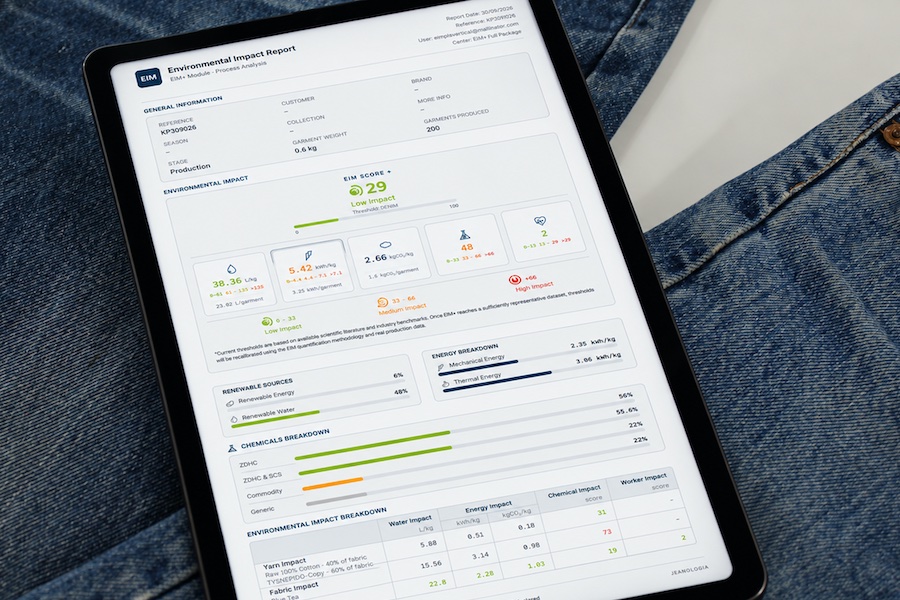
Jeanologia launches Billy

The new AI extracts precise laser designs from a garment image in minutes, transforming how vintage denim is recreated for production. If Jeanologia’s laser changed the way jeans were made at the end of the last century, its AI now takes the next step: moving from reproducing wear to designing it. / archive photo © 2026 Jeanologia

#Textile chemistry

Jeanologia urges industry to accelerate PP Spray phase-out following ZDHC Watchlist update

Potassium permanganate has officially entered the Chemical Watchlist of the ZDHC Foundation, signaling increased scrutiny and potential phase-out of one of the most hazardous chemicals still used in denim finishing. The inclusion confirms an industry shift that Jeanologia anticipated more than a decade ago.

#Denim

ISKO’s denim language at Bluezone

ISKO returns to Bluezone to showcase its latest advancements in denim innovation, presenting a comprehensive overview of its SS27 collection alongside key creative and technological collaborations. At booth C02, ISKO offers visitors an immersive look into how performance, design, and circular thinking are shaping the future of denim.

#Fabrics

MUNICH FABRIC START: Between Attitude and Sensuality

The future begins where we reimagine it. After seasons of restraint, Spring.Summer 27 marks a conscious counter-trend: optimism, sensuality, and creative freedom are replacing pragmatism and neutrality. Physical presence and individuality are regaining importance – as a response to uncertainty, exhaustion, and algorithmic predictability. The overarching theme of PLEASURE stands for fashion as an emotional space, as an expression of attitude and cultural reflection. Colours, surfaces, and materials become vehicles for self-confidence and joie de vivre.

Latest News

#Techtextil 2026

Gebr. Otto highlights versatility at Techtextil with regional supply chains, yarn innovations and new hygiene segment

At this year’s Techtextil, Gebr. Otto places its versatility at the center of its presentation. In addition to spinning, twisting and dyeing – traditionally focused on fine cotton – textile processors will also find a competent development partner for technical specialty solutions. The Dietenheim-based spinning mill has now built up a decade of experience in the production of technical yarns, particularly from aramids. A new hygiene segment has also been established, where yarns for medical and hygiene products are currently being produced. In the future, this department could also develop textile products for the food sector. Gebr. Otto will once again be present at the BW-i joint stand, booth D81, hall 12.1. What is wound onto the spool is determined by the customer: Gebr. Otto develops according to specific customer requirements and transforms its own ideas into yarn innovations.

#Europe

Commission presents proposal for EU Inc. - unlocking the full potential of the Single Market for Europe's entrepreneurs

Today, the European Commission presented its proposal for EU Inc., a new single set of corporate rules, building the cornerstone and starting point for the EU's 28th regime. EU Inc. is an optional, digital-by-default European corporate framework. It will make it easier for businesses to start, operate and grow across the EU – incentivising them to stay in Europe, and encourage those who once looked elsewhere to return.

#Man-Made Fibers

OnceMore® from Södra brings end-to-end traceability for circular Man-made Cellulosic Fibers (MMCF) using TextileGenesis

OnceMore® from Södra, the world’s first large-scale process for recycling blended fabrics into high‐quality dissolving pulp, will begin using TextileGenesis, a Lectra company, to strengthen traceability from raw material to retail across the value chain. OnceMore® produces dissolving pulp made from blended textile waste and wood sourced from responsibly managed Swedish forests. By integrating TextileGenesis, OnceMore® supports the growing need for verified data and secure, transparent tracking throughout increasingly complex supply chain.

#Sustainability

Experts publish APAC policy priorities

Cascale today announced the publication of its APAC Policy Priorities Paper, developed by the Asia-Pacific (APAC) Policy Member Expert Team (MET) to identify key regional sustainability challenges and provide practical, aligned recommendations for policymakers and industry stakeholders across Asia-Pacific.

TOP