[pageLogInLogOut]

#Spinning

Becoming an expert in spinning with Rieter’s Customer Trainings
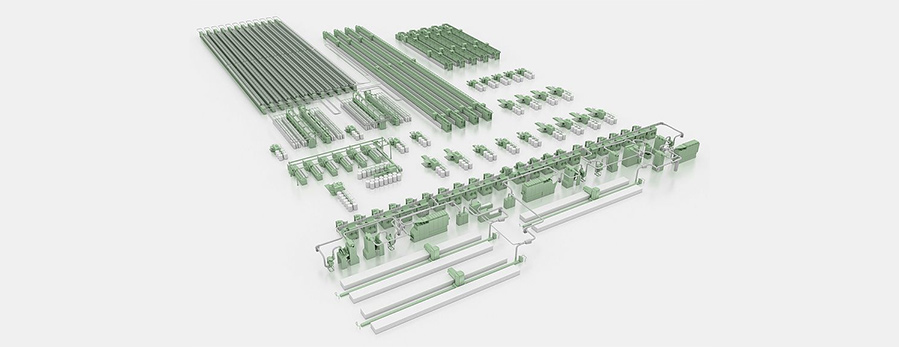
Rieter’s customer training covers the entire range of machines, from blowroom through to winding. © 2023 Rieter
Continuous learning pays rich dividends. Rieter’s customer trainings help unlock the full potential of the mill’s technical team and maximize the benefits of the products. It is therefore crucial to invest in the workforce’s know-how so they can utilize machines most effectively.

Rieter firmly believes that training goes beyond a one-time event; it is a continuous process that empowers mill technicians to achieve unparalleled success in their daily business operations. State-of-the-art technology, advancing automation and fast-changing market requirements increasingly call for expertly trained staff in spinning mills. For more than 35 years, Rieter’s training programs have been addressing exactly these challenges.

The trainings provide detailed insight into the machines and how to minimize conversion costs to have a positive impact on the spinning mill’s bottom line. Customer trainings have been offered on several topics as outlined below and at various levels. The trainings are being conducted by professional Rieter trainers who bring decades of experience in the textile industry along with a strong passion to impart knowledge.


The Right Training Can Make a World of Difference

Training programs help customers understand the value proposition of a product, explore its features and benefits as well as discover innovative ways to leverage its capabilities. By facilitating a smooth onboarding process and ensuring customers feel confident in using the product, businesses can accelerate adoption rates, maximize machine lifetime and gain a competitive edge.

Customers can choose trainings on-site in their own spinning mill, called INmill trainings, which help the technical team make sure that all qualitative and quantitative resources of their machines are used to the fullest potential.

The trainings in Rieter facilities in Europe or China are called INclass trainings, where participants benefit from hands-on experience on installed machines in well-equipped classrooms including the possibility to interact with the Rieter management team as part of the mill management training. The trainings are conducted by Rieter customer education specialists and provide ideal and real-life training environments.

There are four categories of trainings offered by Rieter for both INmill and INclass options: Machine Training, Electrical Training, Process Management and Mill Management. The training duration lasts from minimum two to maximum seven days, depending on the type of training program customers decide to sign up for. Rieter also offers customized trainings as per the customer’s needs. These trainings help get the most out of the installed base. The training is offered for all Rieter machines, from blowroom to winding.

Machine Training: Getting the Best out of the Machines

The machine training equips participants with the necessary know-how and skills to utilize a product effectively. Today, spinning machines are easy to operate . Even so, high utilization and efficiency can only be ensured if maintenance settings and professional troubleshooting are optimized. Machine learning allows businesses to proactively address common challenges, anticipate problems and deliver solutions effectively.

"The Rieter customer training team has conducted an INmill machine training for fiber preparation and draw frame machines at our mill in Egypt. The training was extremely valuable and effective. Our operating personnels highly benefited and started implementing the acquired know-how in their daily work which positively impacts the mill’s overall efficiency and productivity"

Omar Fata and Ibrahim Fata, mill owners of Rose Yarn, Egypt
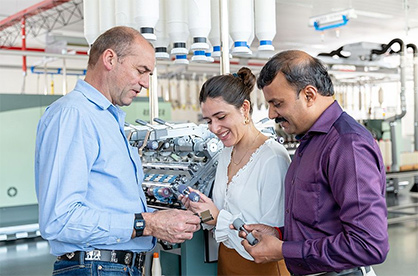
Comprehensive INmill hands-on machine training. © 2023 Rieter


Electrical Training: A Deep Dive into Electrical Refinements

When a highly productive spinning machine stands still because of an electrical problem or faulty running, this may result in considerable production loss. Hence, it is necessary to detect and solve problems quickly. This can only happen when staff are highly trained.

Process Management: Optimizing the Spinning Process for More Value Thanks to In-Depth Expertise

This training improves the expertise in the spinning process and enhances value throughout the value chain. By minimizing support costs, businesses can allocate resources more efficiently, invest in innovation and focus on strategic initiatives.

Process training can significantly reduce support costs. Highly trained customers are less likely to encounter problems or require extensive support. Training programs can address frequently asked questions, troubleshoot common issues and provide step-by-step guidelines enabling operators to overcome operational challenges.


"The trainer and his training content were excellent and exceeded our expectations. We were trained in process management with focus on control techniques in the whole spinning line. The knowledge gained has empowered the team to optimize the spinning process, resulting in an enhancement of the overall mill efficiency and the understanding of the processes. The online training support given by the Rieter winder team as well added value to us"

Srihari Devarajan, Director Process Improvement, Parkdale, Inc., USA.
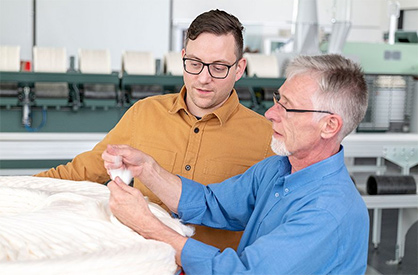
In-depth process management training to gain a competitive edge. © 2023 Rieter


Mill Management: Making More Money by Fixing Economic Leaks

Apart from the technical know-how, it is of utmost importance that the mill management team can detect hidden economic inefficiencies in the spinning process and can take measures to control them. Designed around the specific challenges spinning mills face regarding cost and quality requirements, Rieter developed a training module called the mill economics training course. It covers the key success factors of spinning mills: productivity, quality and conversion costs. The mill economics training aims to connect theory with practice and provides insights in how to increase profit margins while producing consistent yarn quality.

Customized Training Programs

Rieter also provides customized trainings to ensure sustainable production and top mill performance. Thanks to a modular concept, customers can design their own training programs according to their needs, focusing on a specific machine type and challenges they are facing.
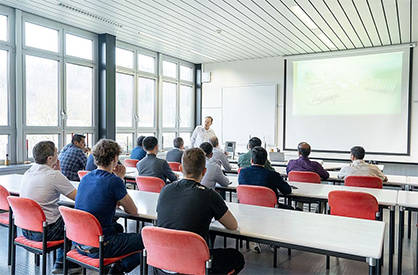
INclass customized training for customers. © 2023


In today's rapidly evolving market, staying ahead of the competition is essential. Customer trainings can be a key differentiator for businesses. By offering comprehensive and innovative training programs, spinning mills underscore their commitment, invest in their workforce and position themselves as industry leaders.

For more information, please register by visiting our website at:

https://www.rieter.com/services/after-sales/customer-training and select your favorite training program.

More News from Rieter Textile Systems

#Spinning

Rieter responds to higher raw material prices

Global political and economic developments have been leading to rising raw material and energy costs for some time. The textile machinery industry is also affected by this trend. Rieter machines and components consist to a large extent of steel, copper, aluminum and electronics. These materials in particular have seen higher demand and higher prices in recent months.

#Spinning

Rieter completes acquisition of Barmag

Rieter has successfully completed the acquisition of Barmag as of February 2, 2026. This strategically important acquisition makes Rieter the world’s leading system provider for natural and synthetic fibers.

#Spinning

Rieter adjusts group structure in preparation for Barmag integration

The planned acquisition of the “Barmag” Division of OC Oerlikon will create the leading system provider worldwide for natural and man-made fibers. Rieter is confident it will receive all regulatory approvals to complete the acquisition in the fourth quarter of 2025. The Rieter Group is therefore adjusting its Group structure as of January 1, 2026, to take this acquisition into account and to be able to provide an even more agile response to market challenges.

#Spinning

Rieter reports stable order backlog and strategic progress – outlook for 2025 adjusted

In its Investor Update 2025, Rieter announced an order intake of CHF 203.9 million in the third quarter and CHF 559.3 million after nine months, reflecting a continued cautious investment climate in the textile machinery sector. Sales totaled CHF 121.5 million in the third quarter and CHF 457.7 million for the first nine months of the year, while the order backlog stood at around CHF 590 million as of September 30, 2025.

More News on Spinning

#ITM 2026

The hub of smart and sustainable transformation in yarn technologies: ITM 2026

With global fiber production projected to reach 169 million tons by 2030, yarn manufacturing is becoming one of the most strategic fields within the textile machinery industry. Located in Halls 6, 7, and 10, the Yarn Hall at ITM 2026 is set to bring together industry professionals with innovative solutions developed around automation, energy efficiency, digitalization, and circular production.

#Spinning

Barmag: DTY efficiency for the future of fancy yarns

Fancy yarns continue to gain importance in the textile market: Whether in fashion, home textiles or the automotive industry - the trend towards individuality is fueling the demand for textured, haptically differentiated and at the same time comfortable yarns.”

#Spinning

Perfect quality through collaboration: Machinery from Trützschler, Toyota and Murata at Zirve Tekstil

In today’s textile industry, excellence is not achieved by chance – it’s the result of deliberate decisions, technical expertise, and the courage to go beyond conventional paths. The Turkish company Zirve Tekstil has done just that: by combining the best technologies from Trützschler, Toyota and Murata, they’ve created a production setup that delivers outstanding yarn quality – recognized worldwide.

#Spinning

Monitor, adjust, perfect

FiberGuard BCF is the name of the new system for real-time monitoring of yarn tension in all Neumag BCF production processes. Barmag, the innovation and technology leader for filament spinning systems, presented this innovation of its Neumag product line at ITMA Asia + CITME in Singapore last November. The new BCF yarn tension sensor is compatible with all current Neumag BCF machines and can be easily retrofitted to existing Neumag BCF S8 machines.

Latest News

#HIGHTEX 2024

The future of Technical Textiles takes shape at HIGHTEX 2026

HIGHTEX 2026 International Technical Textiles and Nonwoven Exhibition is preparing to open its doors at Tüyap Fair and Congress Center between 9–13 June 2026. Bringing together the world’s leading manufacturers and technology providers in the field of technical textiles and nonwoven technologies in Istanbul, the exhibition will go beyond being merely a trade platform where new products are displayed and will assume the character of an international hub where the strategic future of the industry is discussed.

#Textile chemistry

Jeanologia urges industry to accelerate PP Spray phase-out following ZDHC Watchlist update

Potassium permanganate has officially entered the Chemical Watchlist of the ZDHC Foundation, signaling increased scrutiny and potential phase-out of one of the most hazardous chemicals still used in denim finishing. The inclusion confirms an industry shift that Jeanologia anticipated more than a decade ago.

#Recycling / Circular Economy

Circulose restarts commercial-scale production at Ortviken plant in Sundsvall

Circulose today announced the restart of its commercial-scale production plant at Ortviken in Sundsvall, Sweden, marking a significant step in scaling next-generation materials for the global fashion industry. The company plans to resume production of CIRCULOSE®, a recycled pulp made entirely from discarded cotton textiles, in the fourth quarter of 2026.

#Textiles & Apparel / Garment

VIATT 2026 to debut German Pavilion, strengthening European participation alongside key Asian textile hubs

Vietnam’s textile and garment sector continues to be a major contributor to the country’s economic growth, with export revenues expected to reach USD 46 billion in 2025, a 5.6% increase from 2024 . From 26 – 28 February, the Vietnam International Trade Fair for Apparel, Textiles and Textile Technologies (VIATT) is set to contribute to economic growth opportunities by accelerating digital transformation and green transition across the entire textile value chain. The upcoming edition will respond to the rising demand for advanced technologies and sustainable materials with the introduction of the German Pavilion, alongside strong exhibitor participation from key Asian sectors, as well as several high-profile fringe events.

TOP