[pageLogInLogOut]

#Spinning

Autocoro with new, patented rotor cleaning
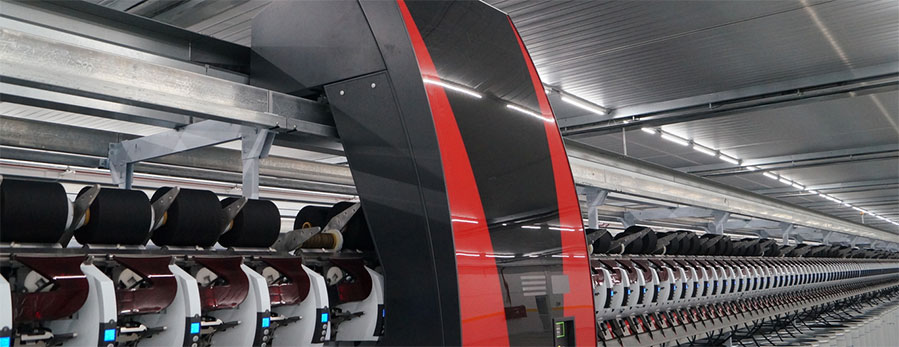
© 2023 Saurer
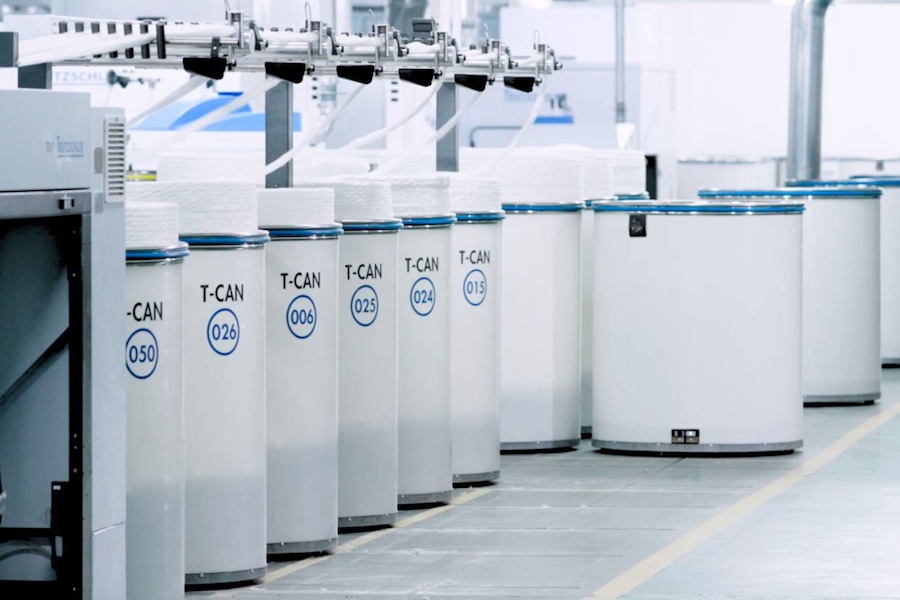
To prepare spinning mills for the circular economy of the future, Saurer thinks one step ahead in all its developments and upgrades. A high degree of contamination reduced production speeds and a lot of personnel intervention are all common consequences of using recycled short-staple fibres in a rotor spinning mill. With their new optimised, patented cleaning and operator guidance with LED light signals, the new doffing cleaning units (DCUs) on the Autocoro 10 help our customers achieve higher yarn quality and personnel efficiency.

Fully automatic rotor spinning essentially consists of four key processes: spinning and winding, automatic piecing and automatic doffing of yarn packages. When it comes to the Autocoro, the first three processes have been integrated into each individual spinning position for more than 10 years through individual drive technology, resulting in high productivity.

When doffing a package, rotor cleaning is carried out simultaneously by the doffing cleaning units (DCUs), which travel from spinning position to spinning position. With the Autocoro, you can install up to eight DCUs. The machine can be configured differently depending on the machine length, package size, yarn count and raw material.

New patented rotor cleaning improves yarns

The several DCUs work like a well-coordinated team on the Autocoro 10. At the same time, each DCU can be precisely adjusted to the quality requirements of its lots and work areas on the Autocoro 10.

The most important task of the DCUs in the context of yarn quality assurance is to clean the rotors, both pneumatically and mechanically. In the new Autocoro 10, this is now even more efficient as a result of an innovative, patented technology. The cleaning processes are digitally controlled using state-of-the-art linear motor technology. A new movement mode for the cleaning scraper has been integrated, and the positioning of the scraper in the rotor groove is more precise and significantly more efficient thanks to an additional circuit.

This new cleaning technology loosens and removes even the most stubborn dirt and sticky residue in the rotor. The cleaning time of the rotors can now be individually adjusted on the new DCUs. All this paves the way for impeccably clean rotors, leading to a more reproducible yarn quality regardless of the fibre type. During our market launch tests, the cleaning technology proved effective for all fibres that are difficult to spin, such as recycled fibres and regenerated fibres. Our customers can now rest assured that they’ll be ready to meet the requirements of the future thanks to the new rotor cleaning system.


Optimised automation for higher efficiency

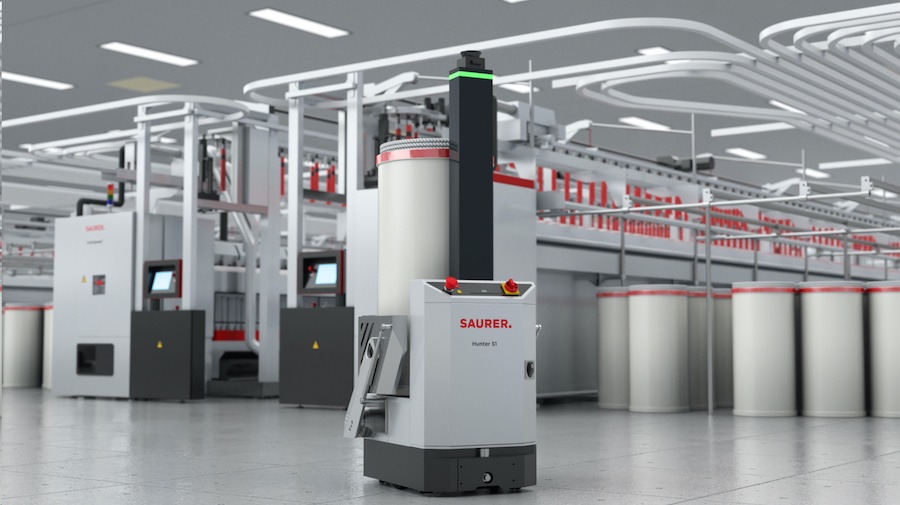
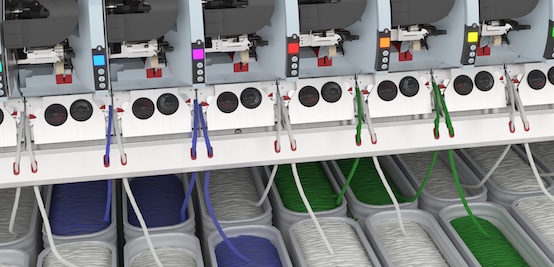
The new DCUs on the Autocoro 10 are not just automatic devices focused on doffing packages and cleaning the rotor – they are the right hand of the spinning mill personnel, and a new type of operator guidance in two steps makes communication with the personnel quicker and easier. The LED signals, visible from afar, indicate to the personnel when manual intervention is needed. The DCU itself has digitally controlled touch menus with plain text information. This way, the operator knows immediately what needs to be done: whether the auxiliary yarn required for doffing the package is coming to an end or some other manual intervention is necessary. This optimised operator guidance improves the timing of the auxiliary yarn supply and increases the efficiency of both the DCUs and the Autocoro 10.

The patent has been granted and the new rotor cleaning system will be integrated into all newly delivered Autocoro systems as of summer 2023. It will also be available as a retrofit kit for Autocoro 8 and Autocoro 9.
More News from Saurer AG

#ITM 2026

Saurer at ITM 2026: Answering markets needs for flexibility

The textile industry is facing unprecedented challenges: geopolitical tensions, natural disasters and pandemics and are changing market conditions overnight. Today, flexibility is no longer an option, but a survival strategy. At the ITM 2026 in Istanbul, Saurer will be demonstrating how modern machine technology delivers flexibility – from bale to yarn – in hall 7 at booth 709 A.

#Techtextil 2026

Saurer sets new standards at Techtextil 2026

When the international textile industry gathers at Techtextil in Frankfurt from April 21 to 24, Saurer is going to present a powerful solution for the growing demands in the field of technical yarns with the TechnoCorder TC2plus.

#Spinning

Saurer Technologies Twisting Solutions at ICFE 2026

Saurer Technologies Twisting Solutions, a global leader in textile machinery innovation, will be present at the International Carpet and Flooring Expo ICFE 2026. Join us January 6–9 at the Istanbul Expo Center, Türkiye, as industry leaders, manufacturers, and innovators gather to explore the latest breakthroughs in carpet and flooring technology. Let’s meet at the new established global Center of the Carpet Sector in hall 3, booth 300!

#ITMA Asia + CITME Singapore 2025

Saurer’s leading technology for the yarns of tomorrow at ITMA Asia 2025

Saurer, is looking forward to presenting the latest innovation highlights at the ITMA Asia + CITME 2025 in Singapore on booth C 301 in hall 3. The spinning, twisting, and automation solutions are underlining the commitment to driving efficiency, sustain-ability, and digitalisation in the textile industry, paving the way for the yarns of tomorrow.

More News on Spinning

#Spinning

Object Carpet tests production of rPET BCF yarn on Neumag BCF line

In a joint project with Object Carpet GmbH, Denkendorf; the Institute for Textile Technology (ITA), Augsburg; and Next Generation Recyclingmaschinen GmbH (NGR), Feldkirchen, Austria, Barmag investigated the processing of recycled polyester for BCF yarn. The goal was to evaluate the fundamental suitability of 100% recycled carpet material for reuse in carpet yarn production to create a closed-loop system in carpet manufacturing. To date, commercial rPET BCF processes have been based solely on rPET from bottle pellets.

#Spinning

New spinning package with two-step filtration for recycled yarns and more

At the ITM in Istanbul, BB Engineering unveiled its new, patented ValuePack spinning package for the first time, which features a two-stage filtration system. This is particularly beneficial for re-cycling processes. Until now, spinning packs have used either metal powder (“sand”) or filter candles as filter media. Both options are suitable for differ-ent applications, and each has its own specific advantages and dis-advantages.

#Research & Development

GenuTrace client advisory: Is your cotton supply chain UFLPA ready?

U.S. Customs and Border Protection has released updated operational guidance (CBP Publication No. 5560-0526) expanding its forced labor enforcement framework. The guidance supersedes the original 2022 UFLPA Operational Guidance and now covers all forced labor enforcement authorities — UFLPA, CAATSA, and WROs/Findings — in a single unified document. For cotton importers, the enforcement posture has not softened. It has become more structured, more documented, and more demanding. Learn more about UFLPA.

Latest News

#Textiles & Apparel / Garment

Catalyst Club launches in Florence: Where conversations become catalysts for change

The first chapter of Catalyst Club debuted in Florence, bringing together creative directors, entrepreneurs, manufacturers, journalists and innovators from across the fashion and textile industry for an evening of dialogue, exchange and connection.

#Recycling / Circular Economy

Textiles Recycling Expo 2026 builds on successful debut with record attendance, global participation and expanded industry collaboration

The second edition of Textiles Recycling Expo concluded on 24–25 June at Brussels Expo, reinforcing its position as Europe's leading exhibition and conference dedicated exclusively to textile recycling and circularity.

#Composites

JEC Forum Southeast Asia 2026 highlights Taiwan as a strategic hub for the global composites industry

The third edition of JEC Forum organized in Southeast Asia brought together 350+ participants from 22 countries for three active days of high-level Business Meetings, conferences, and networking, emphasizing Southeast Asia’s growing role in the global composites market. Held for the first time in Taipei from 23 to 24 June 2026, following the successful first editions in Bangkok, JEC Forum Southeast Asia 2026 confirmed its position as the region’s leading business platform dedicated to the composites industry.

#Associations

Textile machinery: Italian technology charts the course for revival

Operating in a scenario characterized by geopolitical instability, slowing industrial investments, and new protectionist pressures. This is the main challenge for the Italian textile machinery industry that emerged during the General Assembly of ACIMIT (Association of Italian Textile Machinery Manufacturers), held today in Milan at the Shareholders’ Hall of Palazzo Edison.

TOP