[pageLogInLogOut]

#Spinning

Sensor specialist becomes employee owned
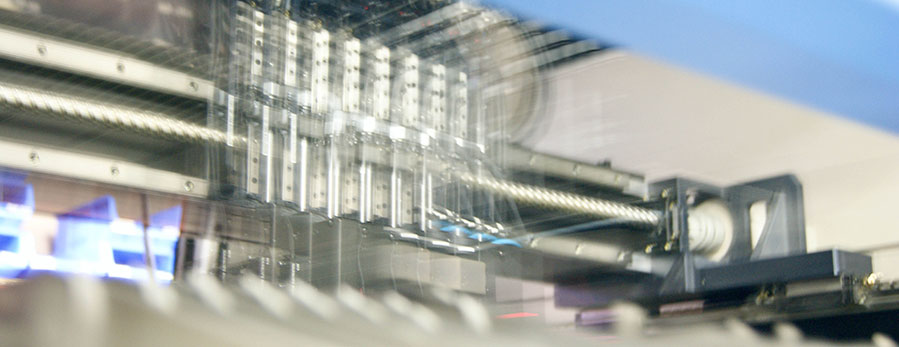
The rock-solid reliability of Dent sensors makes them integral to the yarn spinning and winding processes. © 2022 Dent Instrumentation
BTMA member Dent Instrumentation – a specialist in contactless yarn sensors – has become an employee-owned business following the formation of a new Employee Ownership Trust (EOT).

The company, based in Colne, Lancashire, has been family owned since its founder Geoffrey Dent secured a patent for the very first contactless yarn sensor in the 1960s. It has been successfully run by his son Andrew and the family for many years.

“This deal ensures a smooth succession as well as the preservation of the company’s core family values and the Dent Instrumentation name,” said Managing Director Colin Hull. “The EOT structure will maintain the integrity of the business for years to come.”
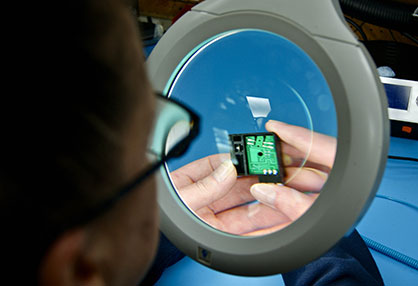
The detection response of the sensors can be adapted to each individual unit according to customer requirements. © 2022 Dent Instrumentation


“The success of Dent Instrumentation has been down to the dedication and talents of the whole team so putting it in their hands feels fantastic,” added Chairman Andrew Dent. “It was incredibly important to protect our heritage and way of working and I couldn’t think of anyone better to do that than the very people who helped to grow the business.”

Reliability

The rock-solid reliability of Dent sensors makes them integral to the yarn spinning and winding processes and they have become the standard throughout the textile industry, recognised for their quality, performance and value. They are used by major manufacturers of textiles and textile machinery under either Dent or OEM machine builder brands.

The highly accurate sensors are effective at speeds as low as 3m/min up to 8,000m/min, and their detection response can be adapted to each individual unit according to customer requirements.

The ‘fit and forget’ sensors are extremely durable in all operating environments and encapsulated in epoxy resin to provide protection from spin finish, oil, wax, water and any other potential contaminants. A unique optical compensation system also contributes to ensuring very little cleaning is required.


The textile processes Dent sensors are developed for include those for filament yarns on machines for the high speed winding of POY and FDY at high speeds, as well as elastomeric yarns etc. For DTY yarns, Dent provides a sensor capable of operating over the full range of speeds and yarn counts, with wrap detection on take up rollers providing early warning of dangerous wraps.

The ‘fit and forget’ sensors are extremely durable in all operating environments. © Dent Instrumentation


For staple fibre operations, low cost and reliable sensors cover ring, Open End and friction spinning machines, as well as assembly winding. Specially-designed multi position sensors are suitable for many creel applications and also twisting machines, particularly for glass fibre operations.

A recent new development is that of the Nelson Twin sensor which incorporates two independent sensing circuits instead of the traditional single circuit and as a retrofit upgrade for machines currently in the field can significantly boost efficiency.

Impartial

Dent’s continuing independence means it is able to offer impartial design advice, with a high priority placed on development by personnel who are not only highly skilled in electronics, but also experienced in textile processes.

“The workforce at Dent Instrumentation is highly skilled and highly valued,” said Jason Kent, CEO of the British Textile Machinery Association (BTMA). “It was a key priority for the Dent family that those jobs and the Dent culture be protected in the delivery of a succession plan. The transition to employee-ownership is a perfect solution.”




More News from TEXDATA International

#Texprocess 2026

Texprocess 2026: Automation, digitalisation and AI reshape textile processing

Investment decisions in textile processing have become increasingly complex. Rising energy prices, labour shortages and geopolitical uncertainties are forcing companies to prioritise technologies that deliver measurable improvements in efficiency and process stability. This applies not only to apparel production, but also to the processing of technical textiles and high-performance materials. Modernisation projects are therefore being evaluated more selectively – but the pressure to upgrade production systems continues to grow. Texprocess 2026 reflects this tension between cautious investment behaviour and increasing technological demand.

#Techtextil 2026

Textile Chemicals & Dyes: Innovation in Textile Chemistry moves into focus at Techtextil 2026

From PFAS-free finishes and water-saving dyeing technologies to advanced coatings and recycling-compatible formulations, innovation in textile chemistry is accelerating across the industry. Reflecting this development, Techtextil 2026 introduces Textile Chemicals & Dyes as a dedicated product segment, highlighting the growing role of chemical solutions in shaping the next generation of technical textiles.

#Recycling / Circular Economy

textile.4U publishes special edition “Top 100 Textile Recycling Companies 2025”

With a comprehensive 176-page special edition, textile.4U is dedicating its latest issue entirely to one of the most dynamic and influential topics in today’s textile industry: textile recycling. The new issue, published exclusively in high-quality print, presents the Top 100 textile recycling companies researched and selected by TexData – organizations that already play a key role in the transition to circular textiles or are expected to have a significant impact in the near future.

#Recycling / Circular Economy

Responsible Textile Recovery Act of 2024 signed by Governor

Senator Josh Newman (D-Fullerton) is proud to announce that Senate Bill 707 (SB 707), the Responsible Textile Recovery Act of 2024, has been signed into law by the Governor of California, Gavin Newsom. This groundbreaking legislation establishes the country’s first Extended Producer Responsibility (EPR) textile recycling program, marking a significant step forward in the state’s efforts to combat waste and promote sustainability.

More News on Spinning

#Spinning

Temco launches a new DTY all-in-one solution

Temco introduces the DTY All-in-One Solution – a fully harmonized set of components engineered to give customers a highly stable, low maintenance and reproducible process environment. The solution reduces interruptions, extends component lifetimes and supports consistent yarn quality across all machine positions. All-in-One Solution – a fully harmonized set of components engineered to provide maintenance and reproducible process environment.

#Techtextil 2026

DIENES at Techtextil 2026: Flexible pilot lines for bio-based fiber development

The growing relevance of bio-based materials in technical textiles is accompanied by increasing demands for reproducibility, high-quality data, and scalable process routes. Especially when working with cellulose and its derivatives, chitosan, lignin-based approaches, or bio-based PAN as a carbon-fiber precursor, R&D teams face variable feedstock quality, tighter process windows, and the need for reliable comparability across trials. This calls for flexible, data-driven experimental setups that can be reconfigured efficiently when recipes, solvents, and raw-material batches change.

#Techtextil 2026

RETECH showcases high-precision godets for high-performance fiber processing at Techtextil 2026

RETECH designs and manufactures godets and draw frames for heated, ambient and cooled processes, enabling precise heat treatment and consistently high yarn quality for a wide range of polymers and applications, with process temperatures of up to 400 °C for high-performance fibers. The company’s key competence lies in exact and stable temperature and speed control, individually adapted to the specific material and process requirements.

#Spinning

Barmag presents the next generation of POY production – energy-efficient and partial-automated

With POY 2.0, Barmag is introducing a completely redesigned spinning concept that takes the production of partially oriented yarn (POY) to a new level in terms of technology and economy. The solution, which was presented to a selected audience of experts for the first time at ITMA Asia + CITME 2025, was met with great enthusiasm: several yarn producers worldwide immediately expressed their interest in a pilot plant.

Latest News

#Sustainability

Experts publish APAC policy priorities

Cascale today announced the publication of its APAC Policy Priorities Paper, developed by the Asia-Pacific (APAC) Policy Member Expert Team (MET) to identify key regional sustainability challenges and provide practical, aligned recommendations for policymakers and industry stakeholders across Asia-Pacific.

#Knitting & Hosiery

SHIMA SEIKI announces partnership with CLO Virtual Fashion

Leading computerized flat knitting innovator SHIMA SEIKI MFG., LTD. of Wakayama, Japan is partnering with digital garment solutions provider CLO Virtual Fashion of Seoul, South Korea for the integration of technology in garment design and simulation.

#Man-Made Fibers

Lenzing advances its transformation: Higher EBITDA, stronger free cash flow and more than EUR 200 million in cost savings

The business performance of the Lenzing Group in 2025 was affected particularly in the second half of the year by external factors such as international tariff measures, subdued demand and declining market prices. As a result, revenue decreased slightly by 2.3 percent to EUR 2.6 billion, primarily due to lower fiber sales volumes and lower prices for fibers and pulp, which were further negatively impacted by currency developments. Nevertheless, thanks to the comprehensive Performance Program, Lenzing was able to improve its operating performance and key financial indicators compared with the previous year.

#Man-Made Fibers

“Lead Transformation – Generate Impact”: Lenzing presents its 2025 Annual and Sustainability Report

The Lenzing Group has published its 2025 Annual and Sustainability Report, entitled LEAD TRANSFORMATION – GENERATE IMPACT. The report shows how Lenzing is actively shaping change in the industry and making a lasting impact: economically, ecologically, and socially. Lenzing is consistently focused on the future: with targeted investments in premiumization, excellence, innovation, and sustainability, the company is strengthening its position as a leading provider of sustainable, cellulose-based premium fibers. The combined report is available in digital format.

TOP