[pageLogInLogOut]

#Spinning

Fully optimized production for maximum competitiveness

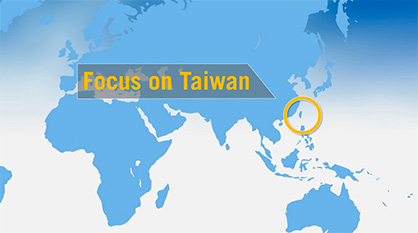
Over the last years, the textile industry in Taiwan has to deal with a tough business environment. Compared to other countries in the region wages are not only relatively high, but they are still rising. As a result there have been no investments in new spinning capacities in Taiwan for years. Taiwanese spinning companies are investing mainly in China and Vietnam, utilizing the advantageous cost structure in these countries. Today, Taiwanese spinning mills are operating 1.35 Million spindles in China and 450,000 spindles in Vietnam, while there are only 500,000 spindles in operation in Taiwan itself.

Focusing on Taiwan

Highest efficiency is one measure to ensure profitable operation of spinning mills in Taiwan even under these difficult circumstances. Therefore Taiwanese spinning mills became premium users of Loepfe´s data management cockpit MillMaster TOP. With only few exceptions, all spinning mills in Taiwan are using this innovative real-time monitoring system. Main advantage for the spinners is the precise and integrated overview of the quality assurance process from winding department. Informative graphical reports help to quickly localize errors in order to eliminate them as fast as possible. These measures lead to an optimized production with consistently high quality, while reducing the maintenance costs.

Loepfe is regularly holding trainings in Taiwan, where quality managers of spinning mills can increase their knowledge. As a result, MillMaster TOP is the standard tool for production planning and trend analysis in Taiwanese spinning mills. In addition Loepfe is offering local support within the Elitec/Loepfe Taiwan Service Station in Taipei.

All sorts of requests are handled there: From technical support and training to service calls. Since many years, Loepfe´s service is supporting the customers in reaching their quality and efficiency targets.
(c) 2019 Loepfe
(c) 2019 Loepfe

Loepfe sales team says: “Taiwanese spinning mills realized in a very early stage, that optimizing their production will help them to reach highest efficiency, which enables them to stay competitive. We are very happy, that they are using our proven products, and are looking forward to continue a stable development of textile industry in Taiwan together with our customers.”
More News from LOEPFE BROTHERS LTD.

More News on Spinning

#ITMA Asia + CITME 2026

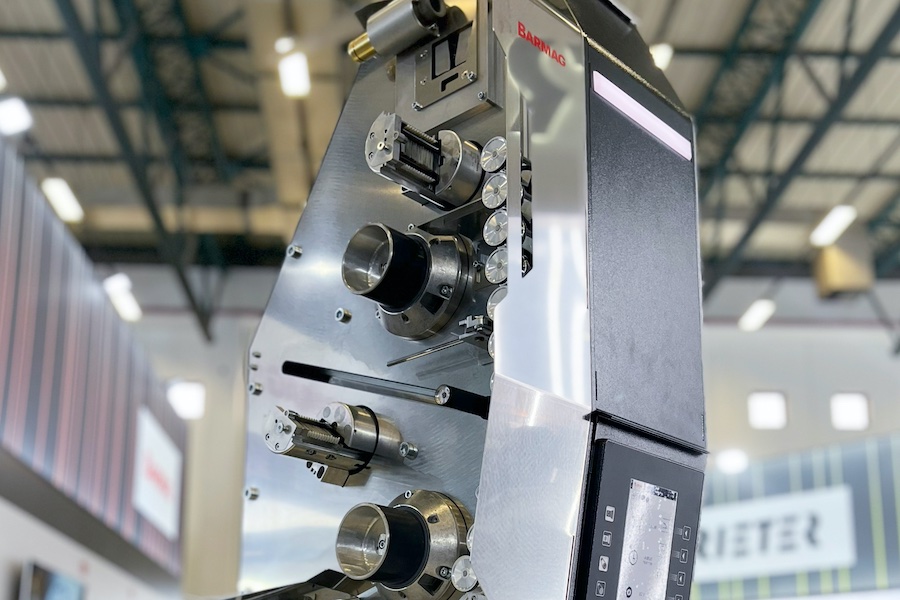
ITMA Asia 2026: How Barmag is reshaping the future of man-made fiber production

The textile industry is entering a groundbreaking era. Manufacturers face rising energy prices, growing sustainability demands, increasing labor shortages, and an unprecedented need for flexibility. For a globally active textile industry, where competitiveness is closely linked to production efficiency and cost leadership, this means that technology is no longer merely a means of improving operational processes – it is increasingly becoming a strategic differentiator.

#Spinning

Eltex takes the tension out of heat-setting

The ACT-MULTI system developed by Eltex – a member of TMAS, the Swedish textile machinery association – is bringing individual yarn tension monitoring and automatic control to the heat-setting process, helping manufacturers maintain consistent processing conditions across every yarn position.

#Spinning

Heberlein reinforces its commitment to the Chinese market

Heberlein, globally recognised as a leading provider of air interlacing and air texturing jets for synthetic filament yarns, is consolidating its success in the Chinese market with its APh- and APe-series for DTY applications. Particularly in the field of Air Covering, Heberlein technologies combine excellent quality with significant savings in compressed-air consumption. A new service hub in Shengze City underlines the company’s long-term commitment in the Chinese market.

#Recycled Fibers

Driving circularity with Uster Recycled Fiber Matrix

The textile industry’s commitment to circularity continues to accelerate, and mechanical recycling is viewed as a targeted approach to cutting textile waste and its environmental impact. At the forefront of this drive, Uster has developed the Recycled Fiber Matrix, a two-dimensional assessment of mechanically recycled fibers to guide optimum processing and end-uses.

Latest News

#Industry 4.0 / Digitalization

Coats Digital launches AI-powered GSD RealMotion for motion analysis

Coats Digital has launched GSD RealMotion, an AI-powered solution designed to provide apparel manufacturers with greater visibility into factory-floor operations. By analysing shop-floor video and applying Coats Digital’s GSD methodology, the solution turns video recordings into structured, motion-by-motion method studies.

#Textile chemistry

Archroma and Lameirinho partner in pioneering deployment of InOneGO single-step dyeing

Archroma, a global leader in specialty chemicals, and Lameirinho, a leading home textiles manufacturer based in Portugal, are collaborating to bring InOneGO by Archroma, a new single-step dyeing process, into commercial production. Lameirinho’s first InOneGo bedlinens collection is now available worldwide.

#Knitting & Hosiery

KARL MAYER launches extra-wide HKS 3-M EL for increased productivity

KARL MAYER has launched a new extra-wide version of its HKS 3-M EL tricot machine, designed to increase productivity particularly in the manufacture of textiles for sports, activewear and athleisure applications.

#Research & Development

Reducing development times for technical textiles by accelerated thermo-oxidative aging in a high-pressure autoclave

Synthetic polymers used in technical textiles can be effectively protected against degradation caused by heat, oxygen, and water through the use of stabilizer systems. This enables service lives of several decades, extending to more than 50 years. As the use of durable technical textiles continues to grow, so does the demand for reliable methods to predict their service life within economically feasible testing periods. For the first time the German Institutes of Textile and Fiber Research Denkendorf (DITF) developed methods for robust service life prediction for textiles in an IGF research project.

TOP