[pageLogInLogOut]

#Spinning

Saurer’s contribution to mankind’s giant leap, the moon landing
(c) 2019 Saurer
Fifty years ago, people around the globe watched in awe as a human being stepped onto the moon’s surface for the first time. We have a little-known connection to this occasion, which marked the start of a new chapter in space exploration.

On 20 July 1969, Neil Armstrong became the first person to set foot on the moon. As the world commemorates the 50th anniversary of this event, we consider the small but significant contribution our company made to this momentous occasion, made possible through the expertise of our customer. 

Saurer’s partnership with apparel branding innovator Lion Brothers, based in Owings Mills, Maryland, USA, lasted seven decades. Already in 1967, the company had become the first to supply the National Aeronautics and Space Administration (NASA) with embroidered mission patches, starting with Apollo 1. 

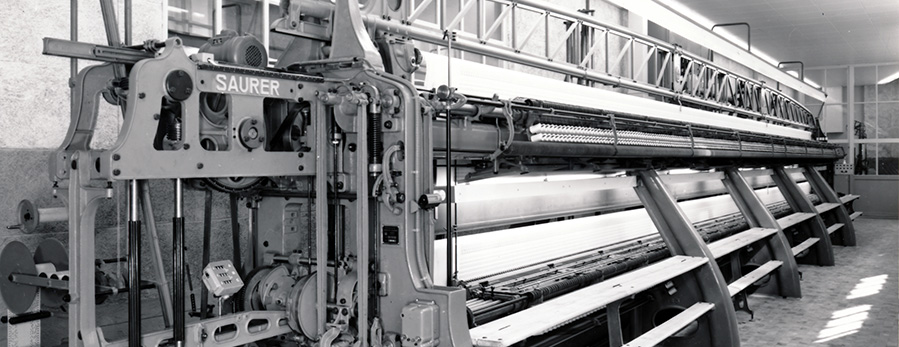
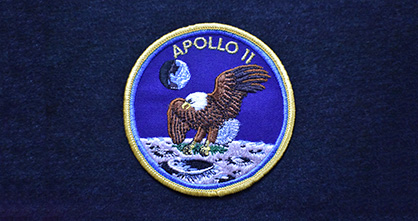
Using Saurer’s 2S-55, the most advanced embroidery machine of the time, Lion Brothers produced the shoulder patch for Apollo 11, the mission that resulted in two astronauts reaching the moon.

“We are proud to have made a contribution to this pioneering mission. Superb quality has always been a distinguishing feature of our customers’ products,” states Efthimios Katsidis, General Manager Saurer Embroidery.

At the time, punched tape was used to program embroidery machines. An image six times the size of the design, called the cartoon, was produced. The puncher then recorded the X and Y coordinates on the paper tape by punching holes into it. The creation of the cartoon and digitising process were both manual. In the case of the Apollo 11 mission patches, the government contract with Lion Brothers dictated that all cartoons and punched tapes had to be destroyed once production was complete. This means that any such patches produced subsequently are copies.
(c) 2019 Saurer
(c) 2019 Saurer


“As science and technology keep developing, we are eager to see our customers pushing boundaries and using our machines to serve clients in new industries and in unprecedented ways,” says Efthimios Katsidis. “Who knows, perhaps embroideries or technical textiles created on Saurer machines will play a role in the first manned mission to Mars.”
More News from Saurer AG

#ITM 2026

Saurer at ITM 2026: Answering markets needs for flexibility

The textile industry is facing unprecedented challenges: geopolitical tensions, natural disasters and pandemics and are changing market conditions overnight. Today, flexibility is no longer an option, but a survival strategy. At the ITM 2026 in Istanbul, Saurer will be demonstrating how modern machine technology delivers flexibility – from bale to yarn – in hall 7 at booth 709 A.

#Techtextil 2026

Saurer sets new standards at Techtextil 2026

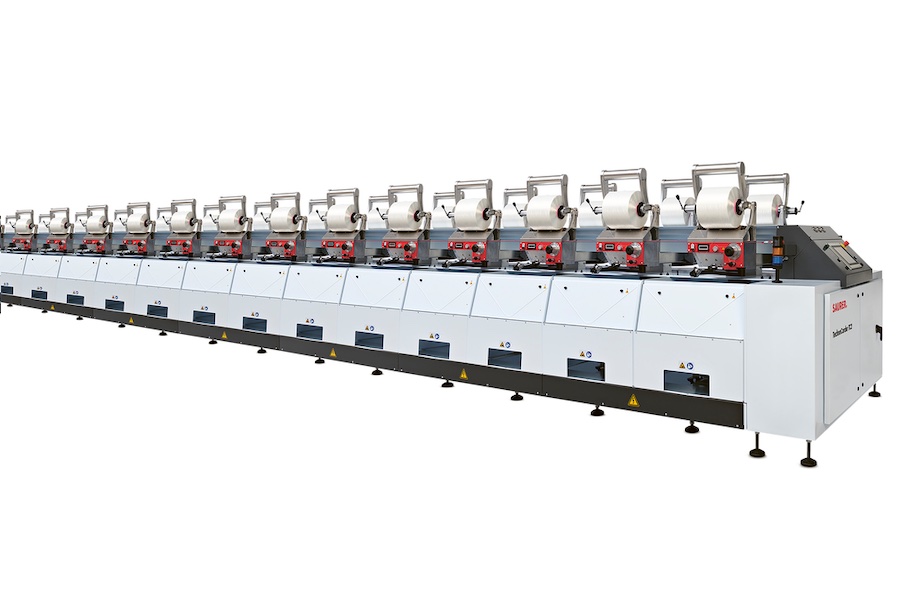
When the international textile industry gathers at Techtextil in Frankfurt from April 21 to 24, Saurer is going to present a powerful solution for the growing demands in the field of technical yarns with the TechnoCorder TC2plus.

#Spinning

Saurer Technologies Twisting Solutions at ICFE 2026

Saurer Technologies Twisting Solutions, a global leader in textile machinery innovation, will be present at the International Carpet and Flooring Expo ICFE 2026. Join us January 6–9 at the Istanbul Expo Center, Türkiye, as industry leaders, manufacturers, and innovators gather to explore the latest breakthroughs in carpet and flooring technology. Let’s meet at the new established global Center of the Carpet Sector in hall 3, booth 300!

#ITMA Asia + CITME Singapore 2025

Saurer’s leading technology for the yarns of tomorrow at ITMA Asia 2025

Saurer, is looking forward to presenting the latest innovation highlights at the ITMA Asia + CITME 2025 in Singapore on booth C 301 in hall 3. The spinning, twisting, and automation solutions are underlining the commitment to driving efficiency, sustain-ability, and digitalisation in the textile industry, paving the way for the yarns of tomorrow.

More News on Spinning

#Spinning

Barmag expands its portfolio for PA6/PA6.6 applications — also available as a retrofit solution

With the new type 6020 ceramic oiler, Barmag is introducing a powerful addition to its product portfolio for processing PA6 and PA6.6 yarns. The solution is specifically designed for low-titer applications in the range of 5 to 100 denier.

#Spinning

Pre-Cleaner CL-X: Proven in cotton cleaning – creating value beyond the spinning mill

Since its market launch, the CL-X has firmly established itself in blowroom lines worldwide. Hundreds of installations confirm its ability to deliver superior cleaning efficiency, lower waste, higher productivity and significant energy savings. Now, new customer applications show that the CL-X not only continues to excel in spinning preparation – it is also entering a completely new field of application: ginning.

#Recycling / Circular Economy

Rieter and partners launch Recycling Powerhouse for industrial-scale textile recycling

Recycling Powerhouse Ltd. was established in July 2026 to industrialize, standardize and scale textile recycling. Based in Switzerland, the venture will operate a franchise-driven business model that enables the production of high-quality, certified recycled yarns. The project is supported by the following partners: Rieter Group, the world’s leading system supplier for natural and man-made fibers, Säntis Textiles, a Swiss textile engineering company, and Valvan, a Belgian sorting technology company. The first blueprint franchise operation is scheduled to launch early 2027 in partnership with Suhail Industrial Holding Group in Qatar.

#Spinning

Rieter sees Barmag integration on track as orders and sales rise

The first half of 2026 was shaped by the successful completion of the largest acquisition in Rieter’s history. The Man-Made Fiber Division enables entry into the growth segment of man-made fibers and sustainably strengthens Rieter’s market position in the Asia region. The expanded Group is now the world’s leading system supplier for the processing of natural and man-made fibers. In the first half of the year, initial cost savings in material costs and operating expenses have already been realized. The targeted synergies are expected to amount to at least CHF 20 million by the end of the 2028 financial year. Due to the completion of the acquisition on February 2, 2026, the first half of the year for the Man-Made Fiber Division only amounts to five months.

Latest News

#Associations

IVGT membership: expertise that pays off

For energy-intensive textile companies, government compensation mechanisms are an important economic factor. The IVGT successfully supports its member companies in applying for state aid and thereby regularly contributes to significant financial relief.

#Research & Development

Networking Day 2026: Industry stakeholders unite around textile recycling

In 2026, the Industry Research Group (IRG) Polymer Recycling once again brought together some of the key stakeholders in textile recycling for its annual Networking Day. This year, the event took place at EREMA’s premises in Ansfelden, Austria. It brought together key players from across the textile recycling value chain for a day of structured exchange and in-depth discussions.

#Knitting & Hosiery

The new RDJ 7/3 defines the design footprint of modern athletic shoes

Stylish, functional, and efficient to produce – spacer fabrics are the all-arounders among textile materials. These versatile fabrics are particularly in demand in the sports and casual footwear sector, as they combine comfort, breathability, and design freedom. At the same time, this industry is trend-driven, dynamic, and price-sensitive like few others. Innovations are therefore a decisive factor for success. With the RDJ 7/3, KARL MAYER offers a solution specifically tailored to these requirements. The particular strength of the new double raschel machine: its exceptional flexibility, thanks to its three jacquard bars.

#Research & Development

Smart textiles reversibly change shape in an energy-efficient manner in response to ambient temperature

Self-actuating textile structures are used in a wide range of applications, such as medical technology, automation, architecture, agriculture, and the apparel industry. An example is the use of shading nets in greenhouses, which can be deployed and retracted depending on the sunlight intensity. The German Institutes of Textile and Fiber Research Denkendorf (DITF) are developing textiles based on shape-memory polymers with reversibly controllable geometry.

TOP