[pageLogInLogOut]

#Software

Optitex congratulates its customer, Rasta Imposta Costumes, for winning the Apparel Magazine's Top Innovator Award

Rasta Imposta has drastically reduced the design-to-development time of its costumes by converting from a manual to a digital pattern creation process with Optitex software.
Optitex congratulates its nominee, Rasta Imposta Costumes, for winning the 2013 Apparel Magazine's Top 40 Innovators Award. The winners are companies that got their creative spark on by looking at their business in new ways - taking a fresh approach to solving problems.

Rasta Imposta has put many a Bob Marley lookalike on the street with its Rasta Hat, the original creation that launched the company 20 years ago and became its signature item. Building on the success of the original hat and its sewn-in dreadlocks, founder Robert Berman continued to launch funny hat designs that became popular on ski slopes and were often featured in the press. 

From there, the transformation from headwear manufacturer to costume designer was natural; a costume collection was introduced in 1998. Today, Rasta Imposta offers humorous costumes for kids and adults of all ages, including licensed branded costumes ranging from the Campbell's soup can and a package of Skittles to the Grateful Dead bear and the Chiquita banana.

  
Like many apparel companies that start small and scale up - the company has tripled revenues from $5 million to $20 million in the past nine years - Rasta began by creating patterns and markers by hand. Pattern blocks were stored on hangers on clothing racks, which occupied a lot of space at the company's facility.

As the company grew, the inefficiency of its manual processes became more of a drag on resources and was hindering design and development; additionally, costs associated with the manual processes were eating into the bottom line. For example, sending its large and heavy cardboard pattern pieces toChina was expensive, said Amy Pendola, designer. From a quality perspective, there was another drawback to the cardboard block patterns. As she explains, "When you're tracing around something so many times, you eventually start to lose some of it, and the pattern starts to change."

Rasta Imposta sought a solution that would eliminate many of its manual processes. It selected Optitex PDS, which has enabled the company to completely change how it creates and submits patterns to its offshore manufacturers.

Today, designers use PDS to digitize and print patterns that were previously hand drafted. Digital files are exported to Adobe Illustrator, and tech packs that include both .PDS and .AI files are created and emailed to its factories for counter sample production.

If the costume includes graphics - which most do - the graphics team creates designs from the files for sublimation onto a sample that is created in house and sent to the factory.

The software has dramatically reduced design-to-development cycle time, eliminating manual processes, enabling designers to easily work from the digital library of stored patterns and speeding up com- Rasta Imposta has drastically reduced the design-to-development time of its costumes by converting from a manual to a digital pattern creation process.


More News from OptiTex International

More News on Software

#Industry 4.0 / Digitalization

Mango joins TextileGenesis pioneering traceability solution, a Lectra company, for a transparent value chain

Mango, one of the leading international fashion groups, has joined TextileGenesis, the pioneering traceability solution for the fashion and textile industries, to trace their natural and animal fibers, synthetics, man-made cellulosic fibers and leather. TextileGenesis, a Lectra company, offers a complete and secure cutting-edge technology with its six-dimensional (6D) offering and unique “fiber forwards” approach. Mango, has long been committed to maintaining a fully transparent supply chain, and TextileGenesis will reinforce this commitment.

#Software

Textile Solutions Group appoints Anton Hofmeier as Group CEO

TSG strengthens Group-level coordination and aligns ERP, CAD, MES and shop-floor execution to deliver faster, lower-risk improvements for textile manufacturers.

#Software

Embee International Selects Coats Digital’s GSDCost Solution to Drive Accuracy, Efficiency, and Global Competitiveness

Coats Digital is pleased to announce that leading global apparel manufacturer, Embee International Industries, has implemented Coats Digital’s GSDCost solution across its operations to eliminate inaccurate costing, streamline production processes, and boost competitiveness in international markets. The move forms a key part of Embee International’s digital transformation strategy to drive greater efficiency, improve quality, and strengthen partnerships with its portfolio of top global brands.

#Software

Style3D launches Moda – the first fashion-first AI platform

Style3D has introduced Style3D Moda, the first AI platform designed exclusively for the fashion industry. The solution integrates all Style3D AI tools for design, development, marketing, showrooms, and merchandising into one business platform – fully GDPR-compliant.

Latest News

#Spinning

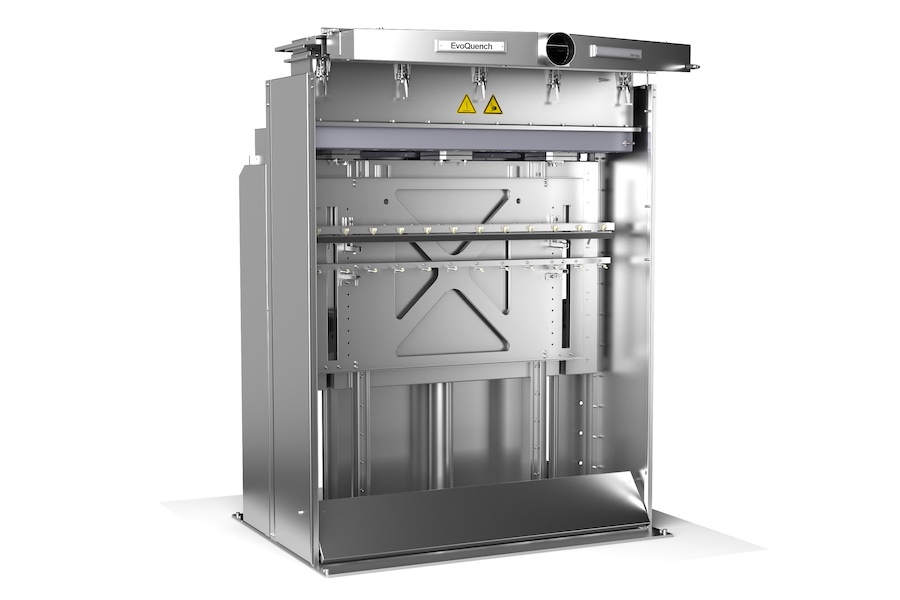
First PA66 spinning plant with EvoQuench successfully commissioned

With the successful commissioning of a multi-digit PA66 spinning line for microfiber yarns, Chinese textile company Shandong Nanshan Fashion Technology Co., Ltd. has added yarn production to its textile value chain.

#Knitting & Hosiery

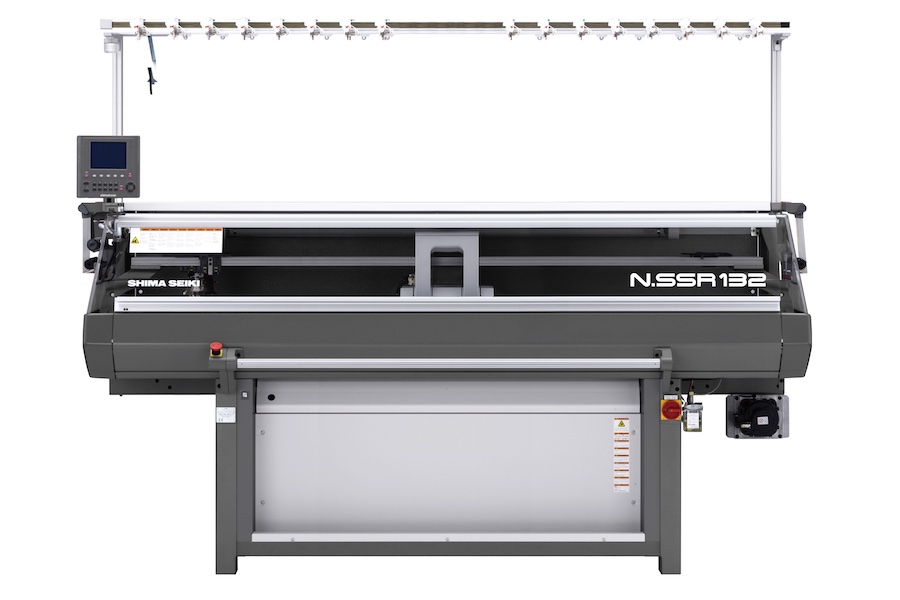
SHIMA SEIKI returns to ShanghaiTex

Leading flat knitting solutions provider SHIMA SEIKI MFG., LTD. of Wakayama, Japan, together with its Hong Kong and Chinese market subsidiary SHIMA SEIKI (HONG KONG) LTD., will exhibit at the ShanghaiTex 2025 exhibition (Booth No.: Hall N3, Booth A20) held in Shanghai, China this month. This marks the return of SHIMA SEIKI to ShanghaiTex after a 14-year hiatus, its last exhibit at the show having been in 2011.

#Research & Development

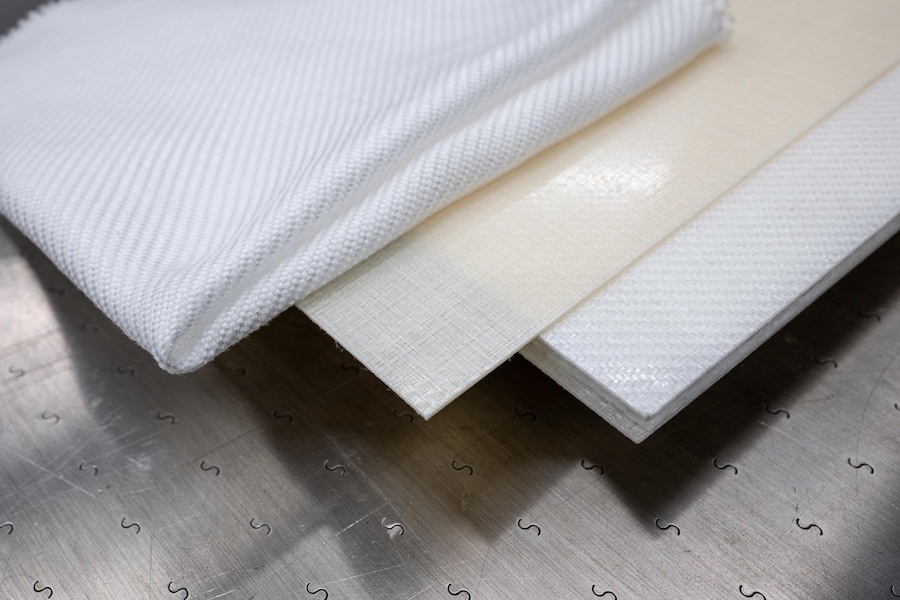
Fraunhofer CCPE presents the “Monomaterial Design Set” – Innovative solutions for circular product design

Composite materials made from different types of plastic often extend the lifetime of products but make recycling more difficult in the circular economy. That is why Fraunhofer CCPE has developed the “Monomaterial Design Set”. This new approach helps to reduce the variety of plastics used in durable products and offers circular solutions for designers and product developers.

#Man-Made Fibers

arena introduces renewable LYCRA® EcoMade fiber in its latest swimwear collection

Italian swimwear specialist arena has unveiled a new collection that brings sustainability and performance even closer together. Launched on December 4, the line features swimsuits made from recycled nylon and renewable LYCRA® EcoMade fiber — the first time the bio-based spandex has been used commercially in swimwear.

TOP