[pageLogInLogOut]

#INDEX 23

INDEX™ : Sustainable nonwovens developments for Geneva
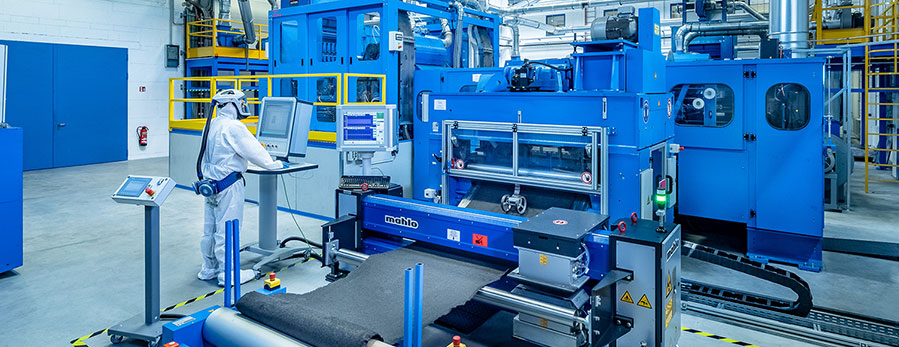
Center for lightweight textile construction © 2023 STFI
From April 18 to 21, INDEX™ 23 invites to Lake Geneva for the world's leading nonwovens fair. A trade fair team from the Saxon Textile Research Institute e.V. (STFI) will be on site to present news from nonwovens research at STFI. Among other things, a bio-based hygiene nonwoven, the recycling of high-performance fibers using the example of the VliesSMC project, an innovative hose liner system and water jet nonwovens made from recycled fibers will be on display. Meet our exhibition team at booth 1369 in Geneva.

Bio-based hygiene nonwoven: BioHyg

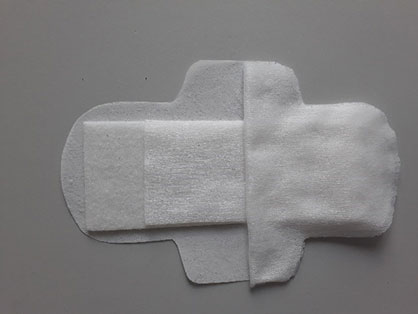
The starting point for the innovation was the search for a washable and thus reusable absorbent pad made from completely bio-based materials for applications in baby, feminine and incontinence hygiene. The focus was on two main requirements: fast and efficient liquid distribution and high absorbency to minimize rewetting and leakage. Both are guaranteed by special viscose fibers from Kelheim Fibres, which have been making this essential contribution in absorbent hygiene products such as tampons for many years.
© 2023 STFI
© 2023 STFI


Here, the advantages of nonwovens in combination with special viscose fibers in terms of absorptive capacity (through, for example, more open-pored structures) have been perfectly transferred from the petrochemical- to the world of biobased fiber materials. For reusable products, however, there is another challenge to overcome: they must remain stable during washing and over several cycles of use. To ensure this, an innovative nonwoven construction was developed at the Saxon Textile Research Institute (Sächsisches Textilforschungsinstitut e.V.). The developed nonwovens close the technological gap between sufficient dimensional stability and as little fiber damage as possible due to the bonding mechanisms. The developed nonwoven layers can be used as a stand-alone solution as a single-use product with bio-based materials or integrated into a washable composite structure, such as the diaper from start-up Sumo. In the Sumo cloth diaper, the absorbent pad's fluid management sets new standards. The new solution combines the worlds of hygiene and sustainability and provides proof that high-performance reusable absorbent products can be developed without fossil materials.

The research collaboration between STFI, Kelheim Fibres GmbH and Sumo GmbH received the 2022 Techtextil Innovation Award in the "New Concept" category for the development of a bio-based hygiene nonwoven - a good example of how research and industry are breaking new ground in sustainability through collaboration in an open innovation approach.


Recycling of high performance fibers: VliesSMC

STFI will be showing innovations in the recycling of high-performance fibers at INDEX™ 23. On display will be a battery housing developed jointly with the research partner Fraunhofer ICT, Pfinztal. Detailed investigations into the use of recycled carbon fibers in the SMC process chain were carried out at STFI, Chemnitz. To this end, nonwovens were first developed that enable the recycled carbon fibers to be fed into the SMC plant.

The SMC semi-finished products produced could then be processed by both molding and impact extrusion.

Comparison with conventional SMC products showed that comparable characteristic values could be achieved with a lower fiber volume content. Developments in the field of renewable raw materials in combination with bio-based resin systems also offer forward-looking materials.Further project information: VliesSMC

Innovative hose liner system

The aim of the research project was to develop an improved pipe liner system for trenchless pipe rehabilitation.

In particular, the force absorption in the longitudinal direction, the bendability without wrinkling were improved and the use of material as well as the pore volume of the textiles were optimized for the best possible impregnation with resin. The project included nonwoven development, coating of the liners and the use of UV-curable resins for curing. At INDEX™ 23, STFI will present a demonstrator showing a nonwoven-based pipe liner with coating, which in turn was impregnated with a UV-curable resin and cured using UV LED lamps. (49MF200100)

From recycled fibers to water-jet nonwovens

At INDEXTM 23, STFI will be exhibiting nonwoven structures that have been bonded by the waterjet process or stitch-bonding technologies after mechanical recycling by means of a tearing machine. The nonwovens are characterized by their soft feel and unique appearance. Whether wet-strength wipes, classic knitted pile fiber nonwovens with cushioning and insulating properties or sustainable needle-punched nonwovens; by using torn fibers in combination with established nonwoven formation processes, new applications for used textiles are found at STFI and material cycles are closed.

We would like to discuss with you the possibility of joint research projects and suitable funding programs. Have we aroused your interest? We are looking forward to exciting discussions with you. Visit us at the INDEX™23 at booth 1369.
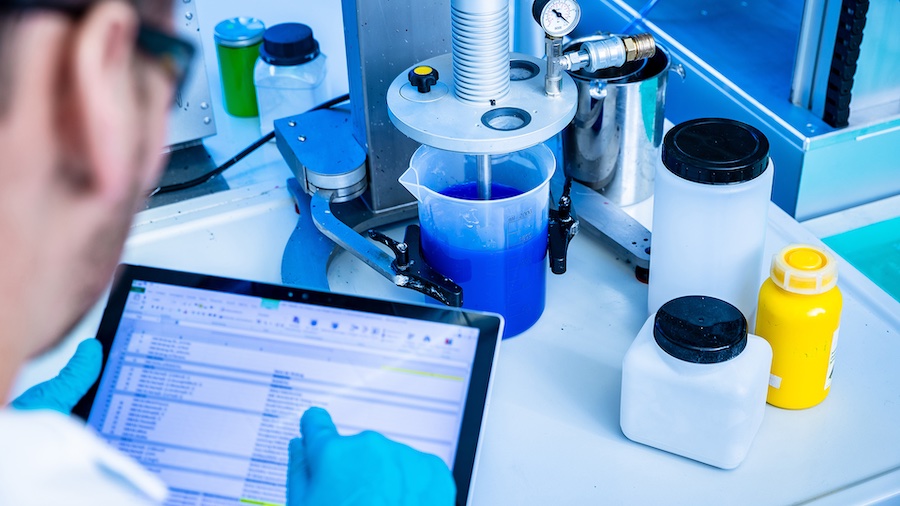
More News from Sächsisches Textilforschungsinstitut e.V. (STFI)

#INDEX 2026

STFI highlights textile circular economy and alternative fibres at INDEX™ 2026

From 19 to 22 May 2026, INDEX will invite visitors to Lake Geneva for the world's leading nonwovens trade fair. The Centre of Excellence in Nonwovens at the Sächsisches Textilforschung- sinstitut e.V. (STFI) will be in attendance to present the latest developments in nonwovens research. In the field of the textile circular economy, the STFI will present acoustically effective nonwovens made from chemical recycling residues. The range also includes innovations aimed at replacing conventional raw materials, such as the biobased and biodegradable polymer polybutylene succinate (PBS) and Kendyr as an alternative to cotton.

#Research & Development

Regional hemp bast for lightweight construction profiles

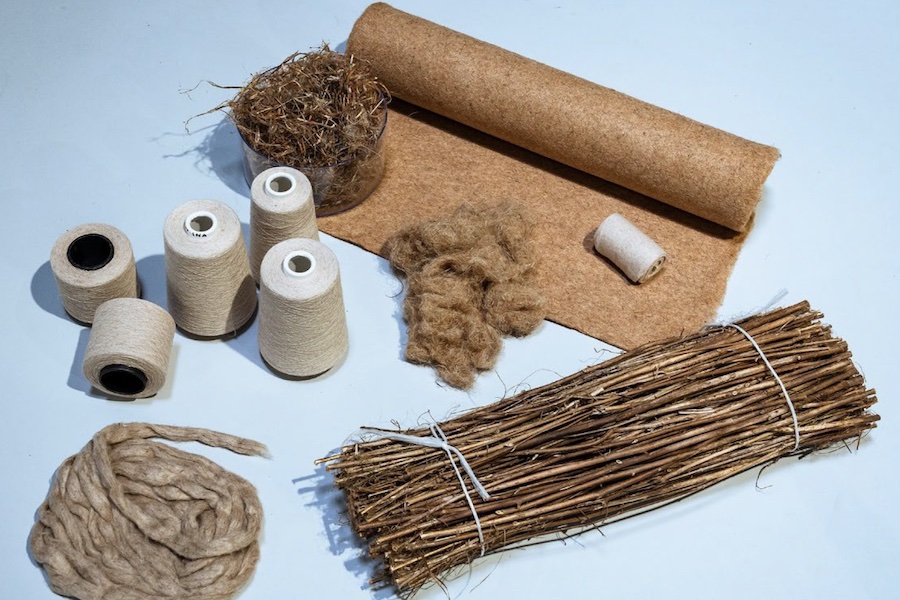
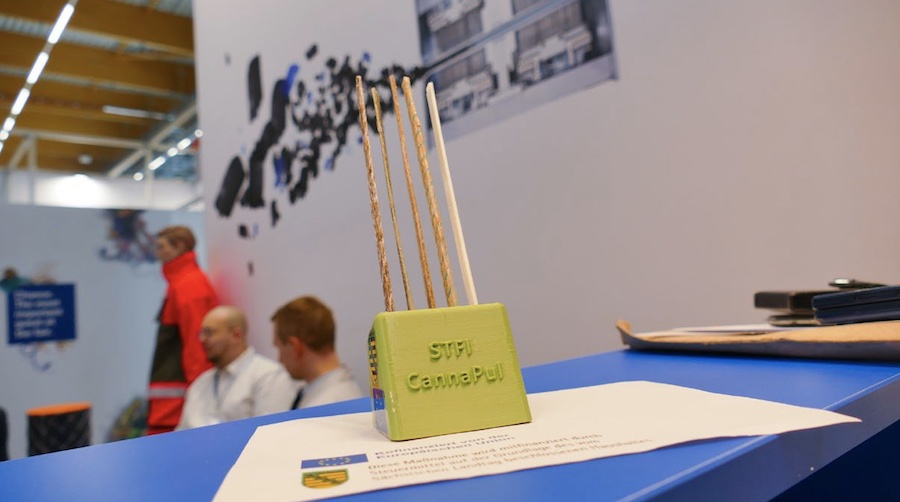
The cultivation of fibre hemp for the production of ropes and clothing has a long tradition in Saxony. Due to its excellent fibre properties, it is also suitable as a renewable raw material for reinforcement in fibre composites. At the STFI and IWU in Chemnitz, the CannaPul project is cur- rently investigating how a regional value chain for hemp-based lightweight construction profiles can be established. To this end, the technical processing of hemp fibres into continuous fibre strands and their embedding in a suitable bio-based matrix are being investigated.

#Techtextil 2026

STFI presents concepts for the textile circular economy and solutions for a healthy and safe life at Techtextil

Sächsisches Textilforschungsinstitut e.V. (STFI) has been supporting companies in developing marketable innovations for over 30 years. With a clear focus on sustainability, the environment, health and protection, the STFI offers future-oriented research, textile testing for tailor-made solutions and certification of per- sonal protective equipment. At Techtextil 2026, the institute will present ideas for the textile circular econ- omy and showcase solutions for healthy and safe living.

#Composites

STFI at JEC

The Sächsisches Textilforschungsinstitut e.V. (STFI) will present composites for aviation made from recycled carbon fibres and natural fibres, as well as printed lightweight elements for surface heating in electric vehicles at JEC World in Paris.

More News on INDEX 23

Latest News

#Spinning

Ibrahim Fibres and Trützschler: A strong partnership enters its next phase with the TC 30Si

For more than two decades, Ibrahim Fibres and Trützschler have grown side by side, driven by a shared ambition to continuously improve spinning performance, strengthen technology leadership and set new benchmarks in the textile industry. Today, Ibrahim Fibres is a leading yarn and polyester staple fiber manufacturer in Pakistan. The company operates the largest number of Trützschler cards in the country, with more than 200 machines running across its mills in Faisalabad, and plays an important role in one of Asia’s largest textile industries.

#Digital Printing

USColorworks expands digital platform with Kornit Atlas MATRIX and Atlas MAX PLUS solutions

Kornit Digital Ltd. (NASDAQ: KRNT), a global pioneer in sustainable, on-demand digital fashion and textile production, today announced that USColorworks, a North Carolina-based apparel decoration and fulfillment company specializing in custom and on-demand printing for retail and promotional markets, has expanded its Kornit digital production platform with the addition of Atlas MATRIX and Atlas MAX PLUS systems to deliver high-quality, on-demand apparel across cotton, blended fabrics and polyester.

#Functional Fabrics

CovationBio introduces two new bio-based innovations at Functional Fabric Fair New York

Covation Biomaterials LLC (“CovationBio®”) is showcasing its two new bio-based innovations, Xatryx® and Sorona® elasterell-p fiber, at this year’s Functional Fabric Fair in New York City, July 7–9, 2026. Attendees can visit CovationBio at Booth #404 to explore this next generation of bio-based performance materials.

#Research & Development

Geotextiles made from recycled materials: GREEN leads the way into the industry

For the industry, recycled materials are creating new opportunities in geotextile production. In the GREEN project, the Fraunhofer Cluster of Excellence Circular Plastics Economy CCPE demonstrates that recycled polypro-pylene (PP), polyethylene terephthalate (PET), and high-density polyeth-ylene (HDPE) can be processed into nonwovens, fibers, and membranes that meet industrial requirements. This creates opportunities for use in existing production lines and new value chains in the geotextile market.

TOP