[pageLogInLogOut]

#Research & Development

Tested pet supplies
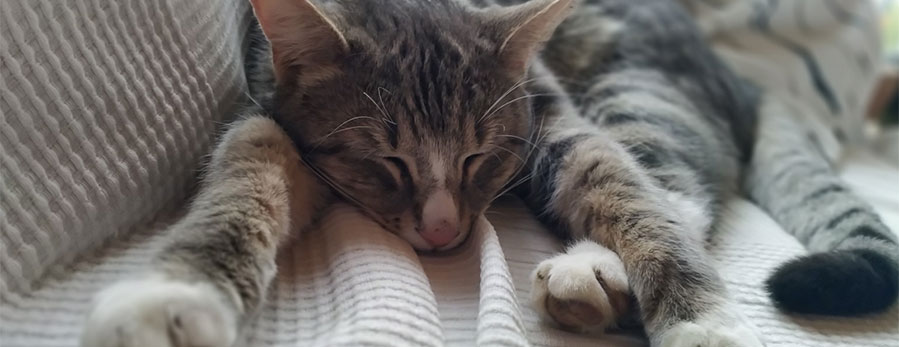
For many of us, our animal companions count as full members of the family and are cared for accordingly. © Hohenstein
To ensure that pets are also well equipped in terms of product safety, quality and durability of their cuddly blankets, cushions or favorite toys, the textile testing service provider Hohenstein has established its quality label for tested pet supplies. After all, the number of pets in private households is growing every year, and for many of us, our animal roommates count as full members of the family and are cared for accordingly.

Hohenstein quality label ensures animal trust

The label is explicitly designed for textile products such as blankets or pillows for sleeping areas, dog clothing, mats or even horse blankets. It provides consumers with clear product information on product safety, quality and durability, and also offers home/pets and their owners security against unwanted residues of chemical substances. Beyond its standard physical tests, the quality label can be flexibly extended: depending on the intended use, product properties such as chew resistance, scratch resistance, outdoor suitability, water repellence, waterproofness or air permeability play a major role in ensuring that pets feel completely comfortable. 
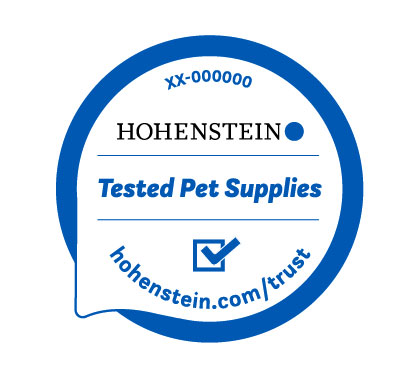
A Hohenstein quality label allows consumers to quickly and conveniently check a product's advertised properties and functions. © Hohenstein


The Hohenstein quality label Tested Pet Supply is an independent proof of quality and joins the ranks of the existing Hohenstein quality labels. These have long been highly credible and have a high recognition value in the trade and among consumers.
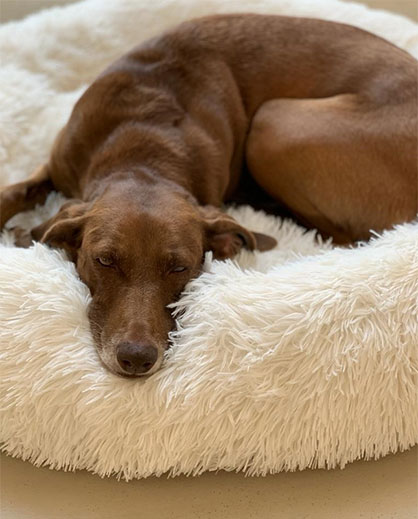
To ensure that our pets are also well equipped in terms of product safety, quality and durability of their cuddly blankets, cushions or favorite toys, the textile testing service provider Hohenstein has established the Hohenstein Quality Label for Tested Pet Supply. © Hohenstein


Detailed information can be found at:

https://www.hohenstein.com/en/trust.



More News from Hohenstein Institute

#Textiles & Apparel / Garment

Global size study for brands and retailers to optimize fit and market coverage

Hohenstein Apparel Fit Solutions, a global leader in apparel fit, sizing, and product development, today announces the launch of its Global Size Study, a new initiative designed to equip brands to better understand and serve their target consumers through more accurate, market-relevant sizing.

#Sustainability

A new standard to combat plastic waste in forests

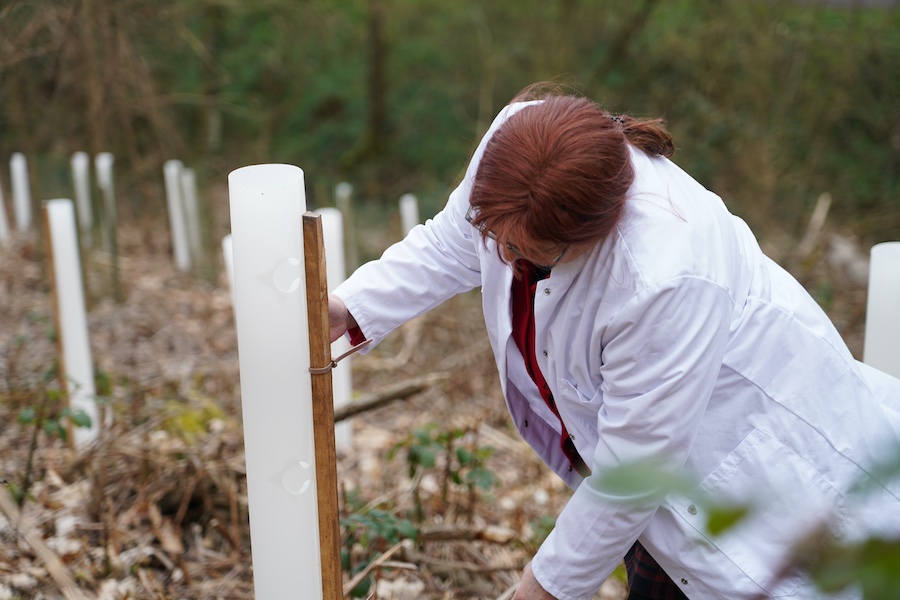
With DIN SPEC 35808 “Tree Shelter for Forestry Applications,” the testing and research service provider Hohenstein, in collaboration with Rottenburg University of Forestry, as well as forestry authorities and industry partners, has established a clear framework for bio-based and fully biodegradable tree shelters. The pre-standard defines requirements and practical testing methods designed to reduce plastic waste in forests and strengthen the long-term protection of soil and the environment.

#Research & Development

Hohenstein publishes 2025 Sustainability Report

The testing and research service provider Hohenstein has published its latest sustainability report, outlining key progress and strategic initiatives. The report focuses on ambitious CO₂ reduction targets, the company’s new mission statement and the systematic expansion of sustainable services for customers worldwide.

#Research & Development

New DIN SPEC assesses environmental impact of textile fragments in soil

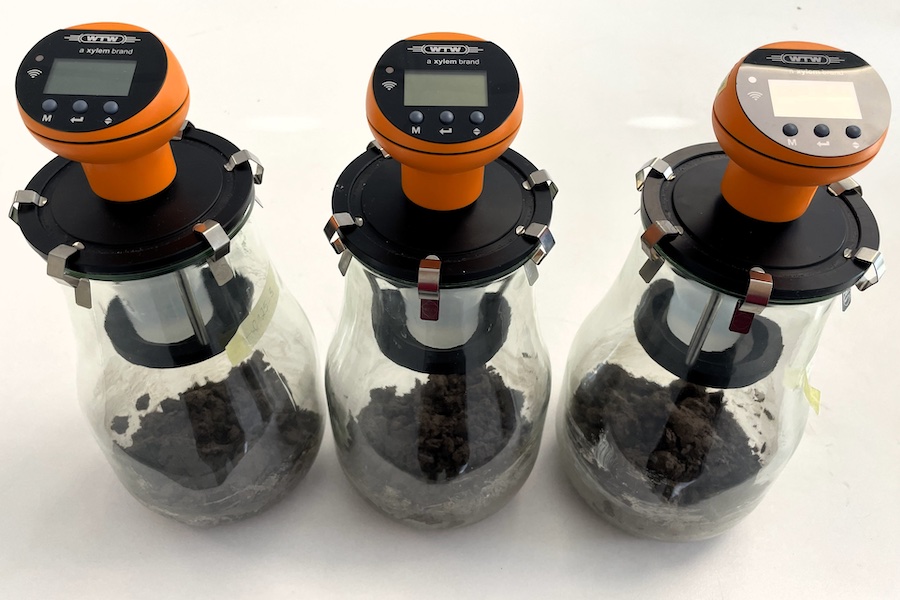
Textile products made from synthetic fibres, finished fabrics or dyed materials release fibre fragments into the environment at every stage of their life cycle. With the new DIN SPEC 19296, Hohenstein has developed a standardised testing method to analyse how these fragments behave in soil under natural conditions. Until now, little was known about their environmental behaviour or potential ecological effects once released.

More News on Research & Development

#Research & Development

MELANGE starts with a co-creative design workshop at Aalto University to shape the visual identity of this new project transforming colouration in textiles

Over the next three years, MELANGE will lower the environmental impact of interior textile production by moving colour design to the beginning of the manufacturing process. This Horizon Europe project officially started on 1 August 2026, and will be publicly launched on 27 August 2026.

#Research & Development

Outdoor Industry Association completes Clean Heat CoLab initiative

The Outdoor Industry Association (OIA) has completed its multi-year Clean Heat CoLab initiative, bringing together outdoor brands and technology experts to accelerate the adoption of electrified process heating in textile manufacturing. The collaboration focused on reducing emissions from thermal processes such as dyeing, washing and finishing, which remain among the most carbon-intensive stages of textile production.

#Research & Development

Europe is committed to recycling end-of-life wind turbine blades

Starting in 2026, Europe’s wind energy industry has committed itself to ensuring that wind turbine blades do not end up in landfills once they reach the end of their service life. The EU-funded research project REWIND is exploring ways to reuse this composite waste. The German Institutes of Textile and Fiber Research Denkendorf (DITF) are one of 13 project partners from seven countries.

#Research & Development

ADD-ITC 2026 publishes preliminary conference program

The organizers of the Aachen-Dresden-Denkendorf International Textile Conference (ADD-ITC) 2026 have released the preliminary program for this year's event, which will take place on November 26–27, 2026, at the International Congress Center Dresden. The conference is expected to attract between 500 and 700 participants from industry, research, and academia.

Latest News

#Raw Materials

Brazil sets new cotton export record and consolidates global leadership

Brazil ended the 2025/26 commercial year with a new record, consolidating its position as the world’s largest cotton exporter. Between August 2025 and July 2026, the country shipped 3,373,941 tonnes of the fiber, 19% more than in the previous cycle, and reached record revenue of US$5.3 billion. The result represents a milestone in Brazil’s expansion in the international market and reinforces the country’s role as a strategic supplier to the global textile industry.

#Raw Materials

Better Cotton Initiative partners with Avalo in AI plant breeding for climate-resilient cotton

The Better Cotton Initiative (BCI) has partnered with agriculture solutions company Avalo, whose platform accelerates the speed at which plants with key resiliency traits may be developed.

#Man-Made Fibers

The LYCRA Company expands its co-creation vision through an immersive Lifestyle District at Intertextile Shanghai.

The LYCRA Company, a global leader in fiber and technology solutions for the apparel industry, is reimagining the trade show experience at Intertextile Shanghai Apparel Fabrics Autumn Edition, which opened today in China. Building on the success of last year's ALL IN concept, the company has expanded its co-creation vision into a 356-square-meter Lifestyle District featuring partners Jingzili New Material, JYT Textile, Lianxingfa Knitting, and Trend Textile. The district is part of a larger 895-square-meter pavilion showcasing a total of 19 co-exhibitors. Together, they demonstrate how innovations in fiber, fabric, and garments can be combined to create compelling solutions for both work and play.

#Natural Fibers

Plastic-free stretch technologies drive new direction for denim innovation

As the denim industry looks for ways to reduce its reliance on synthetic fibres, plastic-free stretch technologies are gaining momentum. Developments based on mechanical fabric construction and natural rubber are demonstrating that comfort and stretch can be achieved without conventional elastane, supporting both recyclability and circular product design.

TOP