[pageLogInLogOut]

#Research & Development

75 years Hohenstein

Today, at its headquarters in Bönnigheim, Germany, Hohenstein has expanded as a versatile service provider beyond the castle with modern lab buildings. © Hohenstein
Textile testing and research partner Hohenstein has reason to celebrate: this year marks the company’s 75th anniversary. Now in its third generation of family ownership, the company will spend this landmark year expanding its foundation for the future. Owner Prof. Dr. Stefan Mecheels is proud: "Our motto, We live textiles, expresses exactly what has made us special for many decades - our collective enthusiasm for textiles and the opportunity to provide solutions that make a difference in the world.”

Successful Roots

Prof. Dr.-Ing. Otto Mecheels laid the foundation for an internationally-renowned company in 1946 when he founded the Hohenstein Institutes, a textile school in Hohenstein Castle. His son, Prof. Dr. rer. nat. Jürgen Mecheels modernized the Hohenstein Group’s business structures and expanded into new research and service areas such as textile finishing or professional laundries/dry cleaning. He helped to forever change textile safety with the STANDARD 100 by OEKO-TEX® certification system that protects consumers from harmful substances. Under Prof. Dr. Stefan Mecheels’ leadership since 1995, Hohenstein has been at the forefront of microfiber analysis, consistently perfected its created standards for comfort and compression testing and worked to reduce the industry’s ecological impact. Last but not least, the testing laboratory in Hong Kong, which has been in operation since 2011, and the Hohenstein textile testing laboratories in Bangladesh and India, which were opened in 2018, ensure even greater market proximity. 
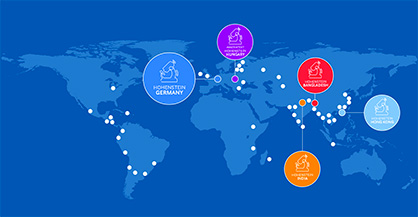
With over 1,000 employees at its headquarters in Bönnigheim and in more than 40 branch offices, contact offices and laboratories worldwide, Hohenstein conquers the current global challenges of the textile world. © Hohenstein


Solutions for the Global Textile Industry 

Today, Hohenstein specializes in the testing, certification and research of all kinds of textile-related products. With a total of more than 1,000 employees at its headquarters in Bönnigheim and in more than 40 branches, contact offices and laboratories worldwide, the company faces the current challenges of the global industry. 

"Textile sustainability remains a major focus for us and is woven through every decision we make," explains Stefan Mecheels. “Even services that are seemingly focused on innovation contribute somehow to longer lasting products, less waste and more safety. Our Digital Fitting Lab helps brands leap forward with digitized apparel development. Using modern 3D and 4D technologies and our traditional fit and pattern expertise, we help our clients design better fitting clothes with fewer prototypes and less waste.”
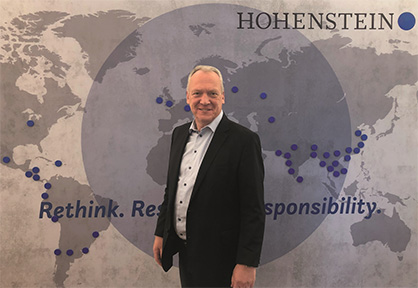
Prof. Dr. Stefan Mecheels, third-generation owner of the family-run company, has good reason to celebrate: This year marks the 75th anniversary of the company. © Hohenstein


When SARS-CoV-2 struck, the company developed a quality label to easily identify non-medical, community masks that meet legal and functional requirements. The Hohenstein Quality Labels are independent proof with a high level of credibility among buyers and consumers.

Anniversary

Among the celebrations, Hohenstein plans to hold a mid-year press conference with regional and industry journalists. "We are celebrating this anniversary because we have succeeded in constantly adapting to the market and use our applied research to anticipate developments. For this I would first like to thank our employees, who, in keeping with the motto We live textiles, put their hearts and souls into their work. A very special thanks also goes to our customers, some of whom have been placing their trust in us for decades," says Stefan Mecheels, adding "I am convinced that we are positioned to continue our contribution in the future.

Detailed information about the work of Hohenstein can be found at www.hohenstein.com. The Hohenstein video at www.hohenstein.com/en/about-hohenstein/ shows how textile expertise is brought to the point.
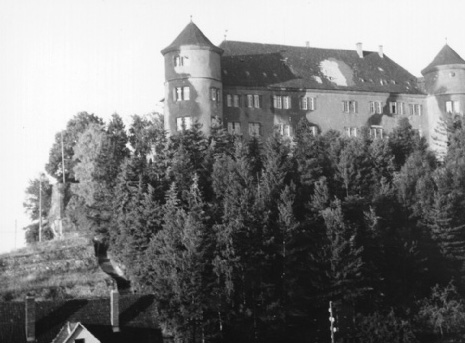

This photograph from spring 1946 shows Hohenstein Castle with camouflage paint and damage caused by shell impacts. © Hohenstein


More News from Hohenstein Institute

#Sustainability

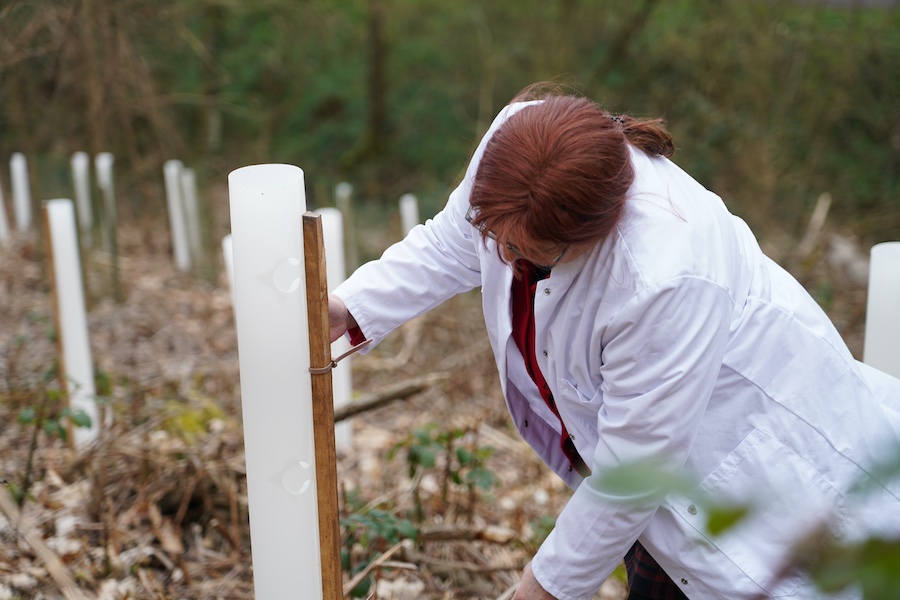
A new standard to combat plastic waste in forests

With DIN SPEC 35808 “Tree Shelter for Forestry Applications,” the testing and research service provider Hohenstein, in collaboration with Rottenburg University of Forestry, as well as forestry authorities and industry partners, has established a clear framework for bio-based and fully biodegradable tree shelters. The pre-standard defines requirements and practical testing methods designed to reduce plastic waste in forests and strengthen the long-term protection of soil and the environment.

#Research & Development

Hohenstein publishes 2025 Sustainability Report

The testing and research service provider Hohenstein has published its latest sustainability report, outlining key progress and strategic initiatives. The report focuses on ambitious CO₂ reduction targets, the company’s new mission statement and the systematic expansion of sustainable services for customers worldwide.

#Research & Development

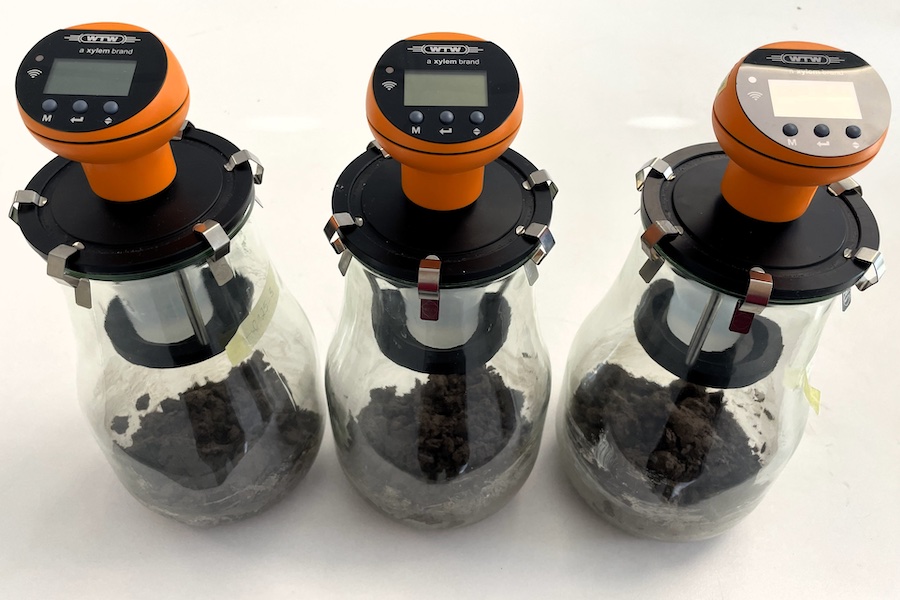
New DIN SPEC assesses environmental impact of textile fragments in soil

Textile products made from synthetic fibres, finished fabrics or dyed materials release fibre fragments into the environment at every stage of their life cycle. With the new DIN SPEC 19296, Hohenstein has developed a standardised testing method to analyse how these fragments behave in soil under natural conditions. Until now, little was known about their environmental behaviour or potential ecological effects once released.

#Research & Development

Testing and research laboratory ensures safe and more sustainable products worldwide

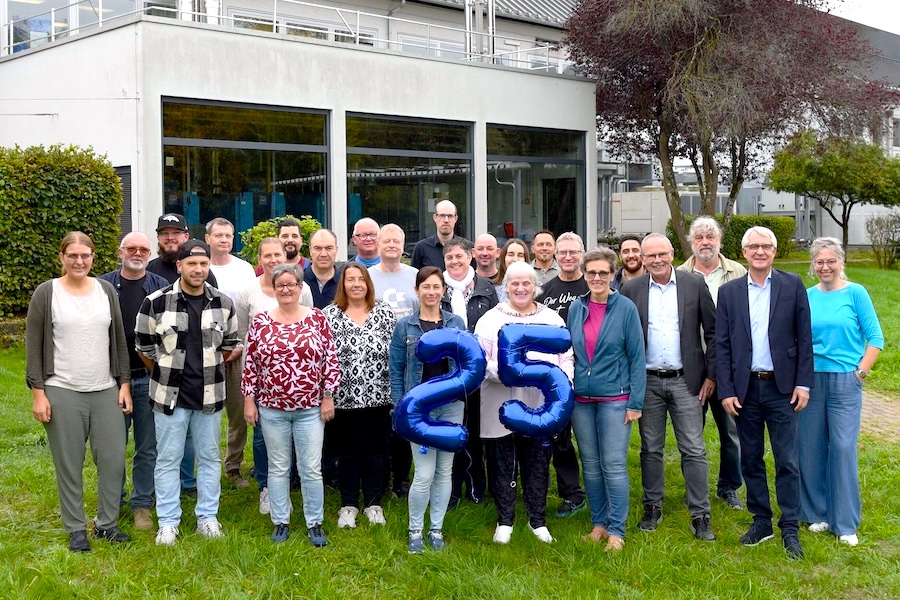
For 80 years, Hohenstein has stood for independent testing, scientific expertise and practical solutions. Today, the testing and research service provider supports manufacturers and brands worldwide in making textiles, hardlines and medical devices safe, more sustainable and market-ready – thereby building trust among consumers. With an international presence and interdisciplinary expertise, Hohenstein supports its customers from production through to market launch, helping them navigate an environment of growing regulatory and societal demands.

More News on Research & Development

#Research & Development

Textile climate control system in workwear – exhibition at the 2026 SME Innovation Day!

Conventional protective workwear often reaches its limits during strenuous physical activity. In particular, the transport of sweat and excess body heat poses a problem. The German Institutes of Textile and Fiber Research (DITF) conducted research on flow-optimized, air-conducting textile structures that enable targeted climate control directly on the body. These structures can be integrated straight into protective work garments. The textile climate control system supports the body’s natural thermoregulation. This contributes to improved workplace safety and comfort.

#Research & Development

Elastic yarns to become more recyclable and environmentally friendly in future

On 29 April 2026, ITA student Tobias Dickmeiß was awarded a sponsorship prize by the Wilhelm Lorch-Stiftung for his innovative approach, to replacing conventional elastane with elastic yarns made from thermoplastic copolyester elastomers (TPC). Thanks to their thermoplastic nature and compatibility with typical polyesters used in the textile industry, elastic TPC yarns offer improved recyclability. Furthermore, the use of the melt-spinning process in yarn production eliminates the need for solvents that are harmful to the environment and human health.

#Research & Development

Walter Reiners Foundation Prize awarded to three ITA graduates

Sabina Dann, Lukas Balon and Annegret Storm from the Institut für Textiltechnik (ITA) of RWTH Aachen University were awarded the Walter Reiners Foundation Prize by the German Engineering Federation (VDMA) for their master’s and bachelor’s theses. Peter Dornier, Chairman of the Walter Reiners Foundation, presented the awards during Techtextil at the VDMA stand in Frankfurt am Main, Germany.

#Techtextil 2026

Young talents honoured – 60 years Walter Reiners Foundation

At the Techtextil trade fair in Frankfurt at the end of April, Peter D. Dornier, chairman of the VDMA’s Walter Reiners Foundation, presented awards to five successful young engineers. Promotion and sustainability awards were presented in the categories of bachelor’s/project theses and diploma/master’s theses. Academic theses are eligible for the sustainability awards if, for example, they develop solutions for resource-efficient products and technologies.

Latest News

#INDEX 2026

“We clearly see that reliability, flexibility, service and total cost of ownership are becoming increasingly important again.”

The nonwovens industry continues to face a challenging market environment. Nevertheless, AUTEFA Solutions reports successful projects, new line sales and growing demand for energy-efficient and flexible solutions. In this interview, André Imhof of AUTEFA Solutions talks about competitiveness against Chinese suppliers, new service and recycling concepts, the growing importance of application development and the opportunities created by countercyclical investments.

#INDEX 2026

“Needle punching technology is more universal and sustainable than ever!”

Needle punching technology was long regarded as a rather traditional and comparatively slow technology within the nonwovens industry. In this interview, Johann Philipp Dilo explains why needle punching is more relevant than ever today – ranging from energy efficiency and resource conservation to hygiene applications, new machine concepts and design-oriented nonwoven solutions.

#Nonwovens

PET spunbond from China – EDANA welcomes imposition of provisional anti-dumping measures

On 13 May 2026, after eight months of investigation, the European Commission imposed provisional anti-dumping duties of 45.6-50.0% on imports of PET spunbond from China. EDANA welcomes this expression of the Commission’s clear determination to protect EU industries from the unfair trade practices of Chinese producers.

#INDEX 2026

ANDRITZ at INDEX ’26: Driving sustainability with next-generation nonwoven technologies

From May 19-22, ANDRITZ Nonwoven & Textile is presenting its innovative solutions for the nonwoven & textile industry in Geneva, Switzerland. ANDRITZ will focus on technologies for sustainable and durable nonwovens, converting, sustainable fiber processes, textile recycling, and life-cycle services on booth 2114 in hall 02.

TOP