[pageLogInLogOut]

#Recycling / Circular Economy

Spinnova and Renewcell announce cooperation to scale circular fashion
© 2023 Spinnova
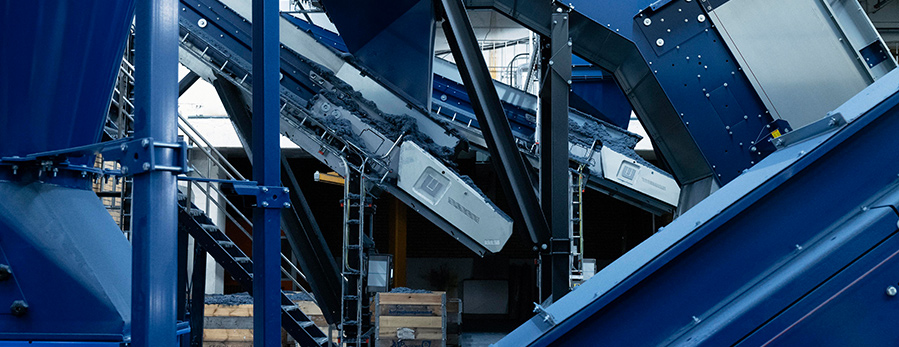
Spinnova, the sustainable textile material company, partners with Swedish textile recycling innovator Renewcell to develop and promote a concept to commercialise and scale textile waste-based fibre. The collaboration is the first of its kind, where textile waste-based fibre can be spun into new fibre without harmful chemicals. The first consumer products from this new textile fibre are estimated to be available by the end of 2024.

Award-winning circular innovation companies Spinnova and Renewcell have announced their cooperation to introduce a technology concept for scaling the production of next-generation textile fibre from textile waste. The new fibre production concept combines patented technology from both companies and advances the circularity in the fashion and textile industries. 

© 2023 Spinnova
© 2023 Spinnova


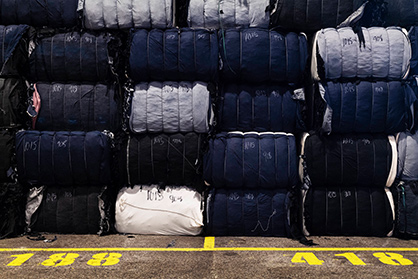
Pioneering a circular economy in the fashion industry, Renewcell recycles cellulosic-rich textile waste such as cotton and viscose using a patented process, which transforms textile waste into a pulp product called CIRCULOSE®. This biodegradable raw material is produced from 100% recycled textiles and can be used to create new fibre. Until now, CIRCULOSE® has been used to create man-made cellulosic fibres, such as viscose. With Spinnova’s transformative technology, the partners can turn CIRCULOSE® into a new, biobased textile fibre without any harmful chemicals in the fibre spinning process. This is a remarkable step towards addressing the industry’s growing textile waste problem, while setting new standards for sustainable textile fibre production.  

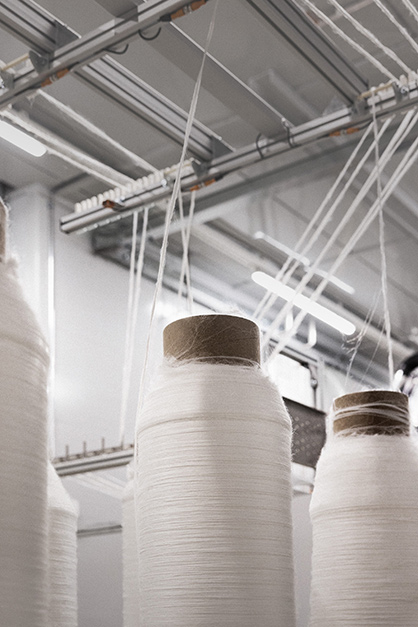
Spinnova has already made successful trials spinning the CIRCULOSE® pulp into new textile fibre. The first batches of SPINNOVA® fibre made with 100 % CIRCULOSE® have been produced for yarn and fabric development, and the first prototypes are made from a blend of cotton and SPINNOVA® fibre made with CIRCULOSE®.  


"The fashion and textile industry needs new solutions and collaboration across its supply chain, which makes this such an exciting partnership for us. Our goal is to accelerate the fashion industry’s transition to a circular economy and explore options to scale textile-to-textile fibre production. Developing our partnership with the skilled Renewcell team has been a great pleasure and the first tests combining Renewcell’s material and Spinnova’s technology have been very promising," says Ben Selby, Spinnova’s Deputy CEO. 
© 2023 Spinnova
© 2023 Spinnova


"The textile industry is in the middle of a massive change, when moving from a linear business model to a circular economy. Change requires new partnerships and brave, innovative players. Learning more about Spinnova’s technology has been really exciting and we can't wait to launch the first collection made from CIRCULOSE® using Spinnova’s unique fibre spinning technology," continues Patrik Lundström, CEO at Renewcell. 
© 2023 Spinnova
© 2023 Spinnova


The companies are currently assessing options to start scaling textile-to-textile fibre production with potential partners and expect to start developing the first consumer collection made from CIRCULOSE®-based SPINNOVA® fibre. The first consumer products are estimated to enter the global market at the end of 2024. 


More News from TEXDATA International

#Texprocess 2026

Texprocess 2026: Automation, digitalisation and AI redefine textile processing

Making investment decisions in textile processing has become significantly more demanding. Increasing energy costs, a shortage of skilled labour and ongoing geopolitical uncertainties are compelling companies to focus on technologies that deliver clear gains in efficiency and process reliability. This applies equally to apparel manufacturing and to the processing of technical textiles and high-performance materials. As a result, modernisation initiatives are assessed more carefully – even as the need to upgrade production systems continues to intensify.

#Techtextil 2026

Techtextil 2026: Between innovation pressure & market reality

From 21 to 24 April 2026, Techtextil in Frankfurt am Main will once again become the central meeting point for the international technical textiles and nonwovens industry. Running in parallel, Texprocess will focus on the industrial implementation of textile processing technologies as the leading platform in this field. Together, the two trade fairs form a closely integrated presentation and working platform along the entire textile value chain – from material development to finished applications.

#Techtextil 2026

Between geopolitical pressure and industrial resilience

In this interview, Dr. Janpeter Horn (VDMA) discusses the current challenges facing textile machinery manufacturers, shaped by geopolitical tensions, regulatory developments and subdued investment. He also outlines why innovation strength, integrated solutions and strategic positioning remain key to global competitiveness.

#Texprocess 2026

Between investment restraint and modernization pressure

Texprocess 2026 takes place in a complex market environment shaped by uncertainty and innovation pressure. In this interview, Elgar Straub (VDMA) explains why the trade fair is particularly relevant this year and which technologies are driving efficiency and competitiveness.

More News on Recycling / Circular Economy

#Recycling / Circular Economy

Efficient recycling of textile PET

At the upcoming Plastics Recycling Show Europe in Amsterdam on May 5–6, BB Engineering will present its portfolio of PET recycling technologies. The German machinery manufacturer will once again focus on textile recycling and melt filtration.

#Recycled Fibers

Circulose and CTA announce collaboration to enable lyocell fibers using CIRCULOSE® pulp

Circulose has announced an agreement with China Textile Academy Green Fibre (CTA) to offer lyocell fibers produced using CIRCULOSE® pulp. Producing lyocell from recycled pulp at commercial scale is an important step in making textile-to-textile recycled materials available across a wider range of textile applications.

#Recycling / Circular Economy

Solving the Feedstock Gap: Unlocking Post-consumer Feedstocks for Textile-to-Textile Recycling in Europe

Fashion for Good launches Project FAE (Feedstock Activation Europe) to develop the sorting and pre-processing infrastructure needed to channel non-rewearable post-consumer textiles into textile-to-textile (T2T) recycling at scale. The project is a practical response to one of the most pressing problems in textile circularity: making post-consumer waste a viable, commercially competitive raw material for recyclers.

#Techtextil 2026

BASF at Techtextil 2026: Helping to shape the future of the textile industry with tangible solutions

At the leading international trade fair for technical textiles and nonwovens from April 21 to 24, 2026 at the Messe Frankfurt, BASF will present numerous solutions and new projects in the textile sector to customers and partners at booth B 68 in hall 11.0. The focus is on product innovations and future-oriented technologies.

Latest News

#Techtextil 2026

Techtextil 2026: KARL MAYER impresses as an innovative sector partner

KARL MAYER looks back with satisfaction on its participation in Techtextil 2026. From April 21 to 24, the international industry leader used the trade show in Frankfurt to meet with numerous key customers at its booth and, at the same time, establish many new contacts. Most visitors came from Germany, followed by major markets such as Poland, the United Kingdom, Turkey, France, and Portugal.

#Associations

BTMA backs global growth while investing in future UK leaders

As one of a number of new initiatives launched this year, the British Textile Machinery Association (BTMA) is launching the UK-India Textile Machinery Coalition. The UK-India Free Trade Agreement, signed in July 2025, has implications that extend across sourcing, competitiveness and long-term trade dynamics, believes BTMA CEO Jason Kent.

#Raw Materials

China projected to increase cotton production, yields, and imports in 2026/27

World cotton production in the 2026/27 season is projected at 25.9 million tonnes, exceeding global consumption of 25.2 million tonnes, according to the May 2026 issue of Cotton This Month. That means both production and consumption are expected to remain close to current season levels, while global cotton trade is projected to decline by 2.7% to approximately 9.6-9.7 million tonnes.

#Raw Materials

ICAC launches Carbon Credits Initiative to deliver new income streams to cotton farmers

The International Cotton Advisory Committee (ICAC) has announced a new initiative designed to unlock additional income streams for cotton farmers through participation in carbon credit markets, linking sustainable production practices directly to financial returns.

TOP