[pageLogInLogOut]

#Recycling / Circular Economy

A new 100% recycled fabric developed through the circular textile supply chain
© 2022 Marchi & Fildi
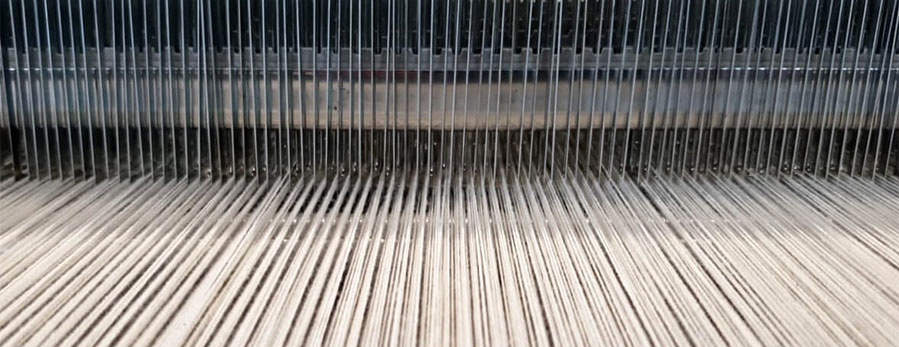
TEXAID, a leading company in the collecting, sorting, reselling and recycling of post-consumer textile waste, included Marchi & Fildi in an international team with several companies active at different stages of the circular textile production chain with the goal to develop a fabric representing a model of development that could be repeatable also for different projects.

Marchi & Fildi, through its know-how about the recycling of fibers and several experiences with the ECOTEC® process in this field, has participated in several projects led by TEXAID, to provide important added value to the development of a specific supply chain dedicated to textile recycling. For decades, Texaid has been leading with textile waste. In particular, they are protagonist of the current discussion, focused on the importance of moving from the traditional management of post-consumer textile waste.
© 2022 Marchi & Fildi


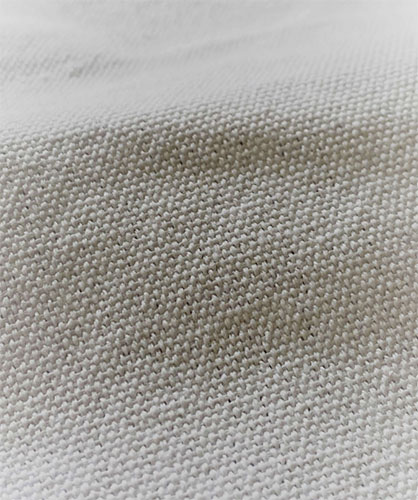
This specific project for the development of a “textile-to-textile” model has been based on post- consumer white cotton, collected and sorted by Texaid in Germany and Switzerland. Marchi & Fildi evaluated the possibility of developing a 100% recycled yarn for weaving, with 50% of post consumer recycled cotton by TEXAID blended with 50% with REPREVE® Our Ocean™, a premium collection of recycled performance fiber sourced from plastic bottles at high risk of entering the ocean. REPREVE® Our Ocean™ is manufactured by UNIFI, an industry innovator and global textile solutions provider.

This special blend has been developed and produced with the ECOTEC® technology, in the Biella facility of the Group, in line with the main mission of the ECOTEC® brand: giving a second life to material that otherwhise would be treated as waste. The yarn has been woven into a fabric by Tessitura Casoni.T.F.C., which is also located in the Biella area.

The result of this international supply chain represents the possibility to create high added value through the collaboration of strong and specialized partnership networks, together with the increased focus of European companies on the topic of circular economy, both for research and development and for production.
More News from TEXDATA International

#ITM 2026

ITM 2026: The new geography of textile production

New production hubs are emerging across North Africa and Central Asia, while Türkiye is accelerating its transformation toward higher-value, technology-driven and more sustainable textile manufacturing.

#Research & Development

“Production is a product”

From technical textiles and AI-driven robotics to the limitations of textile circularity: Professor Dr Thomas Gries looks back on more than two decades of development at ITA Aachen. In the interview, he explains why production technology remains a decisive success factor, discusses international collaborations and innovation ecosystems, and shares his views on the transformation of production landscapes and the challenges facing an increasingly regulated industry.

#Knitting & Hosiery

“We need to move away from the price trap and return to a value-driven mindset.”

With its new Textile Innovation Center, KARL MAYER is sending a strong signal for innovation, collaboration, and the future of textile applications. In this interview, Karl Josef Mayer discusses new opportunities in warp knitting, the processing of staple fibres, recycling, the changing role of machinery manufacturers, and why the textile industry must once again focus more strongly on the value of textiles. by Oliver Schmidt

#Associations

“Innovation, resilience and international experience remain the great strengths of the Swiss textile machinery industry”

Geopolitical uncertainty, growing competitive pressure from China, new free trade agreements and the shift towards a circular economy are currently reshaping the global textile industry. In this interview, Cornelia Buchwalder discusses the current mood within the Swiss textile machinery sector, the industry’s distinctive innovative strength, new market opportunities in India and Asia, and the technological trends that could shape the upcoming trade fair cycle leading up to ITMA 2027.

More News on Recycling / Circular Economy

#Recycling / Circular Economy

Managed workwear services are providing a blueprint for the circular textile economy

Managed workwear service providers are demonstrating how commercial success and circularity can go hand in hand by extending garment lifespans through repair, laundering, reuse and recycling, according to “Managed workwear services—a circular textile economy ahead of the game”, a new 14‑page report from the global business information company Textiles Intelligence.

#Recycling / Circular Economy

Eco-design as the foundation of circular textiles

Based on the results of an extensive European analysis, the Erasmus+ project Skills4Circularity is currently developing three practice-based training modules covering recycling technologies, eco-design for the circular economy and sustainable manufacturing. This was preceded by a comprehensive company survey and a joint analysis conducted by the project partners under the leadership of IVGT. The results show that the greatest challenges lie not so much in a lack of technology as in skills gaps.

#Recycled Fibers

Usha Yarns secures growth equity investment from Fullerton Carbon Action Fund

Usha Yarns Limited (“Usha Yarns”), a producer of high-quality recycled yarns with advanced, well established production processes, announced a growth equity investment from the Fullerton Carbon Action Fund (“Fullerton”), a private equity strategy managed by Fullerton Fund Management that backs established mid-market companies across Emerging Asia to accelerate decarbonisation.

#Recycling / Circular Economy

German 'ZOLL' turns end-of-life uniforms into valuable raw materials

Together with CWS Workwear, the German Customs Administration is extending the life cycle of service uniforms through reuse, recycling and material recovery, demonstrating how circular economy principles can be successfully implemented in the public sector while delivering significant savings.

Latest News

#Weaving

More patterns, less effort: the MULTI-MATIC® at Rohleder

Rohleder is one of Europe’s most modern weaving mills. For over 80 years, the family-owned company has been developing and manufacturing premium fabrics for brands, retailers and private customers – 100% Made in Germany. This success is made possible by a consistent focus on design, quality, and functionality, as well as by continuous investment in state-of-the-art production facilities. Rohleder also relies on innovative technologies in warp preparation and has been collaborating with KARL MAYER for many years. As recently as 2023, a MULTI-MATIC® was delivered to the company’s headquarters in Konradsreuth.

#Nonwovens

BASF opens global diaper and superabsorbents performance lab in Mumbai

BASF has officially inaugurated its new Performance Lab for diapers and superabsorbents (SAP) in Mumbai on August 18, 2026, which will provide technical and application services to superabsorbent customers globally. The new lab of BASF’s Hygiene Solutions business has been established in less than a year and is part of BASF’s Innovation Campus Asia Pacific in Mumbai, BASF’s second largest R&D site in Asia Pacific established in 2017 under BASF Chemicals India Private Limited.

#Recycled Fibers

Naia™ from Eastman strengthens western hemisphere textile connections at Apparel Sourcing Show Guatemala

As brands and retailers explore more diversified and responsive sourcing networks, the Naia™ brand from Eastman is strengthening its engagement with the textile and apparel value chain across the western hemisphere. From August 18–20, the company will participate for the first time in Apparel Sourcing Show Guatemala, a regional meeting point for apparel sourcing, manufacturing and nearshoring.

#Man-Made Fibers

Dornbirn GFC 2026 expands conference program with new thematic sessions

For 65 years, Dornbirn GFC has stood for innovation and is one of the world’s leading conferences in the fiber industry. From September 16 to 18, 2026, the international fiber community will meet in Dornbirn, Austria, to discuss current trends, technological developments, and forward-looking solutions. More than 600 experts from industry and academia from over 30 countries are expected to attend. With around 100 presentations by renowned speakers, a 2,5-day conference program, and three parallel presentation rooms with moderated sessions, Dornbirn GFC provides a first-class platform for knowledge exchange, networking, and international collaboration. Together, participants will generate ideas and impulses that will sustainably shape the future of the global fiber industry.

TOP