[pageLogInLogOut]

#Recycling / Circular Economy

Schoeller Textil gives wear2wear update

wear2wear™ is an innovative industrial partnership dedicated to high-quality and sustainable clothing. Expert partners in Europe have come together to cover the entire recycling loop. On cutting-edge production systems, textile fibres from used clothing will be turned into functional fabrics. Schoeller Textil AG is supplying a holistic textile portfolio, Inspire, for the workwear area.

The sustainable wear2wearTM concept is synonymous with high-quality, responsible clothing. In European operations, textile fibres from used garments are used to produce new functional fabrics. Depending upon the area of intended use, they also meet strict waterproofing, breathability, protection and comfort requirements. To ensure that the raw material cycle comes full circle, these textiles can be fully recycled again when they reach the end of their service life. As a result, there is no waste, and they go on to produce new garments. All those involved in this network ensure that – from the quality of the raw materials to the guaranteed recycling end process – these are 100 percent recyclable, functional fabrics made of recycled textile fibres. Water- and dirt-repelling technologies based on renewable raw materials, along with the most advanced membrane technology, will ensure that the textiles are manufactured and impregnated entirely without the use of PFC in the future too. 

Closing the textile loop together 

The eight European core partner companies in the wear2wearTM cooperation cover the entire recycling loop. Heinrich Glaeser Nachfolger GmbH is a German fibre and yarn producer and the “recycler” in the loop. Märkische Faser GmbH (D) is the “upcycler” and fibre manufacturer. Carl Weiske GmbH & Co. KG (D) develops the polymers, fibres, yarns, chemical additives and textile systems, and TWD Fibres GmbH (D), a fully-integrated filament yarn producer, covers the entire range of polyester and polyamide 6.6 continuous filament yarns. Schoeller Textil AG, the innovative Swiss company, is responsible for textile production and manufactures sustainable high-tech fabrics with maximum clothing comfort. 

The matching climate-neutral and similarly 100 percent recyclable PTFE and PFC-free membrane, as well as recycled outer materials and linings, are supplied by Sympatex Technologies (D), the ecological alternative among the textile function specialists. DutchSpirit is a Dutch company dedicated to environment-friendly clothing. Its mission is to increase the awareness for sustainable clothing and offer recyclable clothing in the workwear segment. DutchSpirit is the initiator for the development of the Inspire products from Schoeller Textil and provided the inspiration for the wear2wearTM concept. As a sustainable large-scale laundry, the Germany company CWS GmbH (D) not only collects, washes and distributes workwear but also designs and manufactures its own collection of protective workwear. 

The Belgian partner company Decontex cleans contaminated workwear by means of a unique process in which the clothing is cleaned using liquid CO2. Liquid CO2 penetrates the deepest fibres of the exposed textiles, loosening and removing the harmful and toxic particles. As a technology partner, mention should be made of Climatex AG (CH) which contributes the patented textile screw. This allows different materials to be joined and detached again. This technology permits mono-material separation of what to date had been non-homogonous textile materials. Further system partners are the companies BTK (RUS), which tailors the inspire fabrics from Schoeller into clothing, and other Schoeller customers – among them, Free Circle (FL), Anchor Workwear BV (NL), Hüsler Berufskleider AG (CH), Bedrijfskledingdiscounter BV (NL), and Rifka'S (NL). 
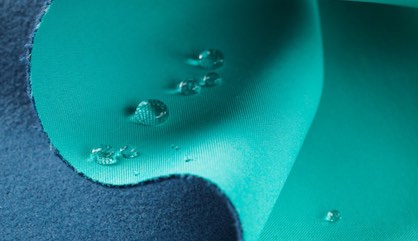


Schneller wear2wear fabric (c) 2019 Schoeller


Inspire fabrics from Schoeller Textil

At Schoeller Textil, the recyclable, functional fabrics from the wear2wearTM concept belong to the Inspire fabric group. These are high-quality protective workwear fabrics made of 100 percent polyester, which offer the greatest clothing comfort. Of course they are also compliant with the stringent requirements of the bluesign® system. 

The comprehensive package extends from antibacterial knitted shirt qualities with outstanding moisture management and a pleasantly-cosy fleece fabric to sturdier pants weights with 3XDRY® Bio feelgood technology and super-comfortable soft-shells. Very light, windproof and waterproof 3-layer laminates which, thanks to the optimally-breathable Sympatex membrane, ensure a high level of climate comfort, round out the range. As well as being PTFE-free and PFC-free, the “guaranteed green” Sympatex membrane is 100 percent recyclable and climate neutral. It is absolutely environmentally friendly and skin friendly and certified in accordance with the stringent environmental standards Oeko-tex Standard 100 and bluesign® system.

The dirt and water repelling properties are achieved exclusively through the use of ecorepel® Bio and 3XDRY® Bio technologies, both based on renewable raw materials. In addition to classic colours such as yellow, blue or grey shades, Inspire fabrics are also available in EN ISO 20471-certified high-visibility colours and are certified according to EN 343 for rain protection. Due to the consistent use of polyester fibres, Inspire textiles are very durable, which further helps preserve resources. Furthermore, their production requires significantly less water and energy.

Further information on the eight partner companies as well as technology and system partners: www.wear2wear.org



More News from

#Research & Development

GenuTrace client advisory: Is your cotton supply chain UFLPA ready?

U.S. Customs and Border Protection has released updated operational guidance (CBP Publication No. 5560-0526) expanding its forced labor enforcement framework. The guidance supersedes the original 2022 UFLPA Operational Guidance and now covers all forced labor enforcement authorities — UFLPA, CAATSA, and WROs/Findings — in a single unified document. For cotton importers, the enforcement posture has not softened. It has become more structured, more documented, and more demanding. Learn more about UFLPA.

#Carpets

DOMOTEX Hannover 2028 off to a strong start with expanded portfolio

Preparations for DOMOTEX 2028 are already gaining strong momentum. Following its successful repositioning as the Home of Flooring & Interior Finishing, around 100 international manufacturers have already secured their place during the initial registration phase.

#Knitting & Hosiery

STOLL: Agreement signed for the divestiture of selected assets

In early 2025, KARL MAYER announced its strategic decision to focus on its core business areas of WARP KNITTING, WARP PREPARATION, and TECHNICAL TEXTILES. As part of this move, the flat knitting machine business under the STOLL brand was discontinued and the production site in Reutlingen was closed in October 2025.

#Research & Development

TERNAfil wins first place at PitchMiUp Night 2026 in Minden

The RWTH spin-off TERNAfil has developed MAXCarbon, a new high-performance hybrid fibre that combines the mechanical performance of carbon with the temperature and corrosion resistance of ceramic materials. For this development, TERNAfil was awarded first prize at the PitchMiUp Night in Minden on 21 May 2026.

More News on Recycling / Circular Economy

#Spinning

"We will become a recycling powerhouse"

The textile industry is now in its fourth consecutive year of crisis, while automation, artificial intelligence and recycling are reshaping the rules of the game. In this interview, Rieter CEO Thomas Oetterli discusses the first signs of a market recovery, reflects on his first three years at the helm of the company, explains the integration of Barmag, outlines Rieter’s vision of the fully automated spinning mill and highlights the strategic importance of recycling. In doing so, he explains why the new Rieter Group aims to play a leading role in transforming the textile value chain into a circular economy.

#Recycling / Circular Economy

Countdown to Textiles Recycling Expo 2026: Brussels prepares for Europe’s textile recycling gathering

With only two weeks remaining until the start of the second edition of the Textiles Recycling Expo 2026, preparations are entering the final phase. The exhibition and conference, dedicated exclusively to textile recycling and circularity, will take place on 24–25 June 2026 at Brussels Expo and is expected to attract stakeholders from across the textile recycling value chain.

#Recycled Fibers

Indorama Ventures enables brands to scale circular textiles through proven, traceable supply chains

Indorama Ventures, a global leader in recycled polyester staple fibers and filament yarns, will exhibit at Textiles Recycling Expo in Brussels on June 24–25. At the event, the company will show how brands and textile manufacturers can build traceable, circular textile supply chains by working with proven partners who deliver recycled materials on an industrial scale.

#Recycled Fibers

RECOVER™ launches Recover™ Yarns to accelerate recycled cotton uptake

Recover™, a leading materials science company and one of the world’s largest producers of recycled cotton fiber, today announces the launch of Recover™ Yarns, a curated portfolio of ready-to-use yarn solutions designed to accelerate the adoption of recycled cotton across the apparel supply chain.

Latest News

#Nonwovens

Lenzing Group highlights scalable, bio-based nonwovens solutions at leading global industry fairs

From CIDPEX in China to Techtextil in Frankfurt and INDEX in Geneva, the Lenzing Group showcases ready-for-market, bio-based nonwoven solutions and receives industry recognition for LENZING™ Nonwoven Technology.

#Research & Development

Carbon-ceramic hybrid fibre proves its worth – NRW Minister for Science Mona Neubaur congratulates ITA start-up TERNAfil

MAXCarbon technology, a novel carbon-ceramic hybrid fibre developed by ITA spin-off TERNAfil, secured third place at the HIGH-TECH.NRW Demo Day on the TÜV NORD campus in Essen. The technology combines the strength of carbon fibres with the temperature and corrosion resistance of ceramic materials. Mona Neubaur, Minister for Science in North Rhine-Westphalia, congratulated the team on their success and on winning prize money of 4,000 euros.

#Digital Printing

DTF vs DTG Printing - The technologies shaping today’s custom merchandise market

From sportswear to branded tote bags, custom merchandise continues to grow in popularity across sectors, driving print shops to cater to short runs, personalisation, and rapid turnaround. As print providers look to this market, two printing technologies often stand out: Direct‑to‑Film (DTF) and Direct‑to‑Garment (DTG). Each offers its own benefits, and understanding these differences helps determine the most suitable production method for print service providers.

#Associations

Towards pragmatic and harmonised labelling in the EU

EDANA, alongside 14 European associations, urges the European Commission and Member States to adopt a pragmatic approach for the future harmonised packaging labels, in line with the EU’s agenda for the EU Single Market, simplification and competitiveness. The system should rely on text-free pictograms, available in achromatic or monochromatic versions matching the packaging palette, with the possibility of using digital labelling as a core element. Our associations represent manufacturers of consumer goods across Europe.

TOP