#Nonwovens / Technical Textiles
Create. Align. Compare. Make the difference: Nora Kühner on the importance of transformation for the industry
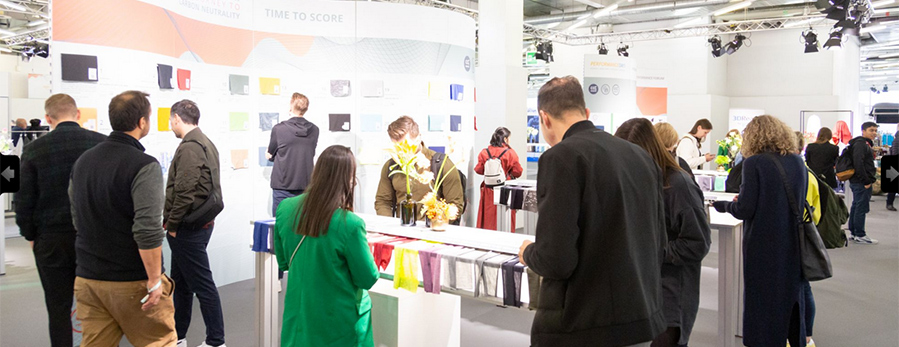
Twice a year, designer and trend expert Nora Kühner develops the color card “PERFORMANCE COLORS by Nora Kühner” for the sports and lifestyle branch. She also gives talks on trends, is active as a designer and provides support for manufacturers on material developments. As part of PERFORMANCE DAYS, Nora Kühner will share information on the color trends for the winter 2024/25 and summer 2025 seasons at the Expert Talks on March 15, 2023. Furthermore, the gifted visionary expert will be giving her support to this year’s Focus Topic at the fair, “Create. Align. Compare – Make the difference!” exploring and addressing the issue of what true transformation means in her talk on March 16, 2023. Now is the moment for our industry to figure out what is worth preserving and what can be discarded. And ultimately, we need to set the framework for the better future we’ve been preaching about now for some time. The clock is ticking and we need to act decisively. How important is this transformation process going to be? PERFORMANCE DAYS asked the trend expert to find out more...
PD: PERFORMANCE DAYS have been pursuing the Focus Topic “On the Journey to CO2 Neutrality” for three fairs in a row. Now, at step three, titled “Create. Align. Compare.” the overriding priority is specifically on getting manufacturers to provide initial values for minimizing their carbon footprint. This is also the title of your talk. Where does the industry currently stand and how do you see its future?
Nora Kühner: We have already taken quite a few steps in the sportswear segment, especially as far as materials are concerned. In terms of fabrics, padding, yarns, dyeing processes or accessories, we can observe many developments that are going in the right direction. But these steps should not hide the fact that our reactions have been too slow. We have to consider the major impact here, there shouldn’t be any downplay or contemplation about too many steps. Now is the time to act. We are in a race against time to decarbonize our industry.
PD: And what role does transformation play in this?
Kühner: Transformation describes a fundamental change and unfortunately, and quite frankly, I don’t really see that happening. To achieve this, we have to fundamentally question ourselves and the way we trade, develop and produce – critically and without prejudice. Take digitalization, for example, which has been the number one topic in many branches for some time now. It is supposed to help in making working steps more sustainable, in saving time and money, and getting concepts off the ground faster. However, when I take a critical look at it, I tend to see that new tools or techniques are keeping the old thinking alive. We urgently need a new mindset that supports us in “letting go” and helps us with rethinking processes.
PD: How do you define “transformation” or “change” in this context?
Kühner: As I mentioned earlier, with being able to let go, a new mindset, a vision of new narratives, new models. It helps to take a look at processes at their final stage and to ask yourself concrete questions: What will the outdoor branch do when the environment suffers more and more destruction? This winter and the lack of snow is a good example: Is indoor skiing really an adequate alternative to the real experience in the mountains? Who wishes to swim or surf in a sea full of litter (great plastic garbage patch)? Who wants to hike in forests that have been burnt down? How are we then going to have an income?
PD: What opportunities can change bring?
Kühner: I would like us not to use the term “change” in a negative way to start with. I’ve noticed these days that we struggle to imagine any positive scenarios. Developing new ideas and structures is certainly painstaking and requires more effort than differentiating what we already have. But we all know that we won’t generate more sales by putting the same product on the market, year after year, season after season.
The history of mankind has always been a history of “exploring new paths”. So why do we still cling so tightly to the existing, to structures that date from another century? And even more so now that we recognize the negative, extremely threatening impact of our actions. In view of the technical advances, the scientific breakthroughs, we should have confidence in our abilities and the possibilities that are emerging as a result. Setbacks are a part of it. Nothing is possible without risk and courageous experimentation.
...what kind of pressure is the industry itself facing?
Kühner: Of course, the economic constraints are enormous. But they are also man-made – we will be exploring this aspect in the upcoming PERFORMANCE COLORS trend color chart for summer 2025. The title is: “MAN-MADE” – the complexity of the problems in commerce, in industry, in our lives, that we complain about today, is man-made. The same goes for climate change, yet we should have confidence in our abilities. We can be different if we want to be. We need to fix causes, not just treat symptoms.
PD: And which areas are particularly affected?
Kühner: I think that hardly anyone has grasped what the last few years have meant for the majority of people. Consuming along the lines of “whatever it takes” is no longer possible for many people. Job losses, rising energy prices, regular environmental catastrophes and deep-rooted fears, especially in Central Europe, of which direction one’s life is going in with a war going on that could spillover, are all not exactly conducive to spending.
PD: How does this affect the areas of design and product development?
Kühner: Sustainability starts with the product. Therefore, from the first ideas to the development and production of the garment, we have to think in this context. As designers, we can’t just look to trade fairs for new, sustainable fabrics or cool, eco- friendly accessories. In fact, we have to design the life cycle of the product. The entire process in product development needs to be overhauled. I see here many exciting tasks in terms of design: designers have the imagination and vision for a new narrative.
PD: While we’re on the topic of new fiber and material technologies. How important is change in this context?
Kühner: I’ve been pointing out for years in my talks that innovation in our industry comes primarily from material manufacturers and new processing technologies. If you look at the brands’ collections, you can clearly see that we seem to have found the perfect cut and construction solutions for a lot of garments, for outdoor jackets, for example. How else could the uniformity of the jackets be explained? Perhaps creative stagnation and cost constraints are the reason behind it? If we have already developed the ideal jacket shape, we shouldn’t continue to produce large quantities of it constantly.
But back to your question: The innovations in fibers and materials are imperative, as this is the area where our carbon footprint is largest. In the end, it’s all about optimizing dyeing and finishing processes, using less energy and water. However, all these efforts make no sense in the end if we continue to rely on PFAS and fail to issue a general ban.
PD: Is the industry ready to reshape the future together, to “cut off old ties” and usher in a new era?
Kühner: I haven’t seen any of that up until now. We’re all too stuck in the familiar processes and structures. Despite the fact that we now see the effects of our exploitation of the planet on a daily basis, we still think we can carry on as before. The idea of moving forward “together” is not an issue – our competitive patterns of behavior are too innate. Developing a common vision for our industry would be a very exciting task. I would like to remind you that we as an industry have a real “purpose”: Clothing is a basic human need. We need clothing to protect us. We can live without a smartphone, but not without clothing.
PD: When you look to the future, where will we be in ten years’ time and what would you like to see?
Kühner: I would like us to have significantly reduced our CO2 emissions, to have stopped routinely overproducing and that product development will stand for relevance and innovation. Producing more and more of the same is a no-go. Hopefully, we will have built new regional structures for a circular economy and stopped treating apparel as waste. That’s why we no longer send mountains of used clothing to Africa or South America. Diverse repair services, the uncomplicated return of textiles that we no longer wish to wear but are seen and used as a material source, and much more, will become standards. I call this “textile mining” in reference to “urban mining”, which is already being done in the construction industry. Furthermore, my dream, which I have had for more than ten years, is that the industry in which I have been working in with great enthusiasm for many years will finally become a pioneer of a large-scale transformation by incorporating our knowledge and know-how in terms of functionality and protection, not only into our products, but also into the way we treat our planet. This is ultimately the basis of our business. It should also be clear to the profit-oriented: Being outdoors, moving around in our physical environment, represents a large part of the industry’s revenue. Imagine if no one wants to be outdoors anymore because of pollution and environmental destruction that threatens their individual health.
SAVE THE DATE:
NORA KÜHNER: Create. Align. Compare. MAKE THE DIFFERENCE!
16. March 2023, 10:30 to 11:30h
LIVE at Messe München, Hall A1 or via the website:
http://performancedays.com
The complete Expert Talks program as part of PERFORMANCE DAYS on March 15-16, 2023 can be viewed here:
https://www.performancedays.com/loop/expert-talk- webinar/expert-talks-munich-livestream.html
All talks available for free on demand after fair ends.
PERFORMANCE DAYS: Register now for free!
Register for The Loop today and make sure to get your hands on a free ticket to the PERFORMANCE DAYS Fair in Munich. Discover all the latest innovative materials including the two awards now also online in the PERFORMANCE DAYS Loop Marketplace with the opportunity to order free samples directly from the exhibitor. Happy Sourcing! https://www.performancedays.com/loop.html