[pageLogInLogOut]

#Nonwovens / Technical Textiles

Using technical warp knitted fabrics from WEFTTRONIC® II G to provide greater efficiency on construction sites

Due to the strong economic growth in emerging markets and low interest rates in most developed countries the global construction market is experiencing a sustained period of growth. The future forecasts are also optimistic. In particular, planned investments in renewable energy infrastructure and urbanisation will continue to ensure full order books for construction companies and their suppliers.

The booming market rewards innovations for greater efficiency and speed in construction, as demonstrated by the textile solutions created on machines developed by KARL MAYER Technische Textilien. These well-thought-out products offer a variety of advantages across different applications.

Greater efficiency in infrastructure and house building

In new road construction, warp knitted, geogrids with large stitches increase the structural capacity of subsoils while also taking on filtration and separation tasks, thereby making additional layers superfluous. Used under the asphalt surface, these open structures also ensure a longer service life for both motorways and rural roads alike. The reinforcement prevents reflective cracks and wheel track rutting caused by truck tyres, and also distributes traffic loads horizontally.

In infrastructure projects, geogrids are also used to secure slopes. These textile solutions represent significantly better value than their steel counterparts, offer excellent static load capacity and can be installed with minimal interference with nature.

Technical warp knitted textiles with tighter stitches are used in building construction to reinforce security gates. Despite their thin design and low weight, these powerful items protect against attacks from most electric power tools, and can be quickly installed in just a few steps.

In addition to this, warp knitted fabrics with weft-insertion and with coatings are also used to make cost-effective roofing systems for industrial buildings. The flexible, stable roofing membranes adapt perfectly to the specific structural conditions, are UV-resistant, and reflect incident sunlight. This reduces the amount of energy used to air condition the building.

In building construction, plaster grids are a firm fixture in the cladding of interior and exterior walls. The glass fibre structures prevent cracks from forming and spreading while also distributing the forces that act upon the walls optimally across the entire surface, thus ensuring a long service life. Warp knitted variants can be produced much more efficiently than comparable woven products.

In the construction and renovation of concrete structures, open grids made of carbon or AR glass are increasingly replacing steel as the reinforcement material of choice. Textile concrete solutions, e.g. for curtain walls, are lightweight and easy to handle, require fewer resources, produce minimal emissions and are extremely durable.

High-performance warp knitted fabrics with weft-insertion also offer advantages when renovating pipes. These dense textiles enable engineers to repair defective sections of pipe, rather than replacing them completely. This avoids costly excavation work that destroys natural environments. In addition to this, the pipe system can be returned to use within a very short time.

The warp knitted products aimed at the construction industry were a real highlight at the KARL MAYER exhibition booth at ITMA ASIA + CITME in Shanghai in June 2021. In order to reach customers on a more global scale, the products are currently being presented as part of the world market leader’s own hybrid exhibition.

A machine with good sales and business prospects

WEFTTRONIC® II G is used to produce most textile solutions for the construction industry. “The high-performance raschel machine with course-oriented weft-insertion is our key machine for this application,” says Hagen Lotzmann, Sales Director at KARL MAYER Technische Textilien. It was developed as an efficient means of producing light to medium-weight grid structures made of glass and polyester fibres, and has long since guaranteed continuous customer sales. It also offers great potential for growth in the future.


In particular, the geo and road grids produced on the weft-insertion machines from KARL MAYER Technische Textilien provide a stable source of business. The company serves a broad customer base, especially in China. Other important sales regions include India, which manufactures for the domestic market but also for export – mostly to the USA – and much of Eastern Europe.

WEFTTRONIC® II G warp knitted plaster grids are also booming in countries such as Belarus, Serbia and Hungary, as well as in China. Buyers include numerous weaving mills that have been impressed by the efficiency advantages afforded by this innovative machine. One WEFTTRONIC® II G can replace up to 20 weaving looms, depending on the opening width of the grids produced. Fewer machines also mean lower operating costs.
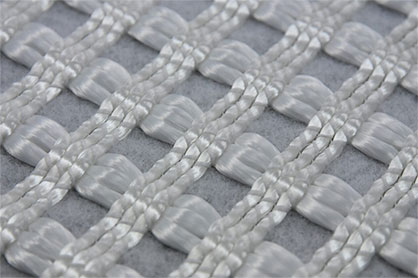
Geogrid for subsoil reinforcement © 2021 KARL MAYER


The WEFTTRONIC® II G can cut personnel costs by up to 60%, not to mention needing less hall space.

Although it was not on show in Shanghai, the WEFTTRONIC® II G was the subject of many discussions at the KARL MAYER booth at ITMA ASIA+ CITME in June 2021. The sale of one machine was negotiated and concluded during the exhibition, and a framework agreement was also signed for further deliveries.

Regional Sales Director Jan Stahr is pleased with the success of the WEFTTRONIC® II G, saying that a repeat order has also been received from the buyer of the prototype. The consensus within the industry is that the machine will result in a shift in technology, says the sales professional – a summary based on opinions shared by exhibition visitors. He was even approached by a manufacturer of textile glass fibres, who wanted to optimise their products with regard to the processability with the warp knitting technology t in order to stay in business.

Come, see and try it out

Anyone who wants to witness the performance of the WEFTTRONIC® II G for themselves can visit the KARL MAYER Technische Textilien customer centres in Chemnitz and, as of August 2021, Changzhou. What’s more, both sites also offer visitors the chance to try out the system’s processing performance themselves. A visit is always worthwhile, especially for manufacturers of woven plaster grids. But Hagen Lotzmann also expects to see great interest from Chinese warp knitting customers. Manufacturers often make their own textile glass fibre material, and can run tests to see for themselves that their yarns run smoothly on the machine.
More News from KARL MAYER Textilmaschinenfabrik GmbH

#Knitting & Hosiery

The newcomers HKS 3-M EL ECO and HKS 4-M EL ECO set new standards in the tricot market

Short development cycles, frequent pattern changes, and maximum efficiency – even with small batch sizes: Today's global fashion and apparel market demands more flexibility than ever before. High-performance warp knitting machines with compound needles (HKS) and EL pattern drive are KARL MAYER's answer to this challenge.

#Knitting & Hosiery

KARL MAYER celebrates 35 years of EL pattern drive

KARL MAYER is celebrating an anniversary this year: on 30 November 1990, the first warp knitting machine with electronic guide bar control, the KS 4 EL, was delivered – another milestone for patterning. As early as 1980, the SU gearbox with the MRS42SU had initiated the transition from mechanical chains to digital data.

#ITMA Asia + CITME Singapore 2025

India becomes growth engine for the warp knitting industry

ITMA ASIA 2025 exceeded all expectations for KARL MAYER – above all thanks to the strong interest from India: around 30% of the qualified discussions were held with partners from this traditional textile country. The response underlines the growing importance of the Indian market, which could become the second largest sales region for KARL MAYER after China. The warp knitting industry in particular is developing dynamically.

#Weaving

Solution for lower energy consumption proves itself in practice

Getzner Textil is one of KARL MAYER’s first customers to use PROSIZE with CASCADE. The innovative weaving specialist has tested the steam and condensation system by KARL MAYER and determined the energy savings it achieves. Karl-Heinz Vaaßen, Head of Textile Drying at KARL MAYER, assisted Getzner Textil’s production specialists both with the tests and with all questions relating to CASCADE. In a conversation with Werner Egger, Head of Weaving, and Thomas Rossi, Head of Warp Preparation at Getzner Textil, he learnt more about the system’s benefits for his customer.

More News on Nonwovens / Technical Textiles

#ITMA Asia + CITME Singapore 2025

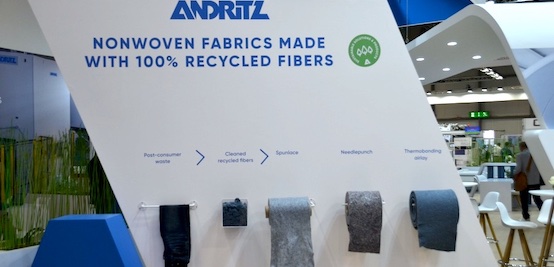
ANDRITZ sets focus on textile recycling and durable nonwoven production technologies at ITMA Asia 2025

International technology Group ANDRITZ will be presenting its innovative nonwovens production and textile solutions at ITMA ASIA + CITME 2025 in Singapore, from October 28 to 31, 2025 (Hall 2, D106). ANDRITZ will showcase its MMCF production plants, textile sorting and recycling, bast fiber processing, needlepunch, airlay, and life-cycle service technologies, with a focus on sustainable solutions. Discover how these innovations can grow your business opportunities and support a greener future.

#ITMA Asia + CITME Singapore 2025

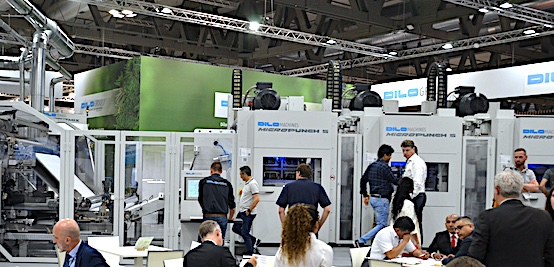
Dilo Group at ITMA ASIA Singapore 2025

At ITMA ASIA Singapore, the Dilo Group will exhibit at Booth No. H2 – D202. Together with Kansan Materials, Izmir, the company will present its latest developments and looks forward to welcoming visitors to exchange ideas and explore innovations in needling technology.

#Nonwovens

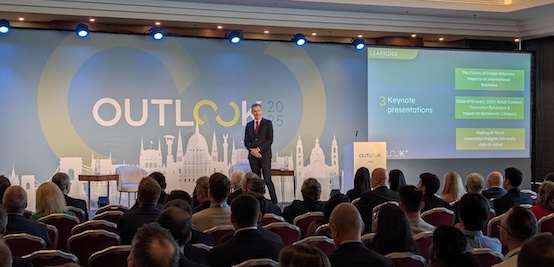
OUTLOOK™ 2025: Charting a sustainable and innovative future for the Nonwovens Industry

EDANA concluded its flagship event, OUTLOOK™ 2025, last week, marking it as a major success and addressing the biggest questions facing the industry. The three-day conference highlighted the urgent need for a unified approach to sustainability, regulation, and innovation in the absorbent hygiene and wipes sectors.

#Nonwovens

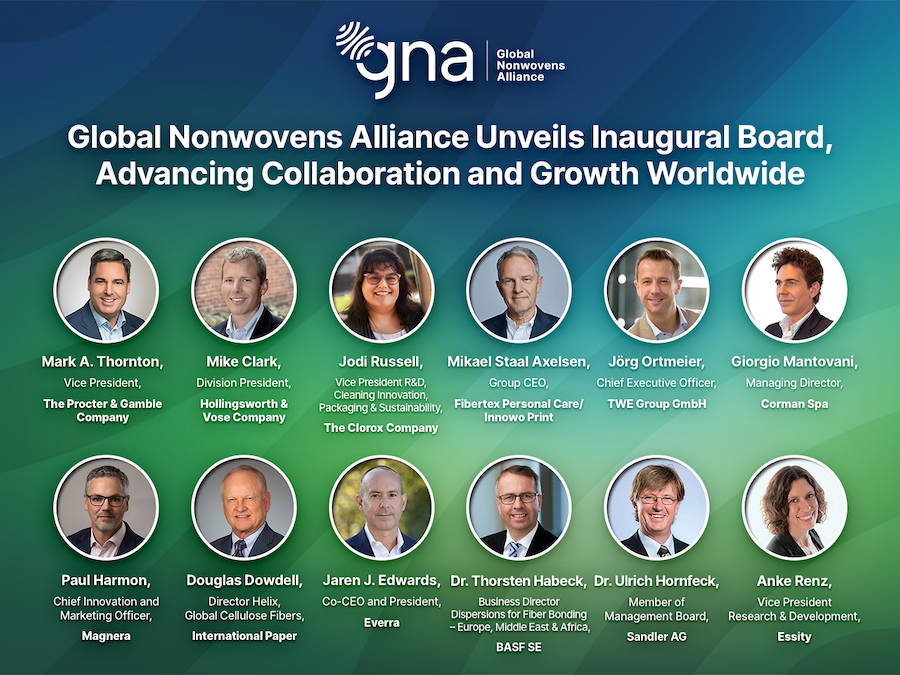
Global Nonwovens Alliance unveils Inaugural Board, advancing collaboration and growth worldwide

The Global Nonwovens Alliance (GNA), a tax-exempt federation jointly founded by INDA, the Association of the Nonwoven Fabrics Industry, and EDANA, the Voice of Nonwovens, announces the appointment of its founding Board of Directors. This group of leaders represents some of the most influential executives across the nonwovens value chain and reflects GNA’s mission to foster global collaboration, innovation, and growth in the industry.

Latest News

#People

Happy Holidays!

Dear reader, the year 2025 is drawing to a close. We are entering what we hope will be a peaceful holiday season, spending time with our families and taking a moment to pause and reflect. We hope we have been able to support you once again this year with relevant news and articles, and we look forward to surprising you with many innovations in the coming year. Enjoy the festive season, stay healthy, and we wish you a happy and joyful holiday season.

#Weaving

Lindauer Dornier announces leadership transition in weaving machine business

After more than ten successful years at Lindauer DORNIER GmbH, Mr Wolfgang Schöffl will leave the family-owned company at the end of the year to enter well-deserved retirement.

#Heimtextil 2026

Texpertise Focus AI: Messe Frankfurt puts Artificial Intelligence centre stage at its international textile and apparel trade fairs

Under the banner 'Texpertise Focus AI, Messe Frankfurt will place a strong emphasis on Artificial Intelligence (AI) across its international textile and apparel trade fairs from 2026 onwards, setting a future-shaping signal for the industry. The initiative highlights the responsible use of AI along the entire textile value chain, from fibre production to the point of sale. The programme will launch at Heimtextil in Frankfurt in January 2026.

#Technical Textiles

Autoneum and Polestar set new benchmarks for passenger experience and sustainability

As the global market leader in sustainable acoustic and thermal management, Autoneum is a key supplier of interior and exterior components for the highly anticipated Polestar 5 model. The successful collaboration between Autoneum and Polestar marks a significant milestone in sustainable automotive engineering: the electric grand tourer sports car features several innovations in lightweight, fully recyclable polyester-based components that ensure a superior driving experience. Polestar 5 was revealed at the IAA Mobility 2025 in Munich and is available in 24 markets.

TOP