[pageLogInLogOut]

#Nonwovens / Technical Textiles

The ABC of sustainability: Autoneum carpets now even more eco-friendly
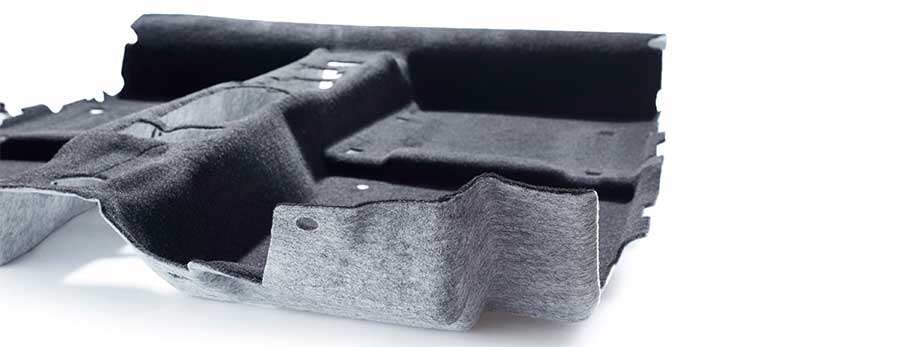
Tune-It-based needlepunch carpet © 2021 Autoneum
Autoneum carpet systems already meet the highest standards of sustainable mobility due to their high content of recycled fibers. Thanks to an alternative backcoating (ABC) process, Autoneum carpets are now becoming even more environmentally friendly: By replacing the latex commonly used in standard backcoatings with thermoplastic material, the recyclability of carpets at the end of product life is further improved. In addition, the innovative manufacturing process greatly reduces water and energy consumption and thus CO2 emissions in production.

Lightweight, textile-based carpet technologies such as Di-Light or Relive-1 significantly improve the environmental performance of carpets. For example, Di-Light-based carpets consist of up to 97% recycled PET; aside from that, they are around 20% lighter than conventional needlepunch carpets, thus contributing to lower fuel consumption and CO2 emissions from vehicles. In addition, Autoneum needlepunch carpets are now even more sustainable thanks to the innovative ABC process, which uses a thermoplastic adhesive instead of latex in the backcoating: Unlike latex, thermoplastic adhesives can be heated and melted down together with the carpet components made of pure PET at the end of the product life cycle, which facilitates recycling considerably. Furthermore, since the fibers of the thermoplastic mono-material are easier to open, carpet cut-outs can be reclaimed more easily, thereby reducing the consumption of natural resources as well as waste volumes and thus CO2 emissions. The environmental performance of Autoneum’s needlepunch carpets, which already contain a high proportion of recycled PET, is thus further improved.

Moreover, backcoatings without latex improve the sustainability of carpets not only thanks to better recyclability at the end of the product life cycle.


Since the application of the thermoplastic adhesive using the innovative ABC process consumes significantly less energy than the production of latex-based backcoatings and does not require any water at all, the environmental impact can already be minimized in the manufacturing process. Additionally, thermoplastic adhesives developed in-house by Autoneum will open up new possibilities in the future for adapting backcoatings to the individual needs of vehicle manufacturers in terms of their acoustic performance, stiffness and abrasion resistance.

Models from various customers in Europe and North America are already equipped with latex-free needlepunch carpets from Autoneum. In the near future, backcoatings with thermoplastic adhesives will also be used for Autoneum’s tufted carpets. Production of the new, even more sustainable generation of tufted carpets is scheduled to start in early 2022.
More News from TECHNICAL & TEXTILE SERVICE SRL

More News on Nonwovens / Technical Textiles

#ITMA Asia + CITME Singapore 2025

ANDRITZ sets focus on textile recycling and durable nonwoven production technologies at ITMA Asia 2025

International technology Group ANDRITZ will be presenting its innovative nonwovens production and textile solutions at ITMA ASIA + CITME 2025 in Singapore, from October 28 to 31, 2025 (Hall 2, D106). ANDRITZ will showcase its MMCF production plants, textile sorting and recycling, bast fiber processing, needlepunch, airlay, and life-cycle service technologies, with a focus on sustainable solutions. Discover how these innovations can grow your business opportunities and support a greener future.

#ITMA Asia + CITME Singapore 2025

Dilo Group at ITMA ASIA Singapore 2025

At ITMA ASIA Singapore, the Dilo Group will exhibit at Booth No. H2 – D202. Together with Kansan Materials, Izmir, the company will present its latest developments and looks forward to welcoming visitors to exchange ideas and explore innovations in needling technology.

#Nonwovens

OUTLOOK™ 2025: Charting a sustainable and innovative future for the Nonwovens Industry

EDANA concluded its flagship event, OUTLOOK™ 2025, last week, marking it as a major success and addressing the biggest questions facing the industry. The three-day conference highlighted the urgent need for a unified approach to sustainability, regulation, and innovation in the absorbent hygiene and wipes sectors.

#Nonwovens

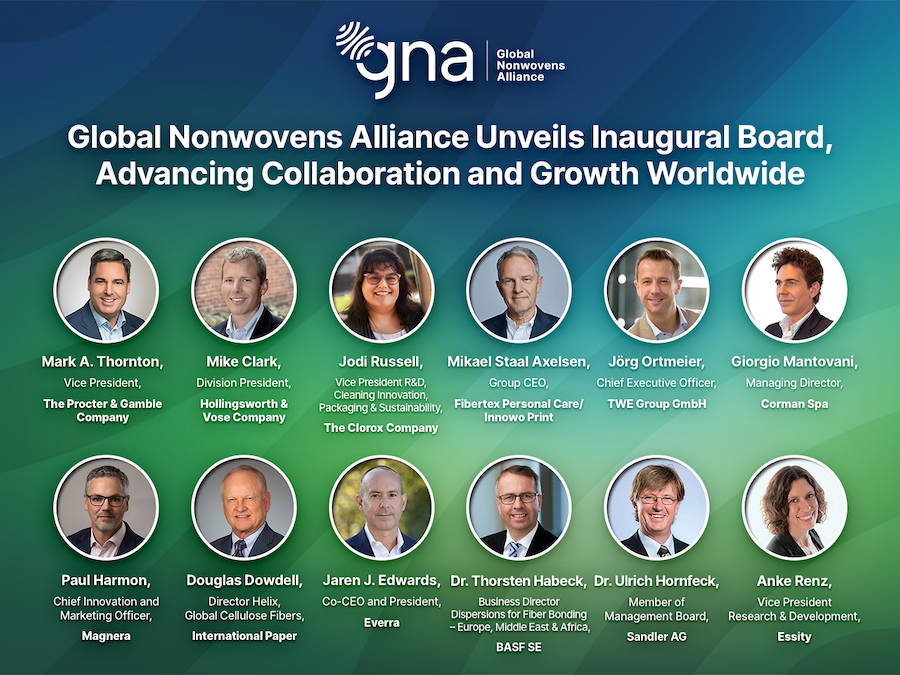
Global Nonwovens Alliance unveils Inaugural Board, advancing collaboration and growth worldwide

The Global Nonwovens Alliance (GNA), a tax-exempt federation jointly founded by INDA, the Association of the Nonwoven Fabrics Industry, and EDANA, the Voice of Nonwovens, announces the appointment of its founding Board of Directors. This group of leaders represents some of the most influential executives across the nonwovens value chain and reflects GNA’s mission to foster global collaboration, innovation, and growth in the industry.

Latest News

#Techtextil 2026

Techtextil 2026: KARL MAYER impresses as an innovative sector partner

KARL MAYER looks back with satisfaction on its participation in Techtextil 2026. From April 21 to 24, the international industry leader used the trade show in Frankfurt to meet with numerous key customers at its booth and, at the same time, establish many new contacts. Most visitors came from Germany, followed by major markets such as Poland, the United Kingdom, Turkey, France, and Portugal.

#Associations

BTMA backs global growth while investing in future UK leaders

As one of a number of new initiatives launched this year, the British Textile Machinery Association (BTMA) is launching the UK-India Textile Machinery Coalition. The UK-India Free Trade Agreement, signed in July 2025, has implications that extend across sourcing, competitiveness and long-term trade dynamics, believes BTMA CEO Jason Kent.

#Raw Materials

China projected to increase cotton production, yields, and imports in 2026/27

World cotton production in the 2026/27 season is projected at 25.9 million tonnes, exceeding global consumption of 25.2 million tonnes, according to the May 2026 issue of Cotton This Month. That means both production and consumption are expected to remain close to current season levels, while global cotton trade is projected to decline by 2.7% to approximately 9.6-9.7 million tonnes.

#Raw Materials

ICAC launches Carbon Credits Initiative to deliver new income streams to cotton farmers

The International Cotton Advisory Committee (ICAC) has announced a new initiative designed to unlock additional income streams for cotton farmers through participation in carbon credit markets, linking sustainable production practices directly to financial returns.

TOP



