[pageLogInLogOut]

#Natural Fibers

"Review" examines the outlooks for seven major cotton producers

The newest issue of Cotton: Review of the World Situation provides an in-depth look at how seven important cotton-producing countries are responding to changing markets, rising production costs, climate pressures, evolving technologies, and growing demands for quality and sustainability.

The July 2026 edition — available free of charge — features reports on the cotton sectors of Uzbekistan, Argentina, Brazil, Spain, the United States, Greece, and Pakistan. Together, the articles illustrate a global industry pursuing greater productivity and value even as weak demand, low prices, competition from synthetic fibers, and unpredictable weather continue to challenge producers.

The issue’s lead article, “Beyond Raw Fiber: Uzbekistan’s Cotton-to-Textile Transformation,” examines the country’s transition from exporting raw fiber toward a more integrated, value-added cotton and textile economy. Uzbekistan has made rapid gains in yield, mechanization, water-saving irrigation, intensive planting, domestic processing, and market reform. Its 2026 plans call for 4.5 million metric tons of seed cotton from 889,500 hectares, while the country continues expanding textile production, traceability, regenerative agriculture, and other sustainability initiatives.

The edition also includes:

“Quality Over Quantity: Argentina’s Cotton at a Turning Point,” which explores how a sharp reduction in planted area, climatic variability, pest pressures, and weakness in the domestic textile sector are increasing the importance of fiber quality and export competitiveness.

“Production Down, Exports Up: Brazil’s Cotton Resilience,” detailing how the world’s largest cotton exporter is adjusting production following a record crop while maintaining strong export volumes through efficiency, quality assurance, traceability, and an increasingly sophisticated logistics network.

“After the Drought: Spain’s Quality-Led Cotton Recovery,” examining the sector’s rebound from several difficult seasons and its emphasis on certified production, traceability, responsible water use, and the quality advantages associated with European cotton.

“On the Rebound: US Cotton’s Push to Rebuild Demand,” which considers the outlook for American cotton as the sector works to recover production, strengthen domestic and international demand, and reinforce cotton’s position in an increasingly competitive global fiber market.

“Smarter Fiber, Stronger Future: Greece’s Cotton Outlook,” highlighting the country’s export-oriented cotton sector and its efforts to compete through quality differentiation, precision agriculture, improved irrigation efficiency, sustainability, and traceable European production.

“Uneven Recovery: Pakistan’s Cotton Sector Under Pressure,” describing a mixed outlook in which cotton area has declined in Punjab but increased substantially in Sindh. Although production could recover, high input costs, climate risks, competing crops, weak grower incentives, and continued reliance on imported cotton remain significant concerns.

Taken as a whole, the issue shows that there is no single outlook for the global cotton industry. Some countries are expanding exports or domestic textile capacity, while others are confronting falling acreage, production shortfalls, or weaker mill demand. Across nearly every market, however, competitiveness increasingly depends on productivity, fiber quality, sustainability, traceability, technological adoption, and the ability to respond quickly to changing demand.

To view the July 2026 edition of Cotton: Review of the World Situation, please click here:

https://icac.org/wp-content/uploads/2026/07/Review-June-2026.pdf

More News from International Cotton Advisory Committee (ICAC)

#Natural Fibers

2026 ICAC report projects World cotton trade to reach 10.3 million tonnes by 2028/29

The International Cotton Advisory Committee has released the 2026 World Cotton Trade Report, which provides analysis of global cotton trade patterns, key trading relationships, import and export trends, and the geopolitical and policy developments shaping cotton trade flows.

#Natural Fibers

Global cotton trade poised for recovery as India and China drive import demand

The July 2026 issue of Cotton This Month highlights a changing global cotton market, with consumption and trade expected to strengthen despite a modest decline in production during the 2026/27 season. The next issue of Cotton This Month will be released on August 1, 2026.

#Natural Fibers

Organic cotton at the crossroads: Ideology, evidence, and the road ahead

Organic cotton occupies one of the most contentious spaces in global agriculture. While praised by brands and consumers for its environmental ideals, it also faces persistent questions about yield stability, certification integrity, and scalability. The current edition of The ICAC Recorder cuts through the ideology to deliver a rigorous, evidence-based assessment of both sides of the debate.

#Raw Materials

CSITC adds ABRAPA as a round trial sample provider

Beginning with the Q2 2026 Round Trials, the ICAC's Committee on the Commercial Standardization of Instrument Testing of Cotton has expanded its sample provision framework by adding the Brazilian Cotton Growers Association (ABRAPA) as an official sample provider.

More News on Natural Fibers

#Natural Fibers

The Woolmark Company showcases Australia's commitment to India's textile industry at Bharat Tex 2026

Reinforcing more than five decades of commitment to India's wool textile and apparel industry, The Woolmark Company, alongside Austrade and the Australian High Commission, marked a strong presence at Bharat Tex 2026, one of the world's largest textile and apparel trade platforms. Through industry engagement, strategic collaborations, technical innovation and knowledge exchange, the participation underscored Australia's continued commitment to supporting the growth and transformation of India's textile ecosystem while highlighting the versatility and value of Australian Merino wool.

#Spinning

Rieter sees Barmag integration on track as orders and sales rise

The first half of 2026 was shaped by the successful completion of the largest acquisition in Rieter’s history. The Man-Made Fiber Division enables entry into the growth segment of man-made fibers and sustainably strengthens Rieter’s market position in the Asia region. The expanded Group is now the world’s leading system supplier for the processing of natural and man-made fibers. In the first half of the year, initial cost savings in material costs and operating expenses have already been realized. The targeted synergies are expected to amount to at least CHF 20 million by the end of the 2028 financial year. Due to the completion of the acquisition on February 2, 2026, the first half of the year for the Man-Made Fiber Division only amounts to five months.

#Natural Fibers

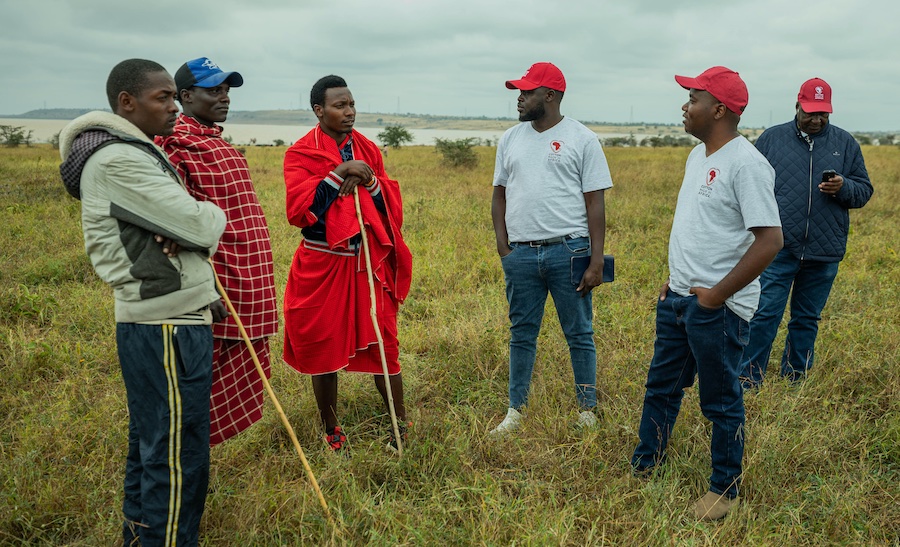
Better Cotton Initiative multistakeholder event in US unpacks regenerative agriculture potential

The Better Cotton Initiative (BCI), in collaboration with Texas-based partner, Quarterway Cotton Growers, will expand upon its annual US field event to relay the vast potential of regenerative agriculture through an immersive experience of tours and demonstrations.

#Sustainability

The first widely accessible Life Cycle Assessment study for cashmere production published by Textile Exchange.

Crucial new data to better understand, measure, and address the impacts of cashmere production has been made available to the fashion, textile, and apparel industry through a new Life Cycle Assessment (LCA) published by Textile Exchange.

Latest News

#Knitting & Hosiery

SHIMA SEIKI brings new flat knitting technologies to FEBRATEX 2026

Leading flat knitting solutions provider SHIMA SEIKI MFG., LTD. of Wakayama, Japan, together with its Brazilian representative BRASTEMA TECNOLOGIA TEXTIL LTDA., will exhibit at the Brazilian Textile Industry Fair (FEBRATEX 2026) this month. On display will be a roundup of SHIMA SEIKI computerized flat knitting technology, represented by WHOLEGARMENT® knitting machines, computerized flat knitting machines featuring a brand-new model with high productivity and excellent cost performance, a glove knitting machine and the latest digital solutions.

#Man-Made Fibers

Lenzing reports improved half-year results and advances strategic transformation

Despite a persistently challenging market environment in the first half of 2026, characterized by volatile energy and raw material prices, subdued global consumer demand and intensified competition from Asia, the Lenzing Group significantly improved its financial performance. Net result after tax more than doubled to EUR 35.6 million, compared with EUR 15.2 million in the first half of 2025. Free cash flow increased to EUR 45.8 million, while EBITDA amounted to EUR 239.2 million. Revenue totaled EUR 1.27 billion, compared with EUR 1.34 billion in the previous year.

#Recycling / Circular Economy

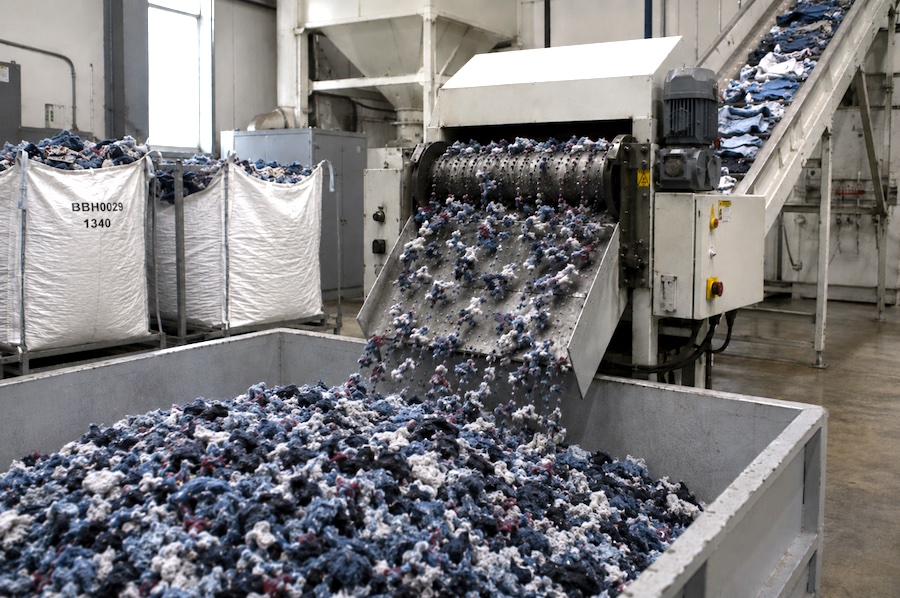
German 'ZOLL' turns end-of-life uniforms into valuable raw materials

Together with CWS Workwear, the German Customs Administration is extending the life cycle of service uniforms through reuse, recycling and material recovery, demonstrating how circular economy principles can be successfully implemented in the public sector while delivering significant savings.

#Spinning

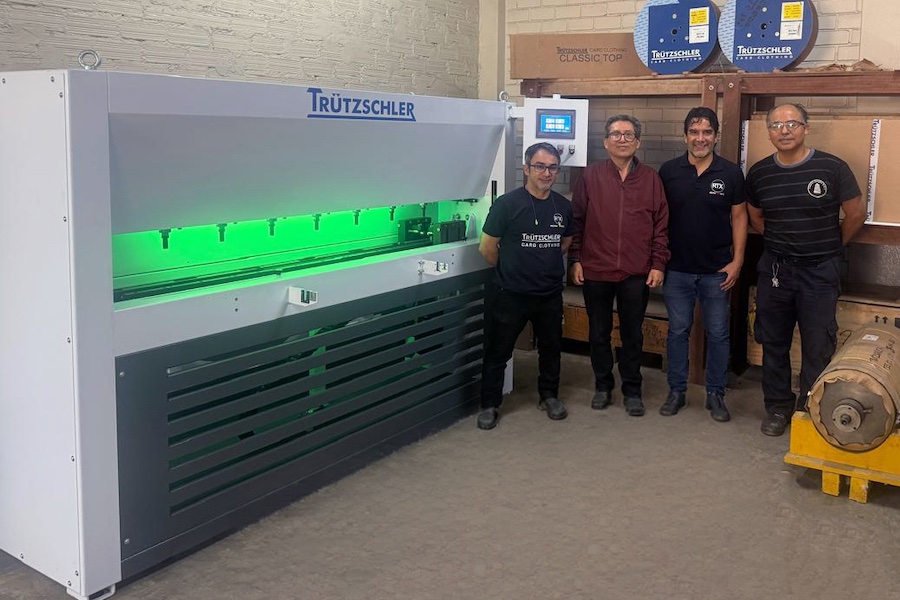
Trützschler’s latest spinning and card clothing innovations at CAITME 2026

From September 8 to 10, 2026, Trützschler will present its latest innovations in spinning and card clothing for state-of-the-art fiber processing at CAITME in Tashkent, Uzbekistan. Visitors are invited to meet the experts at Pavilion 2, Booth D50 and explore solutions designed to increase productivity, streamline processes, and ensure consistently high yarn quality. Key topics include the next-generation card TC 30i, the integrated draw frame IDF 3, the high-performance comber TCO 21XL as well as Trützschler Card Clothing’s new flat top series STEELTOP®.

TOP