[pageLogInLogOut]

#Natural Fibers

Organic cotton at the crossroads: Ideology, evidence, and the road ahead

Organic cotton occupies one of the most contentious spaces in global agriculture. While praised by brands and consumers for its environmental ideals, it also faces persistent questions about yield stability, certification integrity, and scalability. The current edition of The ICAC Recorder cuts through the ideology to deliver a rigorous, evidence-based assessment of both sides of the debate.


This special issue, “A Global Research Review on Organic Cotton,” is co-authored by ICAC Chief Scientist Dr Keshav R. Kranthi and Dr Sandhya Kranthi, who look beyond the extreme perspectives to focus on the facts. Rather than serving as a blanket defense of organic cotton or a dismissal of modern agricultural technologies, the authors evaluate decades of scientific literature covering the economics, environmental performance, certification vulnerabilities, and future trajectory of organic cotton production.

The scale of the shift

Organic agriculture remains a niche within global farming, but its footprint has expanded steadily. The review highlights that global organic farmland grew from approximately 14 million hectares in 2000 to 98.9 million hectares in 2023, representing 2.1% of all global agricultural land and involving more than 4.3 million certified organic producers.

Organic cotton has mirrored this momentum. Its share of global cotton production climbed from 1.08% in 2009 to approximately 2.8% in 2024. Over the past decade, production volume expanded nearly sixfold, rising from 112,483 tonnes in 2015 to 659,567 tonnes in 2024.

Core themes explored in the review

The Profitability Equation: Balancing lower input costs and organic price premiums against lower transition-period yields and certification expenses.

Agronomic Realities: Navigating the vulnerabilities of organic systems, including pest pressure, weed management challenges, and limited organic-specific technological development.

The Systemic Benefits: Documenting positive effects on soil health, biodiversity, ecosystem functioning, carbon sequestration, greenhouse gas mitigation, and reduced dependence on purchased agrochemicals.

The Integrity Challenge: Addressing the critical role of verification, chain-of-custody systems, audits, and robust traceability in protecting consumer trust and market credibility.

Navigating the “Input Paradox”

The review highlights a fundamental paradox in modern sustainability: while organic farming was originally conceived as a holistic, soil-centered philosophy, many modern certification systems have evolved into input-based frameworks focused primarily on lists of approved and prohibited substances.

This tension has helped fuel rising interest in regenerative agriculture. Unlike organic farming, regenerative systems focus more directly on measurable outcomes — such as soil carbon, biodiversity, resilience, and ecosystem function — while often offering farmers greater flexibility in managing production risks.

The road ahead

Ultimately, the ICAC review argues that the future of sustainable cotton production may depend less on rigid divisions between “organic” and “conventional” systems, and more on which approaches deliver the outcomes that matter most: healthier soils, resilient farming systems, credible traceability, stable farmer incomes, and reduced environmental impact.

To read the June 2026 issue of The ICAC Recorder, please click here
THE ICAC RECORDER


More News from International Cotton Advisory Committee (ICAC)

#Raw Materials

Redesigned World Cotton Day website offers tools, ideas and inspiration

With World Cotton Day just one month away, the International Cotton Advisory Committee (ICAC) has launched a completely redesigned www.WorldCottonDay.com, creating a new global home for everyone who wants to learn about, celebrate, and support cotton.

#Raw Materials

ICAC’s 84th Plenary Meeting to be held March 24-26, 2027, in Alexandria, Egypt

Registration will soon be open for the International Cotton Advisory Committee’s 84th Plenary Meeting, to be held March 24-26, 2027, in Alexandria, Egypt. The local Organizing Committee in Egypt has chosen “Building a Resilient and Competitive Future for Cotton and Textiles” as the theme for the event, which will be held at the Rixos Montaza Alexandria Resort.

#Raw Materials

Global cotton production projected to outpace consumption, but risks remain

Global cotton production is projected to reach 26.2 million tonnes in the 2026/27 season, marginally outpacing estimated consumption of 25.9 million tonnes. However, early-season production risks — including weather volatility and pest pressures — could narrow that buffer as the crop progresses, according to the September 2026 issue of Cotton This Month, published by the International Cotton Advisory Committee (ICAC).

#Natural Fibers

Global garment trade nears USD 550 billion as competition intensifies

The global garment industry has undergone a dramatic transformation over the past two decades, with knit and woven garments together accounting for nearly 60% of world textile exports in 2025, according to the August 2026 issue of The Textiles Observer, a free publication from the International Cotton Advisory Committee (ICAC).

More News on Natural Fibers

#Raw Materials

Cotton made in Africa puts farmer dialogue at the heart of agricultural training

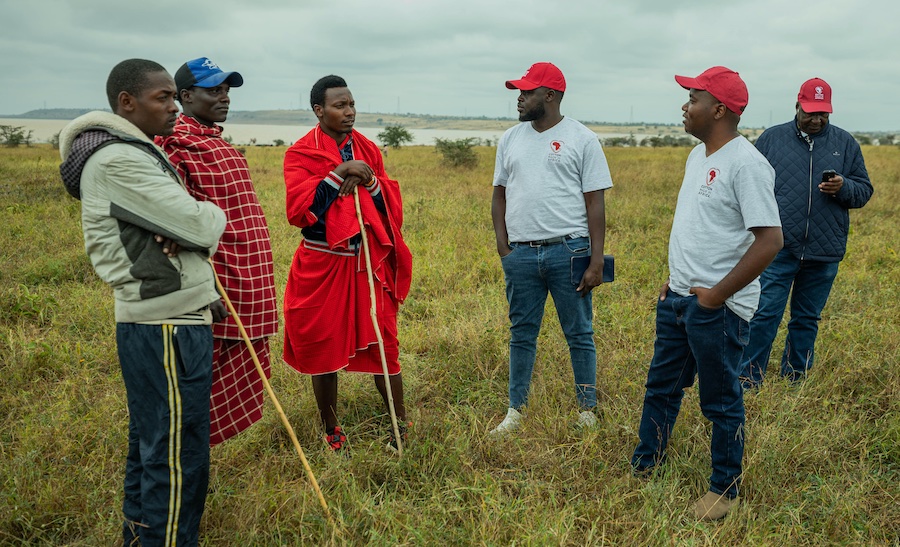
A new manual created by the Aid by Trade Foundation and African People & Wildlife shows how Cotton made in Africa aims to transform cotton cultivation through dialogue rather than directives.

#Raw Materials

Cotton Brazil Dialogues 2026 concludes with 50 international participants immersed in Brazilian cotton production

The Cotton Brazil Dialogues concludes its 2026 edition after a series of technical visits to farms, cotton gins and reference centers, as well as workshops focused on Brazilian cotton production. A total of 50 participants from 14 countries took part in the field trips. The initiative is led by the Brazilian Association of Cotton Growers (Abrapa) and the National Association of Cotton Exporters (Anea), with support from the Brazilian Trade and Investment Promotion Agency (ApexBrasil).

#Raw Materials

Brazil sets new cotton export record and consolidates global leadership

Brazil ended the 2025/26 commercial year with a new record, consolidating its position as the world’s largest cotton exporter. Between August 2025 and July 2026, the country shipped 3,373,941 tonnes of the fiber, 19% more than in the previous cycle, and reached record revenue of US$5.3 billion. The result represents a milestone in Brazil’s expansion in the international market and reinforces the country’s role as a strategic supplier to the global textile industry.

#Raw Materials

Better Cotton Initiative partners with Avalo in AI plant breeding for climate-resilient cotton

The Better Cotton Initiative (BCI) has partnered with agriculture solutions company Avalo, whose platform accelerates the speed at which plants with key resiliency traits may be developed.

Latest News

#Knitting & Hosiery

SHIMA SEIKI to showcase flat knitting and digital design solutions at Egypt Stitch & Tex

Leading Japanese computerized flat knitting technologist SHIMA SEIKI MFG., LTD. of Wakayama, Japan, together with its sales representative in Egypt, TTS (EL MASRIA FOR TRADE & TECHNICAL SERVICES), will participate in the upcoming 24th International Exhibition for Textile & Carpet Machineries, Printing Technologies and Accessories (Egypt Stitch & Tex) to be held in Cairo, Egypt this month.

#Sustainability

Wendy Woods named Chair of the Fashion for Good BV Board

Fashion for Good is pleased to welcome Wendy Woods as its new board chair, succeeding Jill Beraud as of 1 September 2026, who had led the board since 2022.

#Industry 4.0 / Digitalization

Coats Digital launches AI-powered GSD RealMotion for motion analysis

Coats Digital has launched GSD RealMotion, an AI-powered solution designed to provide apparel manufacturers with greater visibility into factory-floor operations. By analysing shop-floor video and applying Coats Digital’s GSD methodology, the solution turns video recordings into structured, motion-by-motion method studies.

#Textile chemistry

Archroma and Lameirinho partner in pioneering deployment of InOneGO single-step dyeing

Archroma, a global leader in specialty chemicals, and Lameirinho, a leading home textiles manufacturer based in Portugal, are collaborating to bring InOneGO by Archroma, a new single-step dyeing process, into commercial production. Lameirinho’s first InOneGo bedlinens collection is now available worldwide.

TOP