[pageLogInLogOut]

#Knitting & Hosiery

Sales success of a solution for more efficiency in warp preparation
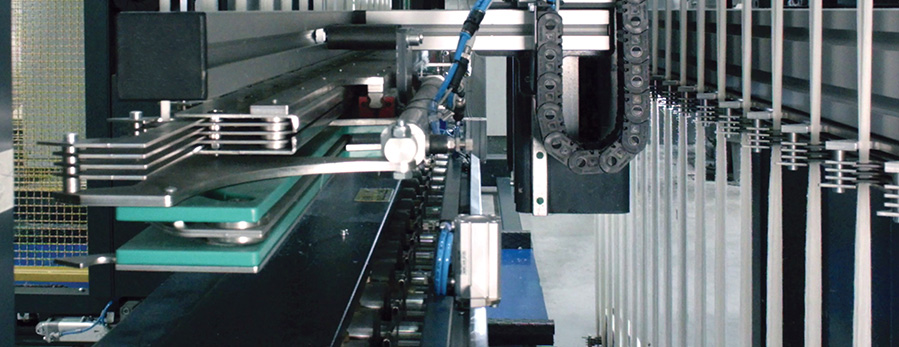
The fully automatic knotting unit on the LINK-MATIC® system (c) 2022 KARL MAYER
Lotustex Textile invests in KARL MAYER's first LINK-MATIC® system for automatic batch change on PRODYE®-S slasher indigo dye range

KARL MAYER has placed its first LINK-MATIC® system on the market. The sophisticated automation solution considerably simplifies the batch change on indigo and sizing machines, thus increasing productivity. An increase of up to 30 % is possible, depending on the number of batch changes per day.

In addition, less yarn waste is produced. Up to 600 m, on indigo dyeing range, of unusable yarn material can be saved with each batch – while at the same time requiring less manpower. During batch changes, only one operator is required to prepare the warper beams for entry into the machine. A fully automatic knotting unit couples the warp yarns of the new batch to the yarns of the batch just finished.

Lotustex Textile has recognized all these advantages for itself. The Egypt-based denim manufacturer, which was only founded in 2019, was the first company to invest in the innovative LINK-MATIC® system in recent months in order to optimize the performance of its PRODYE®-S sizing machine. Especially for its activities in the fashion sector, Lotustex Textile expects a significantly higher flexibility and cost reduction. The delivery date for the new acquisition is November 2022


Continuous processes with LINK-MATIC®

LINK-MATIC® makes it possible to automate the batch change on the PRODYE®-S and PROSIZE® with two subsystems. The first subsystem focuses on feeding the yarn sheets of the new batch from the warper beams to the infeed of the machine. The yarn material is guided to its destination in the lower section of the warper beam frame. Previously, it had to be threaded by hand, usually by two skilled workers, under the bottom cover. The lengthy, complicated process resulted in a batch of waste and numerous sources of error.

With the new solution, only one operator fixes the warp yarns of a warper beam in homogeneous distribution by a clamp in beam length. He then guides the clamp downward and hooks it into a transport chain on each side. The circulating chains take care of the transport to the machine. The time savings are immense. What's more, the quality is right. The yarns are guided to the machine with uniform, constant tension. Here, the second dividing system cuts the warp yarns of the finished batch at the infeed and knots on the warp yarns of the new batch - each with high precision and fully automatically. The actual batch change can thus be reduced to 90 seconds. What appears to be so simple is the result of the precise interaction of well thought-out components such as the clamping device for string formation before knotting and the pneumatic solution for sucking in the yarn ends.

The new LINK-MATIC® system can develop its full potential in conjunction with an moveable creel.

More News from Karl Mayer Textilmaschinen AG

More News on Knitting & Hosiery

#Knitting & Hosiery

KARL MAYER's HKS 2-SE Expands Possibilities for Premium Stretch WARP KNITS

Warp knitted fabrics with a woven look are more in demand than ever in the fashion and apparel industries. Stretch WARP KNITS, in particular, impress with their freedom of movement, breathability, and virtually wrinkle-free wear – thereby opening up new style worlds such as smart casual or business casual. When it comes to the highly efficient production of premium-quality stretch WARP KNITS, the HKS 2-SE has long been the machine of choice. KARL MAYER’s best-selling tricot machine produces standard elastic fabrics characterized by high gauges, smooth, delicate surfaces, and a soft hand feel.

#Knitting & Hosiery

Footwear innovation enabled by warp knitting technology– insights from New Balance

The future of the athletic shoe is increasingly being shaped on warp knitting machines. For KARL MAYER, the footwear industry is one of the most important growth markets – and one of the sectors where innovative textiles can realize their full potential. In his keynote address at the opening of KARL MAYER’s TEXTILE INNOVATION CENTER in Obertshausen in April, Vishnu Prakash Muthusamy, Senior Textile and Materials Engineer at New Balance, explained the opportunities that warp knitting technology opens up for performance, sustainability, and faster development processes, and why textile manufacturers are transitioning from suppliers to development partners.

#ITM 2026

ITM 2026: Mayer & Cie. Global presents itself successfully at international industry trade fair

Mayer & Cie. Global has used ITM 2026 in Istanbul for its first major international appearance since the restart. Together with the Turkish representative Mayer Mümessillik, the company presented its premium circular knitting machines "Made in Germany", explained its future positioning within the group of companies and held talks with customers and representatives from numerous markets. The response to the restart was positive. The clear orientation of the company, the reliable worldwide network of representatives and the resumption of service and spare parts supply were welcomed by customers.

#ITM 2026

Positive market signals for KARL MAYER at ITM 2026

KARL MAYER is pleased with its participation as an exhibitor at ITM 2026. Faced with the challenges of rising domestic costs and fierce competition from low-priced Asian markets, the industry leader had traveled to Istanbul with mixed feelings – yet still draws a really positive conclusion.

Latest News

#Recycling / Circular Economy

Ence and ShareTex begin initial testing of the ATENEA innovation project to promote textile recycling in Spain

Ence and ShareTex are making progress on the Atenea R&D project, which aims to develop a complete value chain for textile recycling in Spain. Specifically, the goal of the ATENEA project—which is funded by the Center for Technological Development and Innovation (CDTI)—is to connect all the necessary stages for the recovery of textile waste, from collection and management, through recycling and transformation into new raw materials, to their incorporation into new textile products.

#Recycling / Circular Economy

DePoly Inaugurates its Showcase Plant in Monthey Switzerland

What if used plastic bottles, PET packaging material and polyester textiles could become raw materials just as high performing as virgin resources? That is the ambition of DePoly, a circular materials company based in Sion, Switzerland which inaugurated its Showcase Plant in Monthey on July 6th & 7th. The first depolymerization facility of its kind and scale in Switzerland, this industrial Showcase Plant represents a major milestone in the company's growth and its journey toward commercialization.

#Recycling / Circular Economy

Commission clarifies rules on plastic bottles recycling

The European Commission today adopted new rules on recycling of single-use plastic beverage bottles made primarily of polyethylene terephthalate (PET bottles). These rules establish, for the first time, a methodology to calculate, verify and report chemically recycled content. This is part of the Commission’s December 2025 plastics package.

#Sustainability

Global Standards establishes new non-profit foundation to strengthen governance

Global Standards gGmbH, the nonprofit organisation behind the globally recognised Global Organic Textile Standard (GOTS), announced a new governance structure designed to support its long-term mission and reinforce organisational autonomy of its Voluntary Sustainability Standards and programmes.

TOP