[pageLogInLogOut]

#Raw Materials

World Water Day 2023: How much water does cotton use?
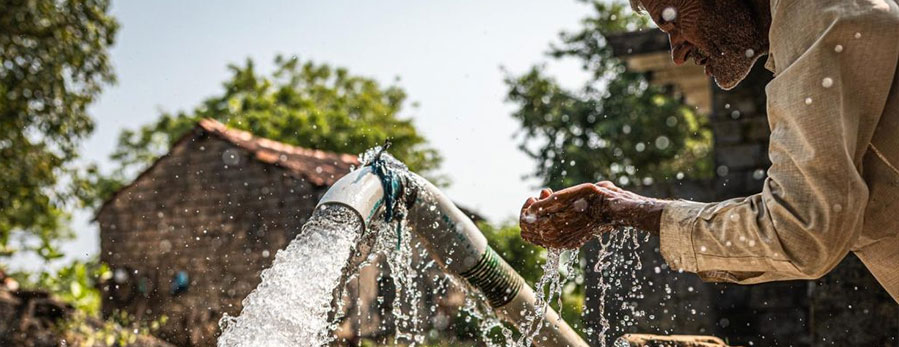
Photo Credit: BCI/Vibhor Yadav Location: Kodinar, Gujarat, India. 2019. Description: Farmworker drinking fresh groundwater.
One of the most common misconceptions about cotton is that it is a ‘thirsty crop’, a plant that requires a large amount of water to grow when compared to other crops. In reality, cotton is an inherently heat and drought-tolerant crop, and not a proportionately high consumer of irrigation water when compared to many other crops such as rice, wheat, maize, soybeans and fodder crops.

In celebration of World Water Day, taking place today, March 22, 2023, let’s explore the facts about cotton’s relationship with water, taking a look at the crucial role of water stewardship in the production of Better Cotton, and the steps we must take to combat water scarcity and pollution.

While it is often stated that cotton is a thirsty crop, data from the International Cotton Advisory Committee (ICAC) shows that, to produce 1kg of lint, roughly equivalent to one T-shirt and a pair of jeans, cotton globally uses 1,931 litres of irrigation water and 6,003 litres of rainwater on average. Relative to other crops, this is not a disproportionately high quantity.

It’s also important to state that the data from ICAC is a global average and the amount of water consumed greatly differs per region. For example, in the US, cotton farmers in the southeast use 234 litres of irrigated water per kilogram of cotton on average whereas farmers in the west use 3,272 litres, demonstrating the importance of focusing on the local and regional context.

However, as highlighted by Transformers Foundation, we must equally recognise that global averages also fail to capture impact, and do not indicate whether water is sustainably managed on a case-by-case basis.

Labelling cotton ’thirsty’ in isolation from its growing context is therefore misleading. Cotton grown in water-stressed regions can contribute to water management challenges, but local climate, poor irrigation systems, poverty, and failure of governance are also contributing factors.


In many regions, cotton is entirely rainfed. However, approximately half of its production area requires some sort of irrigation, and as freshwater becomes an increasingly scarce and precious resource, it is critical that we use it more sustainably.

Poor irrigation practices, or poor water management more generally, can have devastating, long-term effects on farming activities, on the whole water basin’s environment, and on the broader communities who share its water resources. This impact is not limited to the quantity of water available, but also the quality of the water, due to the use of agrochemicals such as pesticides and fertilisers.

By implementing sustainable farming practices, farmers can learn how to use water efficiently on both rainfed and irrigated farms to achieve greater yields and consume and pollute less water. This not only contributes to more sustainable water use but also helps farmers improve their livelihoods and build resilience to climate change — something that will become increasingly important as pressure on water supply intensifies.

The Better Cotton Principles and Criteria provides farmers with a comprehensive framework for using water in a way that improves yields while conserving resources for them and their community. To find out more, head to this link:

https://bettercotton.org/field-level-results-impact/key-sustainability-issues/water-stewardship/



More News from TEXDATA International

#Recycling / Circular Economy

textile.4U publishes special edition “Top 100 Textile Recycling Companies 2025”

With a comprehensive 176-page special edition, textile.4U is dedicating its latest issue entirely to one of the most dynamic and influential topics in today’s textile industry: textile recycling. The new issue, published exclusively in high-quality print, presents the Top 100 textile recycling companies researched and selected by TexData – organizations that already play a key role in the transition to circular textiles or are expected to have a significant impact in the near future.

#Recycling / Circular Economy

Responsible Textile Recovery Act of 2024 signed by Governor

Senator Josh Newman (D-Fullerton) is proud to announce that Senate Bill 707 (SB 707), the Responsible Textile Recovery Act of 2024, has been signed into law by the Governor of California, Gavin Newsom. This groundbreaking legislation establishes the country’s first Extended Producer Responsibility (EPR) textile recycling program, marking a significant step forward in the state’s efforts to combat waste and promote sustainability.

#Textiles & Apparel / Garment

Modtissimo promotes sustainability with 28 coordinates in the Green Circle

Modtissimo is proving more and more to be a textile and clothing show that delivers the latest innovations in the area of sustainability, with the iTechStyle Green Circle being the main showcase for companies' creations. In this 60+4 edition, taking place on 12 and 13 September, 28 coordinates will be exhibited in a section organised by CITEVE and curated by Paulo Gomes.

#Europe

The EU and Egypt team up to mobilise private sector investments at Investment Conference and sign a Memorandum of Understanding underpinning €1 billion in macro-financial assistance for Egypt

At the EU-Egypt Investment Conference, co-organised by the EU and the Government of Egypt on 29-30 June, the EU and Egypt are teaming up to intensify private sector investments in Egypt. They are also signing a Memorandum of Understanding (MoU) for the disbursement to Egypt of up to €1 billion in Macro-Financial Assistance.

More News on Raw Materials

#Natural Fibers

Human Rights Day: Cotton made in Africa reinforces its commitment to ensuring respect for human rights in cotton production

The sustainable cotton standard Cotton made in Africa (CmiA) has always focussed on respect for human rights, including by prohibiting child labour and discrimination. With the new version of the CmiA standard coming into force, AbTF raises requirements for due diligence in the areas of human rights and risk management.

#Research & Development

How innovations drive BASF’s success

“Innovation has always been part of BASF’s DNA. Especially in these volatile times, it is crucial to leverage our innovative strength to develop competitive solutions that differentiate us as a company in our markets and give us a competitive edge,” said Dr. Stephan Kothrade, Member of the Board of Executive Directors of BASF and Chief Technology Officer, at the company’s Research Press Briefing held today. To achieve this, BASF implemented its “Winning Ways” strategy about a year ago with the clear goal of becoming the preferred chemical company to enable its customers’ green transformation.

#Natural Fibers

38th International Cotton Conference Bremen launches registration and unveils key topics

Participants can now register online for the 38th International Cotton Conference Bremen, which will be held on 25-27 March 2026 at the Haus der Bürgerschaft parliament building on market square. All visitors can look forward to a high-calibre conference programme, numerous additional meetings and a valuable exchange of knowledge and information. The comprehensive range of topics covering the entire value chain will provide practical expertise, address current developments, answer key industry questions, and provide new impetus for the future.

#Natural Fibers

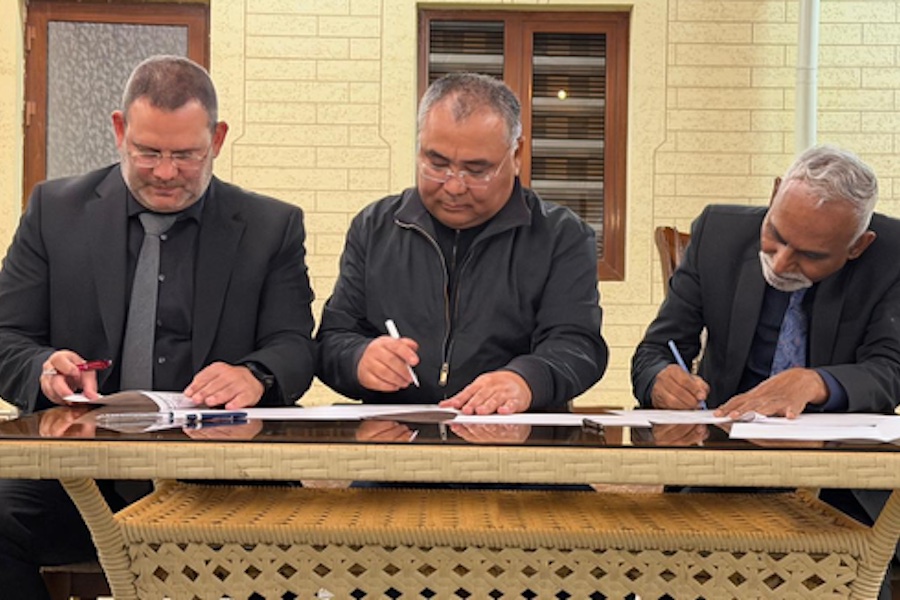
ICAC to collaborate with Uzbekistan and Bizpando on regenerative agriculture

The Government of Uzbekistan has allocated 55,000 hectares of land to implement a regenerative agriculture program for cotton as part of a collaborative project with the International Cotton Advisory Committee (ICAC) and Bizpando, a company with a a blockchain-based internet platform designed to ensure supply chain compliance.

Latest News

#Spinning

First PA66 spinning plant with EvoQuench successfully commissioned

With the successful commissioning of a multi-digit PA66 spinning line for microfiber yarns, Chinese textile company Shandong Nanshan Fashion Technology Co., Ltd. has added yarn production to its textile value chain.

#Knitting & Hosiery

SHIMA SEIKI returns to ShanghaiTex

Leading flat knitting solutions provider SHIMA SEIKI MFG., LTD. of Wakayama, Japan, together with its Hong Kong and Chinese market subsidiary SHIMA SEIKI (HONG KONG) LTD., will exhibit at the ShanghaiTex 2025 exhibition (Booth No.: Hall N3, Booth A20) held in Shanghai, China this month. This marks the return of SHIMA SEIKI to ShanghaiTex after a 14-year hiatus, its last exhibit at the show having been in 2011.

#Research & Development

Fraunhofer CCPE presents the “Monomaterial Design Set” – Innovative solutions for circular product design

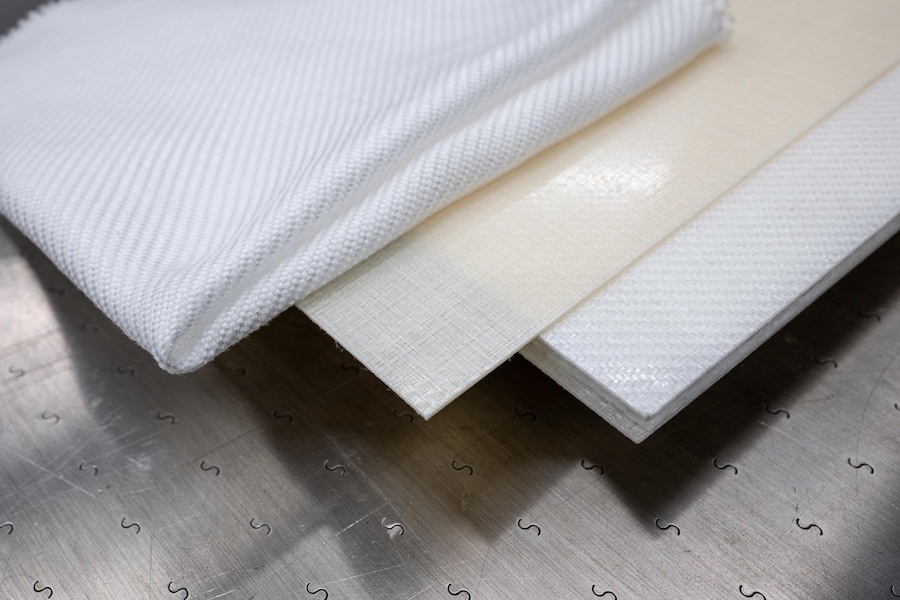
Composite materials made from different types of plastic often extend the lifetime of products but make recycling more difficult in the circular economy. That is why Fraunhofer CCPE has developed the “Monomaterial Design Set”. This new approach helps to reduce the variety of plastics used in durable products and offers circular solutions for designers and product developers.

#Man-Made Fibers

arena introduces renewable LYCRA® EcoMade fiber in its latest swimwear collection

Italian swimwear specialist arena has unveiled a new collection that brings sustainability and performance even closer together. Launched on December 4, the line features swimsuits made from recycled nylon and renewable LYCRA® EcoMade fiber — the first time the bio-based spandex has been used commercially in swimwear.

TOP