[pageLogInLogOut]

#Industry 4.0 / Digitalization

HANNOVER MESSE 2020: How change becomes growth
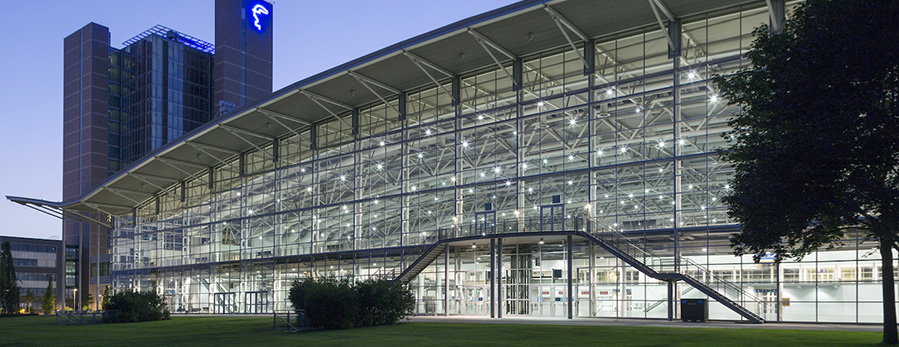
(c) 2020 Deutsche Messe
The manufacturing industry worldwide is grappling with the twin challenges of technological change and economic and political uncertainty. With its keynote theme of Industrial Transformation, HANNOVER MESSE 2020 focuses on the opportunities presented by innovative technologies, steadily growing and ever more readily available amounts of data, and a growing awareness of climate protection.

Hannover. Four megatrends are changing the world: digitalization, individualization, climate protection, and demographic change. Industry is facing a big design task. The current economic and political climates pose additional challenges that make it difficult to maintain reliable partnerships.

HANNOVER MESSE shows global industry the way forward. "The way we live, produce things and work is undergoing extremely rapid change," says Dr. Jochen Köckler, CEO of Deutsche Messe. "The manufacturing industry is in the driver's seat. The challenge is to take the wheel and shape the change. At HANNOVER MESSE 2020, some 5,500 exhibiting companies will show how transformation can be positive, and how change can spark growth and progress."

Data: Source of efficiency and prerequisite for machine learning

In today's world, growth is built on data, and thanks to digitalization, the volume of data generated in industrial production processes is growing exponentially. Our ability to extract meaning from these data and turn them into profit is also growing.

Today's industrial technology solutions are interconnected. Machines and systems communicate and share information with each other autonomously, while software takes care of the documentation, monitoring and simulation. This data revolution is driving efficiency and is the prerequisite for machine learning and artificial intelligence.

Köckler: "At HANNOVER MESSE, we show how machines, production plants and intralogistics processes can be transitioned to the digital world. If you don't make this transition, then sooner or later you will be left behind by your competitors." Against this background, HANNOVER MESSE will feature presentations of software solutions for flexible manufacturing and B2B platforms for industry by big-name companies like Amazon Web Services, Cisco, Google, HUAWEI, IBM, Intel, Kaspersky, Microsoft, SAP, Siemens PLM and Software AG.

5G for industry

This year's HANNOVER MESSE will see the return of the 5G testbed infrastructure that premiered last year. Network equipment providers and users use the testbed to demonstrate the kinds of functionality that the new mobile telephony standard will be able to deliver. Köckler: "The ability to transfer large volumes of data in real time while maintaining high standards of data security is absolutely fundamental to the digital integration of industry. So, in Halls 3 and 21, we are setting up a real, working 5G network." Numerous individual showcases in these halls will be networked via 5G. "Nowhere else in the world will you find such a diverse array of 5G industrial use examples in a real, working 5G network, all under one roof," remarked Köckler.

The convergence of production and logistics

Digitalization is already a major driver of change in all areas of intralogistics. This includes automated warehouses, where processes are controlled by software programs, and where automated guided vehicle systems tour the halls at all hours of the day and night, delivering the right goods and materials in the right quantities to the right place at exactly the right time. Another key aspect is that production and logistics processes are converging and becoming increasingly interconnected, thereby making production more efficient, flexible and cost-effective. This year's HANNOVER MESSE will hold a mirror to these developments by prominently featuring logistics and intralogistics solutions.


Climate protection through innovation: the road to carbon-neutral production

Industrial production is energy-intensive. That is why resource efficiency, energy efficiency, and carbon-neutrality have been on the industry agenda for many years.

The climate debate currently taking place in society is helping with this by adding further momentum to the development of sustainable advanced technologies and carbon-neutral business models. Whatever form these technologies and business models take – whether smart solutions for energy, circular economy models or lightweight design – the resulting gains in terms of resource conservation, energy efficiency and process optimization will do more than merely counter climate change; they will be good for business as well. That is why one of the key messages of HANNOVER MESSE 2020 is that climate protection and forward-looking industrial policies are two inseparable sides of the same coin.

Energy in transition: Hydrogen as a motor for industry

Hydrogen and fuel cell technologies span both infrastructure and industrial applications and are steadily gaining ground in the alternative energy mix.

For many years at HANNOVER MESSE, the international "Hydrogen + Fuel Cells EUROPE" showcase has been a key driver of growth in the hydrogen economy. This year the group exhibit boasts record participation, with more than 200 exhibiting companies from around the world. Visitors gain a comprehensive overview of energy generation and use, transport and mobility, and the interrelationships between the building-systems, manufacturing, transport, and energy sectors.

E-mobility infrastructure and related technologies are also a big topic in Hannover: Exhibitors show everything from transportation systems and charging technology to electricity network infrastructure and stationary energy storage technologies.

Young guns: Tech startups shaking up the industrial sector

One important effect of digitalization is that it empowers small companies to achieve things that were once the exclusive preserve of the big industrial players. Startups are now able to punch above their weight with disruptive ideas and technologies that really make a mark.

Tech startups from all around the world are rising to the challenge and helping to shape the transformation of industry in all kinds of ways, whether in the form of AI-powered software, virtual reality applications, sensor technologies, smart materials or intelligent energy solutions.

Not only young disrupters present pioneering visions of the future of industry at HANNOVER MESSE. The show also profiles Indonesia's impressive roadmap for the future. HANNOVER MESSE's official Partner Country for 2020 is taking decisive steps towards the realization of Industry 4.0.




More News from TEXDATA International

#ITM 2026

ITM 2026: The new geography of textile production

New production hubs are emerging across North Africa and Central Asia, while Türkiye is accelerating its transformation toward higher-value, technology-driven and more sustainable textile manufacturing.

#Research & Development

“Production is a product”

From technical textiles and AI-driven robotics to the limitations of textile circularity: Professor Dr Thomas Gries looks back on more than two decades of development at ITA Aachen. In the interview, he explains why production technology remains a decisive success factor, discusses international collaborations and innovation ecosystems, and shares his views on the transformation of production landscapes and the challenges facing an increasingly regulated industry.

#Knitting & Hosiery

“We need to move away from the price trap and return to a value-driven mindset.”

With its new Textile Innovation Center, KARL MAYER is sending a strong signal for innovation, collaboration, and the future of textile applications. In this interview, Karl Josef Mayer discusses new opportunities in warp knitting, the processing of staple fibres, recycling, the changing role of machinery manufacturers, and why the textile industry must once again focus more strongly on the value of textiles. by Oliver Schmidt

#Associations

“Innovation, resilience and international experience remain the great strengths of the Swiss textile machinery industry”

Geopolitical uncertainty, growing competitive pressure from China, new free trade agreements and the shift towards a circular economy are currently reshaping the global textile industry. In this interview, Cornelia Buchwalder discusses the current mood within the Swiss textile machinery sector, the industry’s distinctive innovative strength, new market opportunities in India and Asia, and the technological trends that could shape the upcoming trade fair cycle leading up to ITMA 2027.

More News on Industry 4.0 / Digitalization

#ITM 2026

Driving digitalization, efficiency, and Smart Manufacturing across textiles and carpets

At this year’s ITM, BMSvision proudly showcases its next leap forward in digital manufacturing excellence. As a long-standing global pioneer in Manufacturing Execution Systems (MES) for the textile and plastics industries, BMSvision continues to accelerate digital transformation by delivering powerful, data-driven solutions that boost productivity, enhance quality and support sustainable growth. Visit BMSvision at the Vandewiele booth in Hall 7, Booth 710, to experience the future of textiles manufacturing.

#Industry 4.0 / Digitalization

Textile ETP launches digital transformation strategy, calling for urgent collective action across the value chain

Textile ETP’s DigitX Innovation Hub published its strategic roadmap for the digital transformation of Europe's textile and apparel industry.

#Research & Development

Textilfabrik 7.0 launched: Mönchengladbach becomes a real-world lab for sustainable textile production

With the official kick-off event of the Textilfabrik 7.0 (T7), a major transformation project for the German textile and apparel industry has been launched in the Monforts Quarter in Mönchengladbach. At the “Textile Roundtable,” an event format organized by the Zukunftsagentur Rheinisches Revier, representatives from industry, research, politics, and the regional economy came together to jointly lay the foundation for CO₂-neutral, circular, and economically viable textile production in Germany.

#Man-Made Fibers

OnceMore® from Södra brings end-to-end traceability for circular Man-made Cellulosic Fibers (MMCF) using TextileGenesis

OnceMore® from Södra, the world’s first large-scale process for recycling blended fabrics into high‐quality dissolving pulp, will begin using TextileGenesis, a Lectra company, to strengthen traceability from raw material to retail across the value chain. OnceMore® produces dissolving pulp made from blended textile waste and wood sourced from responsibly managed Swedish forests. By integrating TextileGenesis, OnceMore® supports the growing need for verified data and secure, transparent tracking throughout increasingly complex supply chain.

Latest News

#ITM 2026

The future of textiles, the power of trade, and the summit of technology come together at ITM 2026

ITM 2026 International Textile Machinery Exhibition, one of the most prestigious organizations in the textile technologies sector, opens its doors to visitors between June 9-13. Expected to break records in terms of both exhibitor and visitor numbers, as well as the technological vision it presents, ITM 2026 will transform into a global trade hub with machine sales, and new business collaborations.

#Nonwoven machines

ATCO Hygienics, Uzbekistan, orders baby diaper production line from ANDRITZ

International technology group ANDRITZ has received an order from ATCO Hygienics to supply a new baby diaper production line for its plant in Tashkent, Uzbekistan. The order is included in ANDRITZ’s order intake for the first quarter of 2026. Commissioning of the production line is scheduled for the end of 2026.

#Weaving

Itema manufactures the first Projectile Weaving Machines “Made in Italy” at its Colzate Headquarters.

Itema proudly announces an important industrial milestone: in early May, the first Itema projectile weaving machines manufactured in Italy were successfully produced at the Group’s headquarters in Colzate.

#Spinning

Nico Pedretti appointed as Managing Director Graf Group

As of June 1, 2026, Nico Pedretti has assumed the role of Managing Director Graf Group. With more than 20 years of international industrial experience and extensive expertise in Operations, Supply Chain Management, Finance and Controlling, he brings a broad range of leadership and business experience to support Graf’s continued success.

TOP