[pageLogInLogOut]

#ITMA Asia + CITME 2024

KARL MAYER Technische Textilien at ITMA ASIA + CITME - a presentation that opens up many opportunities

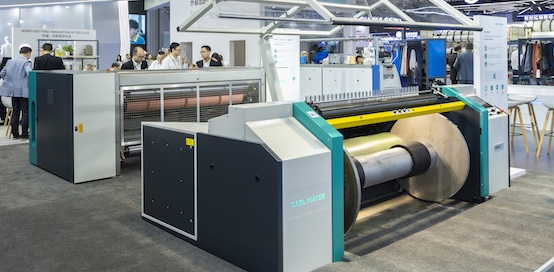
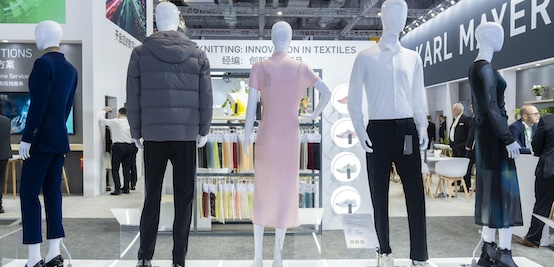
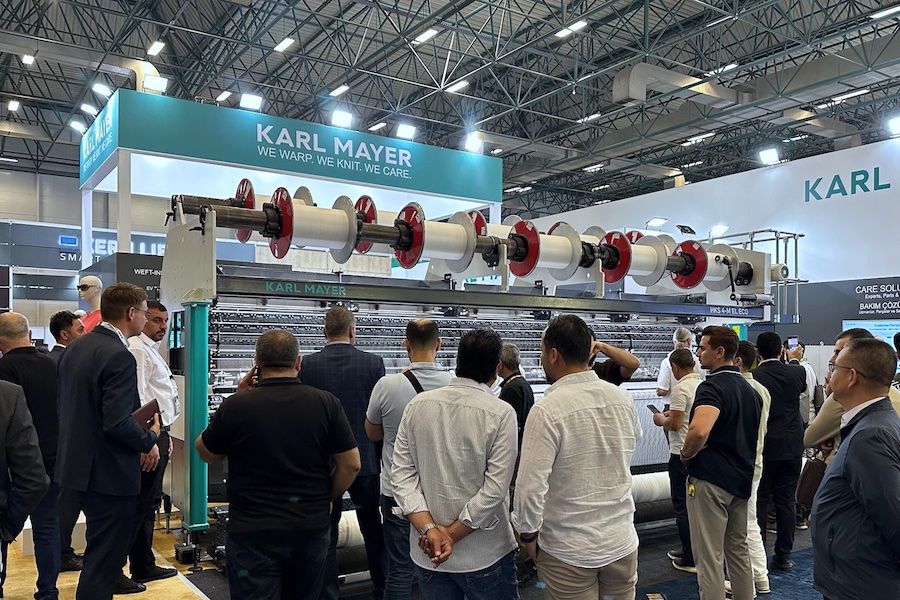
During ITMA ASIA + CITME 2024, KARL MAYER presented “Master the Change” solutions for numerous areas of the textile industry, including the technical textiles segment. At its stand in the Shanghai National Exhibition and Convention Center, the global player showed how the non-crimp fabrics from its highly productive composite machines can be used to exploit promising sales potential with lightweight construction applications.

More business with composites, greater efficiency in warp knitting with weft insertion

At an in-house show accompanying the trade fair at KARL MAYER (CHINA) in Changzhou, there was also a performance demonstration of innovative warp knitting machines with weft insertion with a 2nd generation TM WEFT and the new WEFT GRID ECO. Thanks to its special performance, the newcomer focuses on the production of lightweight glass fabrics for use in the construction industry, for example as plaster grids or crack tape.

Multiaxial non-crimp fabrics for a high-margin market

The response to the two exhibitions was not as high as at a typical technical textiles trade fair. In particular, the number of visitors from countries outside Asia was below the expectations of Jan Stahr, Regional Sales Manager of KARL MAYER's Technical Textiles Business Unit. Nevertheless, the market expert draws a positive conclusion. “We held numerous high-quality discussions with different customers. Among them were a surprising number of traditional warp knitting companies who talked to us about entry opportunities in the carbon composite sector,” says Jan Stahr.

The reactions to the samples of non-crimp fabrics exhibited in Shanghai and to the application video shown met all expectations. Particularly pleasing was the visit to the KARL MAYER stand by an up-and-coming carbon composite player, which is characterised by a high willingness to innovate. Representatives of his top management came to exchange ideas. The reasons for the great inter-est in carbon fiber-reinforced composites are, on the one hand, the affordable raw material prices since China's entry into fiber production and, on the other hand, an increased demand for light-weight components, especially in the field of e-mobility. The carbon composite business attracts newcomers and those switching to it with higher margins than in the glass fiber reinforcement seg-ment.

There was also a promising exchange about the MAX GLASS ECO. The reliable production machine for the extremely economical production of standard articles made of glass fibers is particularly interesting for the wind power market, which is currently picking up speed again in China and India after years of consolidation. The timing of the machine presentation via video and with samples could not have been better!
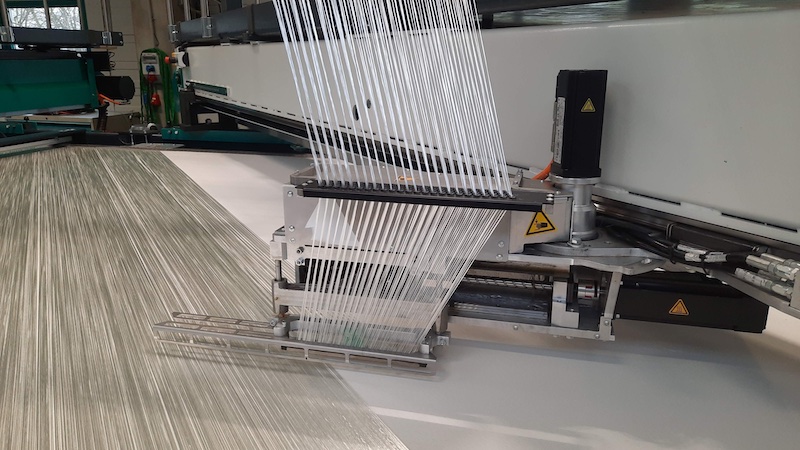
The weft layer as a detail of the KARL MAYER MAX GLASS ECO © 2024 KARL MAYER


Warp knitting machines with weft insertion with market tailoring

Another crowd-puller was the TM WEFT for the in-house show at KARL MAYER (CHINA). Many visitors took the opportunity to see the performance of the highly efficient machine for themselves - thanks to a targeted upgrade, the new version is 20% faster than its predecessor. Some customers also decided to invest during the event. Demand is being fuelled in particular by the trend-driven fashion sector. “We are seeing more and more outerwear fabrics being produced at TM WFT instead of interlining articles,” explains Jan Stahr. In line with this development, the exhibition machine in Changzhou produced a chic ocean wave fabric with striking 3D surface effects. TM WEFT customers include many weaving companies that have been able to reduce their machinery and there-fore their personnel requirements by switching to the highly efficient warp knitting machine with weft insertion.
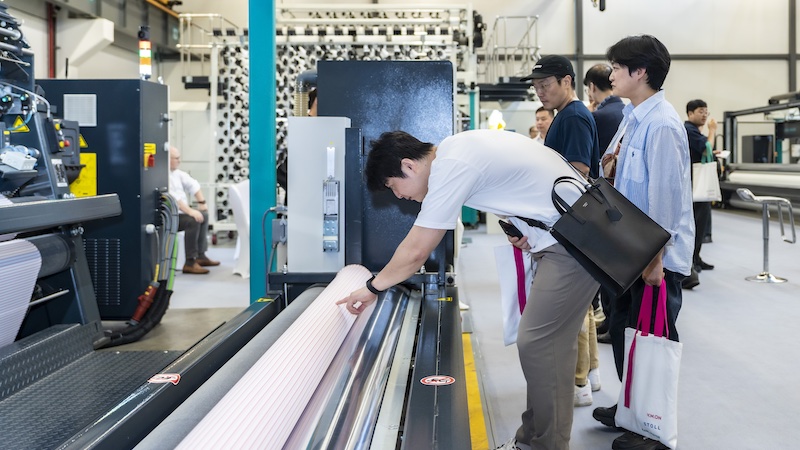
MT WEFT in action on the in-house show © 2024 KARL MAYER


Confirmation from the market

The new WEFT GRID ECO aroused interest due to its price-performance ratio. It achieves a working speed of 1,800 rpm and has convinced customers to conduct performance tests in their pro-duction in the coming weeks. However, the growth impulses from the construction sector, the main customer for WEFT GRID ECO products, is still below expectations.
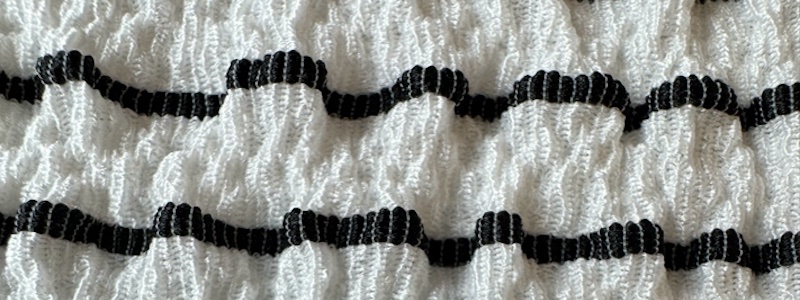
Ocean Wave Fabric produrced on a Karrl Mayer TM WEFT © 2024 KARL MAYER


The feedback from the presentations at ITMA ASIA + CITME 2024 confirms that KARL MAYER's Technical Textiles Business Unit is on the right track.


More News from KARL MAYER Textilmaschinenfabrik GmbH

#Knitting & Hosiery

Live more beautifully and comfortably with Warp Knits

Knitted fabrics are the all-rounders among home textiles. They can be designed in many different ways and are used in mattresses, blankets and pillows as well as in terry towelling, curtains and upholstery fabrics to create trendy designs, constantly new products and good business.

#Knitting & Hosiery

The newcomers HKS 3-M EL ECO and HKS 4-M EL ECO set new standards in the tricot market

Short development cycles, frequent pattern changes, and maximum efficiency – even with small batch sizes: Today's global fashion and apparel market demands more flexibility than ever before. High-performance warp knitting machines with compound needles (HKS) and EL pattern drive are KARL MAYER's answer to this challenge.

#Knitting & Hosiery

KARL MAYER celebrates 35 years of EL pattern drive

KARL MAYER is celebrating an anniversary this year: on 30 November 1990, the first warp knitting machine with electronic guide bar control, the KS 4 EL, was delivered – another milestone for patterning. As early as 1980, the SU gearbox with the MRS42SU had initiated the transition from mechanical chains to digital data.

#ITMA Asia + CITME Singapore 2025

India becomes growth engine for the warp knitting industry

ITMA ASIA 2025 exceeded all expectations for KARL MAYER – above all thanks to the strong interest from India: around 30% of the qualified discussions were held with partners from this traditional textile country. The response underlines the growing importance of the Indian market, which could become the second largest sales region for KARL MAYER after China. The warp knitting industry in particular is developing dynamically.

More News on ITMA Asia + CITME 2024

#Weaving

Innovations for warp preparation at the cutting edge

At ITMA ASIA + CITME in October, KARL MAYER presented solutions for lower production costs and environmental impact and greater efficiency in the warp preparation sector. After the trade fair, the company can draw a positive conclusion, both in terms of the number of visitors and the quality of the discussions.

#ITMA Asia + CITME 2024

Successful warp knitting machines and textile show to master the changes of our time

Warp knitting companies in Asia are also facing fundamental changes and challenges considering the tense global economic and geopolitical situation. During ITMA ASIA + CITME in October 2024, KARL MAYER showed how these can be mastered: with innovations that are primarily aimed at greater profitability, flexibility and sustainability.

#ITMA Asia + CITME 2024

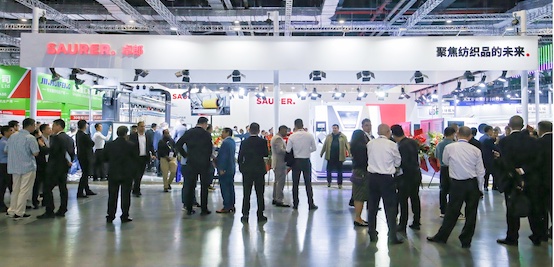
Successful at ITMA Asia 2024 - Saurer's technology highlights

At ITMA Asia 2024, Saurer's new products were very popular and in the focus of visitor interest. Investment in new equipment seems to be on the rise and Saurer was positively surprised by the number and quality of visitors as well as the deals closed during the exhibition. Overall, visitors showed great interest in all the Saurer innovations designed to contribute to the future of textile technology and yarn production.

#ITMA Asia + CITME 2024

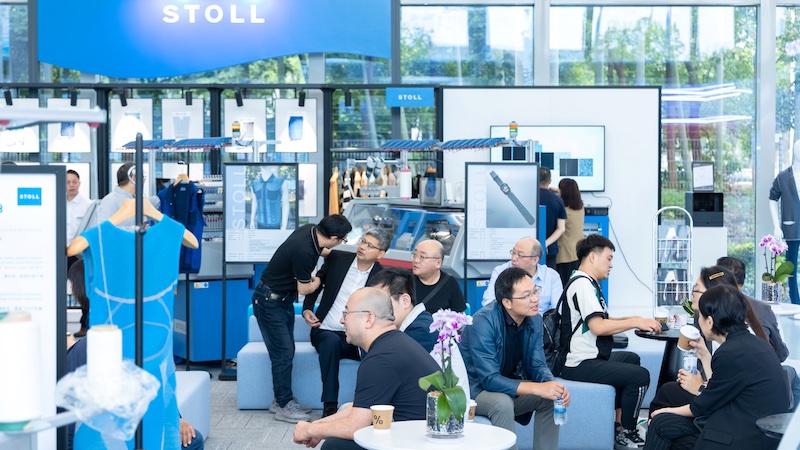
STOLL pushes the flat knitting industry in China

At this year's ITMA ASIA + CITME, the KARL MAYER GROUP demonstrated its innovative power on two platforms at once: at a well-frequented stand in the Shanghai National Exhibition and Convention Centre and at an in-house show at its Chinese location in Changzhou.

Latest News

#Research & Development

Innovation center for textile circular economy inaugurated

Just over eight months after the foundation stone was laid, the new Innovation Center for Textile Circular Economy was officially inaugurated today at TITK Rudolstadt. Thuringia's Minister President Mario Voigt, TITK Director Benjamin Redlingshöfer, and other guests of honor cut the ribbon to the modern building complex and viewed the premises, which are now ready for occupancy. The “DICE – Demonstration and Innovation Center for Textile Circular Economy” is TITK's largest single investment to date. The Free State of Thuringia supported the total cost of €11.5 million with €8 million in GRW and FTI funding.

#Research & Development

Sustainable design of Geosynthetics and roof underlayments made from recyclates

Is it possible to recover plastic recyclates from previously unused waste streams in order to produce high-quality fibers and films? How can bio-based polymer fibers be manufactured so as to allow adjustable biodegradability? These are the questions being addressed by researchers from the Fraunhofer Cluster of Excellence Circular Plastics Economy CCPE in the Zirk-Tex project.

#Associations

Waste2Fashion: FTTH Committed to advancing Circular Fashion in the Mediterranean

As an official partner of the Waste2Fashion project, the Tunisian Federation of Textile and Apparel (FTTH) participated in the Kick-off Meeting held on 10–11 December in Spain. The event brought together project partners from across the Mediterranean, including Spain, Italy, Egypt, Lebanon, and Tunisia, to align on a shared vision and initiate the first implementation steps.

#Associations

AATCC announces 2025 Herman & Myrtle Goldstein Graduate Student Paper Competition winners

The American Association of Textile Chemists and Colorists (AATCC) recognized the winners of the 2025 Herman & Myrtle Goldstein Graduate Student Paper Competition. Founded in 1982 to give student members the chance to conduct and present original research, the competition was renamed in 1994 in honor of Herman and Myrtle Goldstein, following their US$60,000 endowment. Their gift is a lasting remembrance of their dedication to young people in the textile industry.

TOP