[pageLogInLogOut]

#Spinning

The Truetzschler Card TC 19i: The first intelligent card
(c) 2019 Truetzschler
Is there a formula for successful innovations? Definitely not. But how does Truetzschler manage to continuously raise the bar in carding technology? How can the Truetzschler Card TC15 be surpassed in terms of quality and performance?
“The dialogue with our customers is decisive for our developments. We listen to them very carefully when they talk about unresolved problems. High raw material costs, personnel bottlenecks and fluctuating raw material qualities combined with constantly high quality requirements are among the present circumstances that need to be overcome”, stated Markus Wurster, Sales Director at Truetzschler Spinning.

The fact that Truetzschler has the technical competence to implement these requirements was demonstrated once again at ITMA 2019. A new chapter in card development has been be opened: The Truetzschler card is intelligent. It performs important settings completely independently and with a precision not achievable by humans, which results in an unprecedented level of quality.
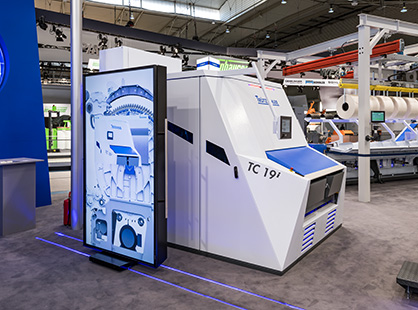
The new Card Tc 19i presented on ITMA 2019 (c) 2019 truetzschler


“This is the future!” and “This is the development we need!” were the reactions of booth visitors which sales manager Ralf Müller experienced at this year’s ITMA. “The possibility to increase quality and productivity as well as solving personnel issues through features like T-GO or WASTECONTROL fascinated our customers”, he summarized the visitor' s interests. 

TC 19i main features at a glance:

  • Self-optimizing precision 

For cotton carding, the carding gap between the cylinder and flat clothing should be as small as possible. The optimum gap is 3/1000” (0.075mm) for many types of cotton. For comparison: Not even a sheet of paper fits inbetween. Even an experienced technologist cannot carry out such narrow settings when the card is cold. During operation, centrifugal forces and temperature increases influence these settings significantly.
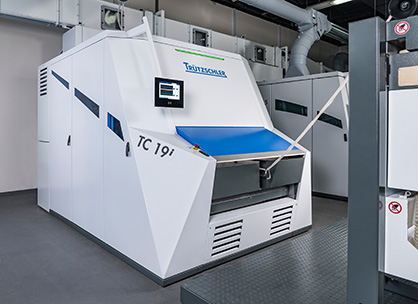
(c) 2019 Truetzschler


On the Truetzschler Card TC 19i with the Gap Optimizer T-GO, a basic flat setting is only carried out once by our specialists. Afterwards, T-GO ensures an ideal carding gap at all times, whether the card is cold or warm, after clothing grinding, even after clothing replacement. This is a permanent, self-optimizing, intelligent process that takes place without any production interruption. It responds automatically to changing parameters such as:

    • Material properties
    • Production level
    • Cylinder speed
    • Environmental influences such as room temperature
    • Maximum raw material utilization 


    :UL


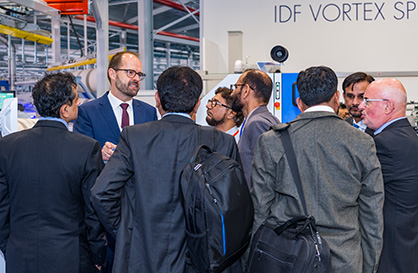
Many visitors have been very interested in the new card TC 19i and wanted to learn more about its intelligence (c) 2019 Truetzschler


The key to the profitability of a spinning mill is the maximum utilization of the raw material. On TC 19i, an optical sensor monitors the waste in the suction, thus providing the data for WASTECONTROL. If too many good fibers end up in the waste, the system adjusts the mote knife setting on the WEBFEED via a servomotor.

  • Permanent quality control 

The Truetzschler Nep Sensor NCT (separat option) permanently monitors the web on the doffer. A camera registers and distinguishes neps, trash particles and seed coat fragments. The data is displayed on the screen of the cards and also transmitted to the Truetzschler mill monitoring system My Mill. In this way, multiple cards can be monitored regarding quality delivery, and any deviation will immediately be recognized.

  • Smart and easy operation


The TC 19i provides a multitouch screen that can be used as easily and intuitively as a smartphone. Individual operator recognition and authorization is possible through an RFID chip. In addition, the remote card display T-LED visualizes important machine information in an easy way and helps operators to stay aware of each machine’s status. 

Jürgen März, carding specialist at Truetzschler, received a lot of positive feedback at ITMA: “By talking to our customers about problems in their mills, we learned about their dependence on skilled staff. The precision of the flat setting is highly influenced by the operator, but reliable and well-trained personnel is difficult to find today. Customers were very impressed by the fact that very narrow settings can be set completely independent. The carding gap is no longer set by a technician, but by an intelligent system. The limitations of human precision have been overcome by Truetzschler machinery at this point.”
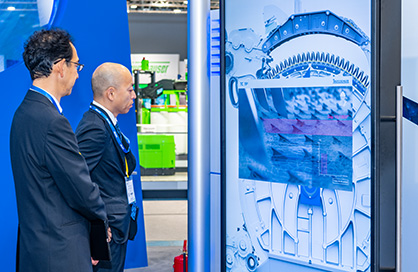
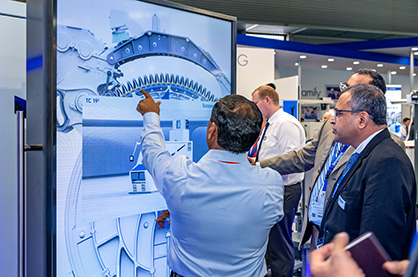
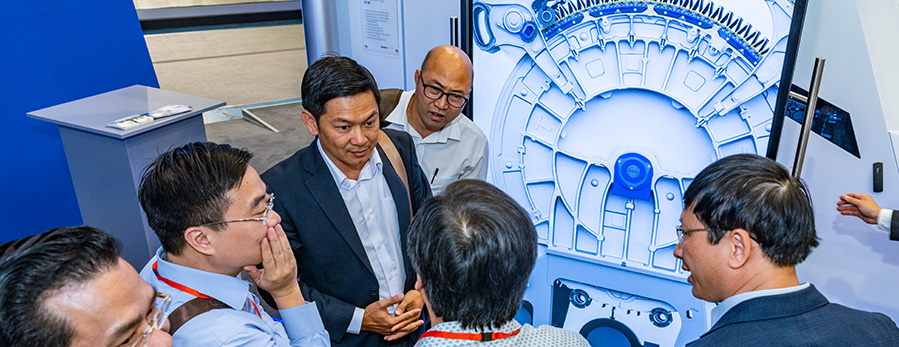
Impressed visitors in front of the new card TC 19i (c) 2019 Truetzschler


(c) 2019 truetzschler


More News from Truetzschler GmbH & Co. KG

#Spinning

Perfect quality through collaboration: Machinery from Trützschler, Toyota and Murata at Zirve Tekstil

In today’s textile industry, excellence is not achieved by chance – it’s the result of deliberate decisions, technical expertise, and the courage to go beyond conventional paths. The Turkish company Zirve Tekstil has done just that: by combining the best technologies from Trützschler, Toyota and Murata, they’ve created a production setup that delivers outstanding yarn quality – recognized worldwide.

#Spinning

Details matter: How Trützschler cylinder wires boost efficiency in Pakistan’s spinning sector

Pakistan’s textile industry, especially its spinning sector, is the backbone of the national economy and a vibrant hub of innovation. Today’s spinning mills face growing demands for efficiency, quality, and sustainability. From the serene northern valleys to the vibrant port city of Karachi in the south, mills like Suraj Cotton Mills, Liberty, and Nishat Chunian are turning to advanced solutions.

#ITMA Asia + CITME Singapore 2025

T-CAN – Revolutionizing can transport

In virtually all spinning mills, transporting sliver cans is still done manually. Rising labor costs, lack of operators and increasing quality requirements make this a growing challenge. With T-CAN, Trützschler introduces a practical solution: a fully automated can transport system that will be presented live at ITMA ASIA 2025 in Singapore.

#Spinning

Pre-Cleaner CL-X: The future of cotton cleaning

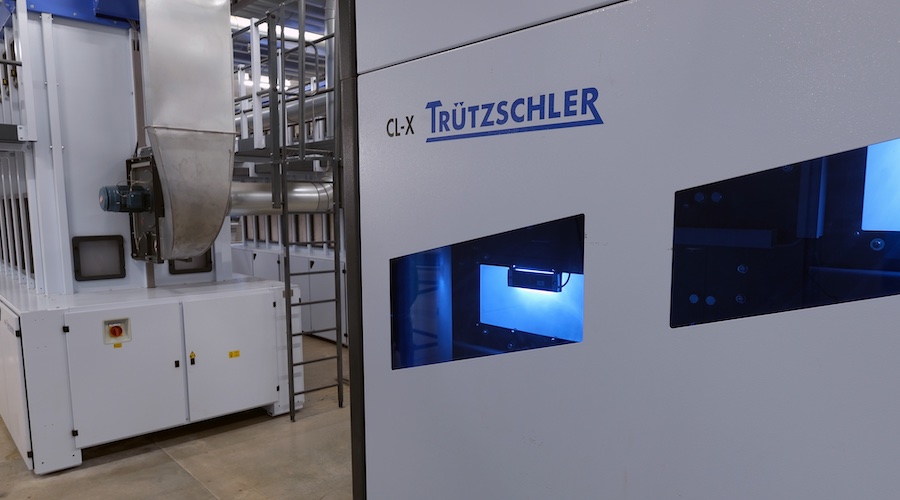
What if the future of cotton cleaning was already here – setting a new standard for cleaning efficiency, productivity and energy savings? That future has a name: CL-X. Since its market launch in 2022, the Pre-Cleaner CL-X has become a true bestseller, proving its value in several hundred customer applications worldwide. Now, new results from Türkiye demonstrate again how the Pre-Cleaner CL-X outperforms the competition.

More News on Spinning

#Techtextil 2026

DIENES at Techtextil 2026: Flexible pilot lines for bio-based fiber development

The growing relevance of bio-based materials in technical textiles is accompanied by increasing demands for reproducibility, high-quality data, and scalable process routes. Especially when working with cellulose and its derivatives, chitosan, lignin-based approaches, or bio-based PAN as a carbon-fiber precursor, R&D teams face variable feedstock quality, tighter process windows, and the need for reliable comparability across trials. This calls for flexible, data-driven experimental setups that can be reconfigured efficiently when recipes, solvents, and raw-material batches change.

#Techtextil 2026

RETECH showcases high-precision godets for high-performance fiber processing at Techtextil 2026

RETECH designs and manufactures godets and draw frames for heated, ambient and cooled processes, enabling precise heat treatment and consistently high yarn quality for a wide range of polymers and applications, with process temperatures of up to 400 °C for high-performance fibers. The company’s key competence lies in exact and stable temperature and speed control, individually adapted to the specific material and process requirements.

#Spinning

Barmag presents the next generation of POY production – energy-efficient and partial-automated

With POY 2.0, Barmag is introducing a completely redesigned spinning concept that takes the production of partially oriented yarn (POY) to a new level in terms of technology and economy. The solution, which was presented to a selected audience of experts for the first time at ITMA Asia + CITME 2025, was met with great enthusiasm: several yarn producers worldwide immediately expressed their interest in a pilot plant.

#Spinning

Development of bio-based polyethylene fibers for textile applications – BB Engineering partici-pates in the bioPEtex research project

In the German research project bioPEtex, BB Engineering (BBE) is working with other partners to develop textiles made from 100% bio-based polyethylene (PE). The aim is to make use of this poly-mer, which has hardly been used in the chemical fiber industry to date. BBE is contributing its spinning and texturizing expertise and developing the texturing process on an industrial scale. The first promising results are already available – opening up new opportu-nities for sustainable and economically attractive applications in the textile industry.

Latest News

#Techtextil 2026

Smart sensors, smart savings - Reducing energy and cost in textile finishing

As energy prices, sustainability requirements and quality expectations continue to rise, manufacturers of technical textiles face increasing pressure to optimize efficiency while ensuring process reliability. At the same time, skilled labor shortages require production systems that are intuitive, automated and easy to manage. PLEVA addresses these challenges with robust, maintenance-friendly sensor technologies combined with intelligent process control.

#Texprocess 2026

Gunold showcases embroidery product range and services at Texprocess

At Texprocess 2026, GUNOLD will present numerous hands-on examples related to embroidery in Hall 8, Booth E20. The focus is on creative embroidery designs as well as the extensive product range of threads, nonwovens, and accessories for embroidery and embellishment. “Trade visitors can once again look forward to many new and creative embroidery designs. Of course, we will also showcase the matching products required to bring these ideas to life,” announces Marketing Manager Stephan Gunold.

#Nonwovens

EDANA and more than 70 industry organisations call for consistent exemptions in EU packaging regulation

EDANA, together with more than 70 industry associations and organisations, has issued a joint statement commenting on the European Commission’s Delegated Act under Article 29 of the Packaging and Packaging Waste Regulation (PPWR).

#Raw Materials

A Powerful Opening: Global thought leaders launch the International Cotton Conference Bremen

The International Cotton Conference Bremen will open on 25 March 2026 in the Parliament building of the Free Hanseatic City of Bremen with a keynote session of exceptional calibre. Distinguished international experts will set the stage for the conference by offering incisive perspectives on the most pressing challenges and the defining trends shaping the future of the global cotton trade. Their insights will span a broad spectrum — from geopolitically driven disruptions affecting global supply chains to the opportunities emerging from innovation-led agriculture capable of supporting a growing world population. Together, these opening keynotes will frame the dialogue of the conference, highlighting both the complexity of today’s market environment and the pathways toward a resilient and forward-looking cotton sector.

TOP