[pageLogInLogOut]

#ITM 2022

Erhardt+Leimer presents two new inspection technologies at ITM 2022
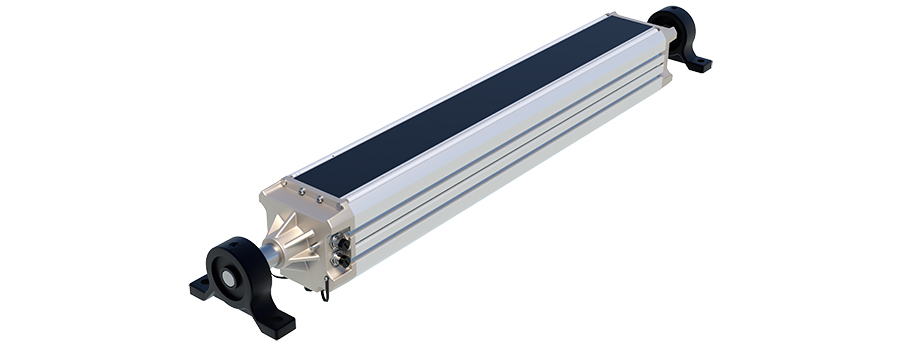
The metal detector MD 1005 protects textile machines against damage due to pieces of metal, e.g. broken needles, in the web © 2022 Erhardt+Leimer
At ITM the Erhardt+Leimer group will present, along with its proven systems and devices for web automation, two new inspection technologies, a seam sensor and a metal detector, for the detection of cross-seams and pieces of metal in the web. With these devices, production processes can be optimized and made more reliable.

New inspection technologies for improved 

Sensor acquires cross-seams as reliably as the human eye

The seam sensor marketed with the identifier SI 1001 detects, optically and therefore without contact, any type of seam on printed or single-color fabrics. New software algorithms make it possible for the first time to acquire cross-seams at the level of human perception. Along with a light transmitter and a matrix camera with lens, the sensor also includes a WLAN card for reliable communication with a smartphone, tablet or any other mobile terminal device. A dedicated app is also available using which, for instance, special seams can be tested offline. If a cross-seam is detected, a digital output in the sensor is switched so that, depending on the machine, for example the calender rollers can be opened, the shearing blade raised briefly or the seam left to run through the digital printing press without printing. The seam sensor can also be used to calculate the running meters per batch.

Metal detector with segment-by-segment evaluation

During the production of textiles, small metal particles find their way into the web due to the various processing steps. If these particles are not all detected, extremely costly damage may occur on the downstream calender rollers and shearing tools. In addition, there is also a risk of catalytic reactions in wet finishing. As a result, whole web sections are often converted into scrap. The metal detector ELMETA MDA 1005 / 1006 reliably and accurately detects the smallest metal particles over the entire width of the web. Per segment ?(300 mm) a signal LED on the sensor indicates the position of the metal particle in the web. The metal detector can be used for dry and damp web textiles, non-woven fabrics and carpets. Its function is assured at production speeds from 2 to 500 m/min.


Web cleaning for various application areas

ELCLEAN is a modular web cleaning system for the removal of dust and similar soiling in production lines where there is only little space. The system consists of components such as brushes and fabric rollers, as well as components that operate without contact such as powerful fans and a highly efficient vacuum system. The system is equipped with all components or only with certain components depending on the application. Suitable filter systems make possible straightforward, reliable disposal of the soiling. The system is available in both a cantilever version for narrow webs and with support on both sides for wide webs. It can be integrated into production lines or operated as a standalone machine.
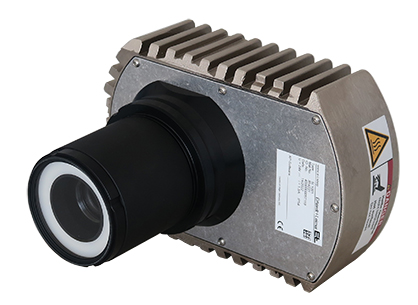
The seam sensor SI 1001 detects a very wide range of seams, even on printed textiles, thanks to special algorithms © 2022 Erhardt+Leimer


E+L will be present at ITM together with ITEKS and other partners in hall 14 on stand 06B.



More News from Erhardt + Leimer GmbH

More News on ITM 2022

Latest News

#Research & Development

Innovation center for textile circular economy inaugurated

Just over eight months after the foundation stone was laid, the new Innovation Center for Textile Circular Economy was officially inaugurated today at TITK Rudolstadt. Thuringia's Minister President Mario Voigt, TITK Director Benjamin Redlingshöfer, and other guests of honor cut the ribbon to the modern building complex and viewed the premises, which are now ready for occupancy. The “DICE – Demonstration and Innovation Center for Textile Circular Economy” is TITK's largest single investment to date. The Free State of Thuringia supported the total cost of €11.5 million with €8 million in GRW and FTI funding.

#Research & Development

Sustainable design of Geosynthetics and roof underlayments made from recyclates

Is it possible to recover plastic recyclates from previously unused waste streams in order to produce high-quality fibers and films? How can bio-based polymer fibers be manufactured so as to allow adjustable biodegradability? These are the questions being addressed by researchers from the Fraunhofer Cluster of Excellence Circular Plastics Economy CCPE in the Zirk-Tex project.

#Associations

Waste2Fashion: FTTH Committed to advancing Circular Fashion in the Mediterranean

As an official partner of the Waste2Fashion project, the Tunisian Federation of Textile and Apparel (FTTH) participated in the Kick-off Meeting held on 10–11 December in Spain. The event brought together project partners from across the Mediterranean, including Spain, Italy, Egypt, Lebanon, and Tunisia, to align on a shared vision and initiate the first implementation steps.

#Associations

AATCC announces 2025 Herman & Myrtle Goldstein Graduate Student Paper Competition winners

The American Association of Textile Chemists and Colorists (AATCC) recognized the winners of the 2025 Herman & Myrtle Goldstein Graduate Student Paper Competition. Founded in 1982 to give student members the chance to conduct and present original research, the competition was renamed in 1994 in honor of Herman and Myrtle Goldstein, following their US$60,000 endowment. Their gift is a lasting remembrance of their dedication to young people in the textile industry.

TOP


