[pageLogInLogOut]

#INDEX 23

Italian exhibitors at INDEX23 cover a very wide range of textile machinery for the nonwovens sector

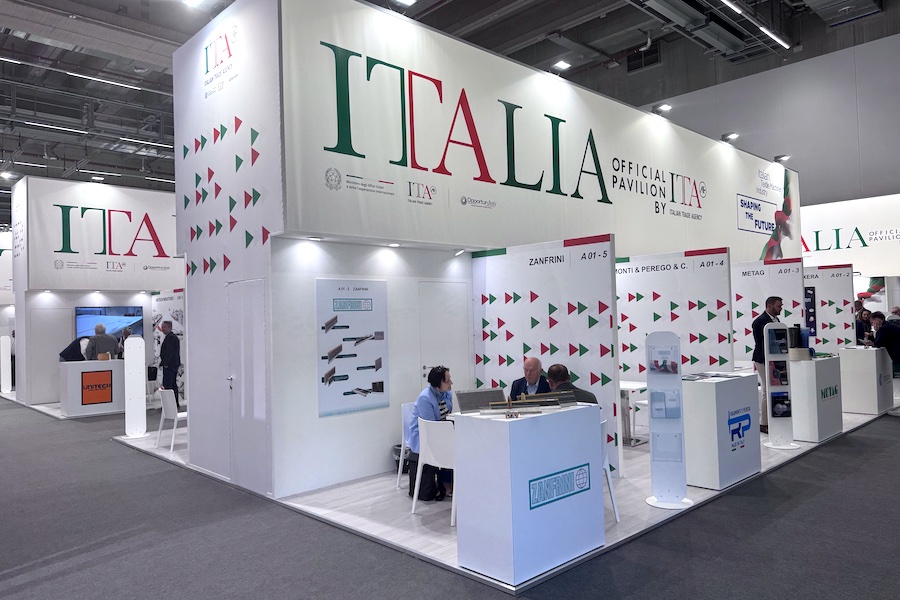
From 18 to 21 April 2023, INDEX, the world’s leading nonwovens exhibition, will take place in Geneva. About 90 Italian exhibitors will be present at this edition, including over 40 machinery manufacturers. As in past editions, ITA – Italian Trade Agengy, in cooperation with ACIMIT, the Association of Italian Textile Machinery Manufacturers, has organized an exhibition space reserved for companies manufacturing machinery for the sector.

There will be 12 exhibiting companies in the Italian pavilion (Hall nr. 4, booths nr. 4131 & 4137). Of these, the ACIMIT members are: Bematic, Bombi, Bonino, Dell’Orco & Villani, Ferraro, Loptex, Ommi, Rf Systems, Texera, Zappa Macchine. Other ACIMIT member companies will exhibit fair with their own booths

The nonwovens sector has grown significantly in recent years. According to EDANA, the association grouping European companies operating in the sector, after the impressive growth in the previous year, the production volume of nonwovens grew by 2% in 2021, exceeding 3 million tonnes.

“The growth in nonwovens production has also driven the demand of machinery for nonwovens, comments Alessandro Zucchi, president of ACIMIT. The Italian technological supply has consequently expanded. At the 2023 INDEX edition, the presence of a significant number of Italian machinery manufacturers testifies their desire to play a leading role also in the production of machinery for nonwovens”.


The trend of Italian exports testifies the strong increase in production of nonwovens machinery. Indeed in 2021 Italian sales abroad reached a value of 102 million euro (+77% over the previous year) and in the first nine months of 2022, the value of Italian exports stood at 92 million euro.

Visit the Italian Pavilion @INDEX2023, Hall nr. 4, booths nr. 4131 & 4137


More News from Associazione Costruttori Italiani di Macchinario per l Industria Tessile (ACIMIT)

#Associations

Italian textile machinery orders rise 7% in Q3 2026 as export demand strengthens

Order intake for Italian textile machinery manufacturers increased by 7% in the third quarter of 2026 compared with the same period of 2025. Growth was driven by international markets, where orders rose by 8%, while domestic demand remained weak, declining by 4%.

#Associations

Brazil: The Italian textile and textile-machinery sector takes centre stage at two workshops

From 19 to 24 October 2026, Brazil will host a mission showcasing Italian excellence in the textile and textile machinery sectors, with two workshops scheduled for 20 October in the state of Santa Catarina and 22 October in São Paulo. The initiative will bring together Italian companies specialising in textile machinery, yarns, fabrics and clothing accessories, with the aim of strengthening commercial and industrial ties between the two countries and opening up new opportunities for collaboration.

#Associations

Italian textile machinery at TITAS 2026: strategic partnership and tailor-made solutions for the Taiwanese market

The excellence and innovative capabilities of Italian textile machinery technology are coming to Taipei for TITAS 2026 (Taiwan International Textile & Garment Machinery Show), the leading event for the island’s textile industry and the wider Asian region, scheduled to take place from 6 to 8 October 2026.

#Associations

Italian textile machinery orders show quarterly recovery in Q2 2026

In the period between April and June 2026, order intake for Italian textile machinery manufacturers showed mixed but encouraging signals for the second half of the year. The order index at constant prices stood at 46.6 points (taking 2021=100 as the base year), showing a slight decrease of 3% compared to the same quarter of 2025. This trend was largely due to the contraction recorded in the domestic market, which fell by 25% compared to the corresponding period of the previous year.

More News on INDEX 23

Latest News

#Textile processing

Jeanologia combines digitalisation, laser and ozone technology to strengthen China’s textile competitiveness

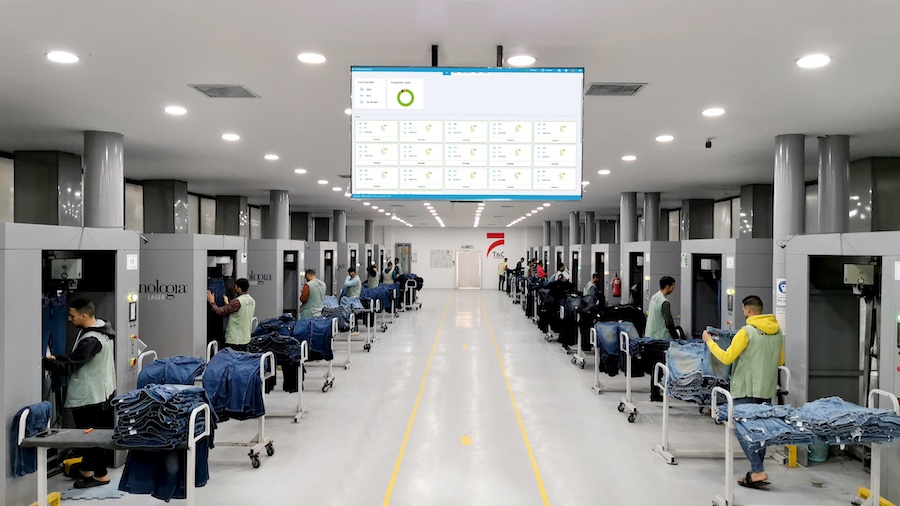
At ITMA Asia + CITME 2026 in Shanghai, Jeanologia showcased how the combination of digitalisation, laser technology and G2 Ozone can help China’s textile industry improve productivity, speed, quality and efficiency. With its Compact Super Flash laser system and integrated production concepts, the Spanish technology specialist demonstrated how connecting product development and industrial production can enable faster, more automated and sustainable manufacturing processes.

#Textile chemistry

Flame protection and OEKO-TEX® certification: Gulec Chemicals clears an important hurdle

Three halogen-free flame retardants from German specialist Gulec Chemicals have been included in the OEKO-TEX® list of accepted Active Chemical Products (ACP). The listing opens up additional opportunities for textile finishers, coaters and manufacturers of technical textiles seeking to combine demanding fire protection requirements with certification according to OEKO-TEX® STANDARD 100.

#Dyeing, Drying, Finishing

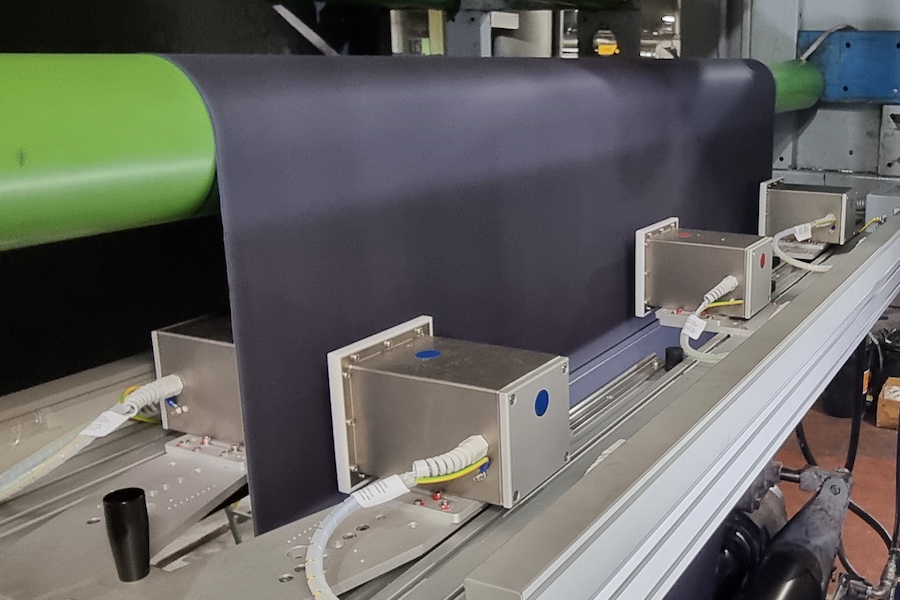
PLEVA improves dyeing consistency with inline microwave measurement of liquor pick-up

Consistent shades are essential in continuous textile dyeing. Yet variations in fabric absorbency or uneven padder pressure can go unnoticed until the end of the line. By then, hundreds of metres of fabric may already be affected and may become second-choice or rejected.

#Recycling / Circular Economy

DITF establishes CYCLOTEXUM recycling center to advance mechanical and solvent-based textile recycling

As part of the CYCLOTEXUM research project, the German Institutes of Textile and Fiber Research Denkendorf (DITF) established the CYCLOTEXUM recycling center. There, in collaboration with industry partners, the center develops application-oriented solutions for mechanical and solvent-based recycling processes. The technologies developed make a significant contribution along the textile value chain toward the efficient use of textile resources in the future and the transition of production in the German textile sector to a circular economy. The project was funded by the Ministry for the Environment, Climate and Energy Sector of the State of Baden-Württemberg.

TOP