[pageLogInLogOut]

#Composites

SGL Carbon and Solvay collaborate
(c) 2019 SGL Carbon
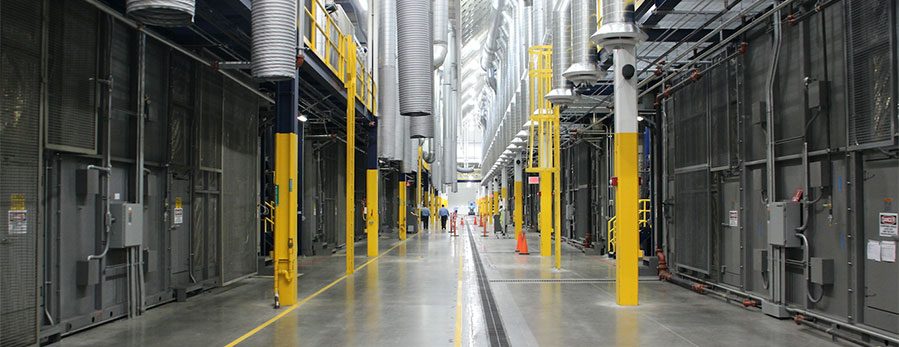
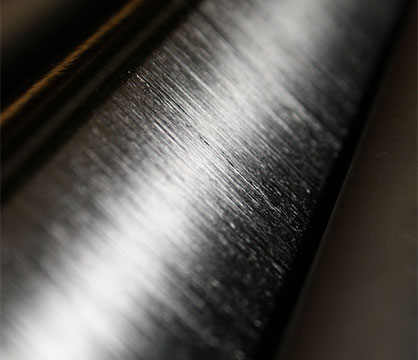
SGL Carbon and Solvay have entered into a joint development agreement (JDA) to bring to market the first composite materials based on large-tow intermediate modulus (IM) carbon fiber. These materials, which address the need to reduce costs and CO2 emissions, and improve the production process and fuel efficiency of next-generation commercial aircraft, will be based on SGL Carbon’s large-tow IM carbon fiber and Solvay’s primary structure resin systems.

The agreement encompasses both thermoset and thermoplastic composite technologies. It builds on Solvay’s leadership in supplying advanced materials to the aerospace industry and SGL Carbon’s expertise in high-volume carbon fiber manufacturing.

“For Solvay, this is an opportunity to lead the aerospace adoption of a composite material based on 50K IM carbon fiber. This is a highly competitive value proposition that brings more affordable high-performance solutions to our customers. We see this as the first step in a long-term partnership,” said Augusto Di Donfrancesco, member of Solvay’s executive committee.

“By combining SGL’s carbon fiber expertise in our newly developed, unique 50K IM fiber with Solvay’s resin formulation and aerospace market expertise, both partners are aiming to develop an advanced aerospace material system. This alliance supports our strategic direction and accelerates our growth in the attractive aerospace market,” said Dr. Michael Majerus, spokesman of the management board of SGL Carbon.

Composite materials for aerospace applications represent a multi-billion-dollar market that is expected to grow strongly in the coming decade. Solvay and SGL Carbon are uniquely positioned to develop solutions to address the needs of this market.

(c) 2019 SGL Carbon
(c) 2019 SGL Carbon


More News from SGL CARBON SE

More News on Composites

#Research & Development

Novel flame-retardant and recyclable fiber-reinforced composite

Airplanes and passenger trains must meet strict safety requirements, including fire safety standards. This calls for materials that are flame-retardant, lightweight, robust, and scalable. Empa researchers, in collaboration with their industry partner Elantas, have now succeeded for the first time in making such a material – a composite – fully recyclable.

#Composites

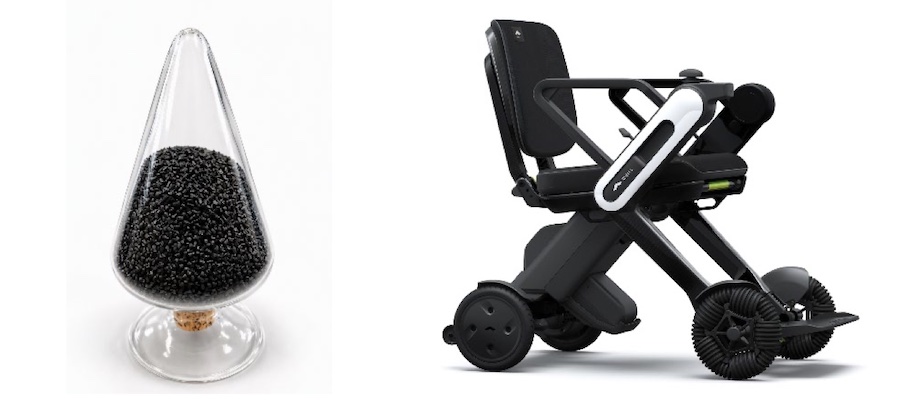
WHILL selects Teijin’s tough, lightweight Carbon Fiber Composite for new last-mile mobility

Teijin Limited announced today that WHILL Inc., a global leader in inclusive mobility technology, has selected Sereebo® P CFP series, a carbon fiber-reinforced thermoplastic (CFRTP) material, for key structural components of the upcoming WHILL Model C Lite. Sereebo® P CFP series provides high strength, light weight, design flexibility and system cost advantages to the Model C Lite, which is a battery powered, single-seat, last-mile device. This new model combines maneuverability with light weight and one-handed folding to ensure ease of handling and operation.

#Composites

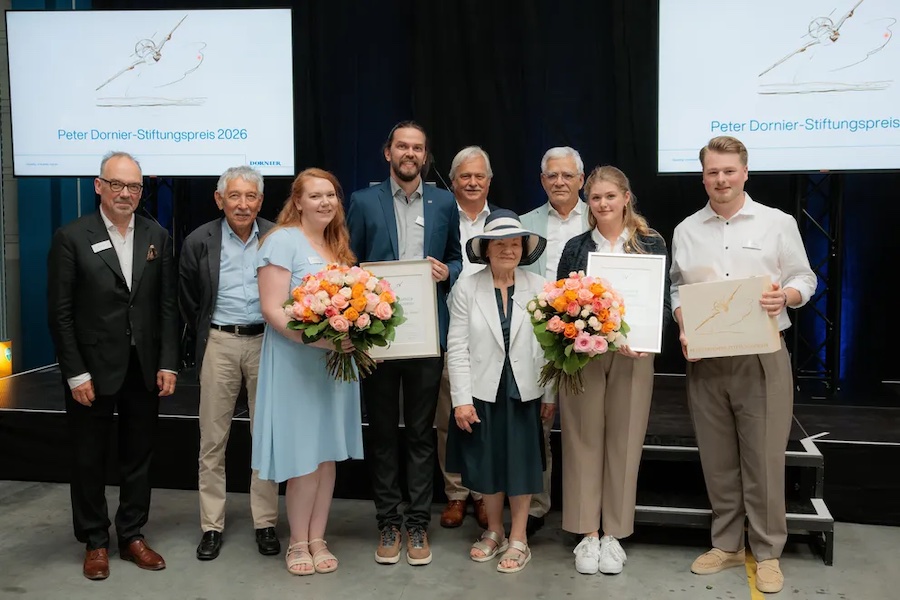
Fewer pores, greater impact tolerance: Peter Dornier Foundation Prize 2026 honours material research on fibre-reinforced composite components for aerospace industry

Microscopically small pores that form during manufacture, or barely visible impact damage, can severely impair the load-bearing capacity and service life of fibre-reinforced composite components. Two young researchers have presented groundbreaking work in this field and will both be awarded the 2026 Peter Dornier Foundation Prize: Dr.-Ing. Benedikt Neitzel from the Technical University of Ilmenau for his doctoral thesis on pore minimisation in the RTM process, and Johanna Buschmann, M.Sc., for her master’s thesis, completed at the German Aerospace Centre, on the improved impact tolerance of 3D fabrics compared to 2D laminates.

#Composites

Carbon Revolution wins Composites Australia Engineering Team Excellence Award

Carbon Revolution has won the Engineering Team Excellence Award at the 2026 Composites Australia Annual Industry Awards.

Latest News

#Sustainability

Jeanologia Sustainability Report highlights environmental impact of textile technologies

Jeanologia has published its Sustainability Report 2025, reporting a 13.64% reduction in its own carbon footprint and quantifying the environmental impact associated with the use of its technologies across the global textile industry. According to the company’s calculations, their use avoided the pollution of 21.52 million m³ of water and emissions of approximately 103,530 tonnes of CO₂ compared with conventional textile finishing processes.

#Sustainability

Global Standards announce launch of a new textile processing standard

The 14th September 2026 marks the public launch of the Global Responsible Textile Standard (GRTS), a new standard for the processing of textiles made from fibres certified to third-party standards recognised by GRTS and covering a broad range of plant, animal, synthetic, man-made cellulosic and recycled fibres.

#Industry 4.0 / Digitalization

Orient Rongheng connects production planning across China and Bangladesh with FastReactPlan

Chinese apparel manufacturer Orient Rongheng is implementing Coats Digital’s FastReactPlan to digitalize production planning across its manufacturing operations in China and Bangladesh. The project aims to connect capacity, materials and order planning across multiple factories while integrating these processes with the company’s existing ERP and Manufacturing Execution System (MES).

#Raw Materials

ALLIED expands down traceability with lot-level carbon footprint data

ALLIED Feather + Down has expanded its TrackMyDown traceability platform to include validated cradle-to-gate carbon footprint data linked to individual down lots. The initiative is designed to provide brands and consumers with more detailed environmental information on the materials used in finished products and could also support future data requirements associated with Digital Product Passports.

TOP