[pageLogInLogOut]

#Composites

Excellent forecasts for the construction industry
(c) 2017 Composites Europe
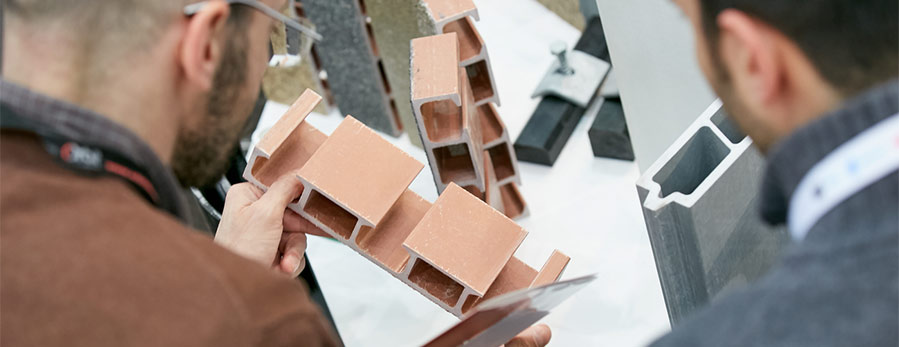
The building and construction industry represents the most important growth market for fibre reinforced plastics. According to the “9th Composites Market Survey” by the trade association Composites Germany, no other application sector has experienced such a dynamic development. From 19 to 21 September 2017, COMPOSITES EUROPE 2017 in Stuttgart will reflect this trend, dedicating an entire trade fair day to building and construction in the composites world.

In doing so, the trade fair seizes upon a key theme in the industry: 45 per cent of surveyed companies expect the infrastructure/construction area of application to grow. In the prior survey, that figure was at just 35 per cent. The increasing use of composites doesn’t just benefit glass-fibre reinforced plastics (GFRP), which have dominated the construction sector for years; carbon-fibre reinforced plastics (CFRP) are also on the rise. According to the “Composites Market Report 2016” by CCev and AVK, worldwide consumption of the latter is expected to double to 12,100 tonnes by 2022.

Carbon concrete: Life cycle costs often favour CFRP

Carbon-reinforced concrete, or carbon concrete for short, holds great potential for the future.  This new element enables the design of thinner, more delicate structural components. “We started developing carbon concrete way back in the mid-1990s”, recalls Dr. Walter Begemann, the project manager of the VDMA Working Group Hybrid Lightweight Technologies in Frankfurt am Main. It took a long time for the new technology to prevail, however. “It wasn’t until 2016 when engineers from the Technische Universität Dresden received the Deutscher Zukunftspreis, the German President's Award for Innovation in Science and Technology, from then-German Federal President Joachim Gauck for replacing reinforcing steel cast in concrete with a mesh of carbon”, says the physicist and former managing director of the umbrella research organisation Forschungskuratorium Textil e.V.

According to the “Composites Market Report 2016”, carbon concrete is often deployed in reinforcements – like repairs of bridges or other structures. In such cases, the higher price is often immaterial when weighed against total life cycle costs. “The high price when compared to steel reinforced concrete is somewhat balanced by the cheaper and quicker assembly times, easier transportation and a sustainable stabilisation of constructions”, states the market report.

Focus Day Building and Construction

Designers, engineers, technicians and buyers with a focus on building and construction applications should reserve 20 September for a trade fair visit. The Focus Day Building and Construction will illustrate how composites can be deployed – alone or in combination with other materials – in the building and construction industry. The time-coordinated programme on the theme day will start at 10 am at the COMPOSITES FORUM in Hall 6/Stand B76. Expert lectures will explore the basics, trends and innovations of composites in the building and construction sector. Participation is free of charge.

Pic: Walter Begemann (Source: VDMA)

Afterwards, during a free one-hour guided tour from 1:30 to 2:30 pm, trade fair visitors will be able to meet exhibitors participating in the trade fair to present their products and services for the building and construction application segment. Stops will include Hexion, Röchling, SAERTEX, Toho Tenax and Vosschemie. Experience has shown that guided tours sell out quickly, so interested visitors should register in a timely manner: www.composites-europe.com/guided-tours.

Lightweight Technologies Forum: Cross-material interface

Topics at the Lightweight Technologies Forum are geared toward the building and construction sector, as well. Sponsored by the German Federal Ministry for Economic Affairs and Energy, the combined exhibition and presentation forum serves as the cross-material interface between metal and fibre reinforced composite technologies in structural components. In several application-focussed thematic modules, experts will present their real-world experiences with current questions and issues revolving around material composites in architecture, among other topics.

Here’s what Dr. Begemann, as a long-time friend of composites, is looking forward to above all: “COMPOSITES EUROPE provides visitors with an opportunity for an in-depth exchange of ideas with a detailed focus on technical content. I think it’s a good approach that the Lightweight Technologies Forum (LTF) also provides a presentation platform for exhibitors of lightweight solutions for other materials. Stuttgart isn’t just about composites or about competition with other materials, it’s about all lightweight construction materials working together.”
More News from COMPOSITES EUROPE

More News on Composites

#Research & Development

Novel flame-retardant and recyclable fiber-reinforced composite

Airplanes and passenger trains must meet strict safety requirements, including fire safety standards. This calls for materials that are flame-retardant, lightweight, robust, and scalable. Empa researchers, in collaboration with their industry partner Elantas, have now succeeded for the first time in making such a material – a composite – fully recyclable.

#Composites

WHILL selects Teijin’s tough, lightweight Carbon Fiber Composite for new last-mile mobility

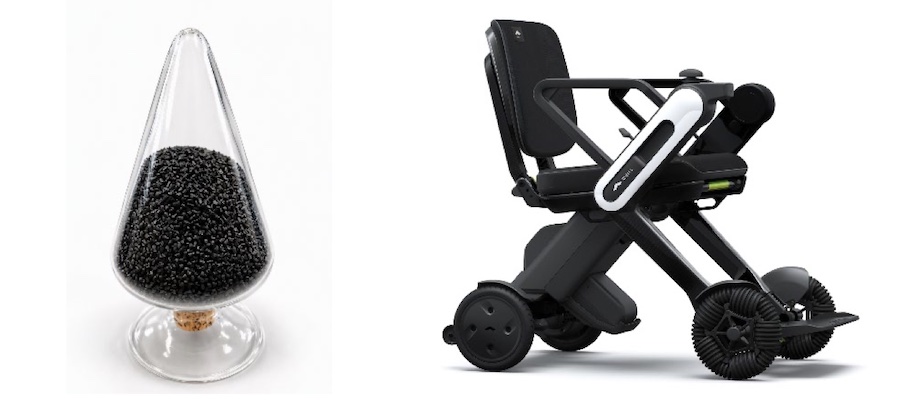
Teijin Limited announced today that WHILL Inc., a global leader in inclusive mobility technology, has selected Sereebo® P CFP series, a carbon fiber-reinforced thermoplastic (CFRTP) material, for key structural components of the upcoming WHILL Model C Lite. Sereebo® P CFP series provides high strength, light weight, design flexibility and system cost advantages to the Model C Lite, which is a battery powered, single-seat, last-mile device. This new model combines maneuverability with light weight and one-handed folding to ensure ease of handling and operation.

#Composites

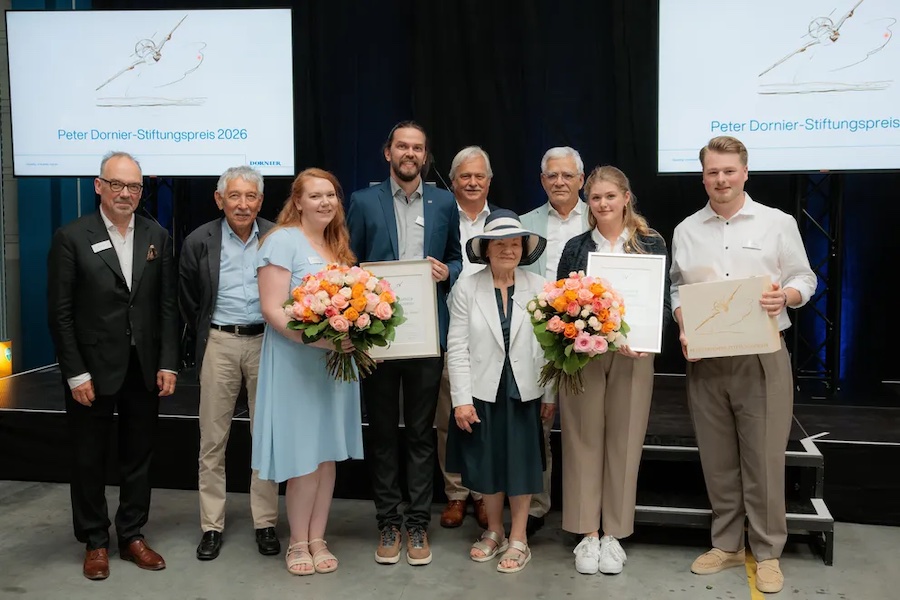
Fewer pores, greater impact tolerance: Peter Dornier Foundation Prize 2026 honours material research on fibre-reinforced composite components for aerospace industry

Microscopically small pores that form during manufacture, or barely visible impact damage, can severely impair the load-bearing capacity and service life of fibre-reinforced composite components. Two young researchers have presented groundbreaking work in this field and will both be awarded the 2026 Peter Dornier Foundation Prize: Dr.-Ing. Benedikt Neitzel from the Technical University of Ilmenau for his doctoral thesis on pore minimisation in the RTM process, and Johanna Buschmann, M.Sc., for her master’s thesis, completed at the German Aerospace Centre, on the improved impact tolerance of 3D fabrics compared to 2D laminates.

#Composites

Carbon Revolution wins Composites Australia Engineering Team Excellence Award

Carbon Revolution has won the Engineering Team Excellence Award at the 2026 Composites Australia Annual Industry Awards.

Latest News

#Weaving

Lindauer DORNIER GmbH welcomes new apprentices and dual-study students

For 22 new “DORNIER Talents”, these days mark the beginning of a new chapter at Lindauer DORNIER. For the family-owned company, in-house training is a key pillar in developing skilled professionals and retaining them within the company for the long term.

#Raw Materials

Cotton Brazil Dialogues 2026 concludes with 50 international participants immersed in Brazilian cotton production

The Cotton Brazil Dialogues concludes its 2026 edition after a series of technical visits to farms, cotton gins and reference centers, as well as workshops focused on Brazilian cotton production. A total of 50 participants from 14 countries took part in the field trips. The initiative is led by the Brazilian Association of Cotton Growers (Abrapa) and the National Association of Cotton Exporters (Anea), with support from the Brazilian Trade and Investment Promotion Agency (ApexBrasil).

#Textile chemistry

ZymoChem secures $4 million in renewed federal funding to advance U.S. biomanufacturing of critical materials and their supply chains

ZymoChem, the specialty chemicals company dedicated to bringing decarbonization, sustainability, and supply chain resiliency to the chemical industry through innovative biological manufacturing, today announced the resumption and expansion of its federal research portfolio. The company has been notified that previously paused work under a $5 million U.S. Department of Energy (DOE) program is officially back on, to be joined by continuing collaborations with three of the nation's premier national laboratories.

#Technical Textiles

RDJ 6/2 in E 32: Finesse in Motion

The appearance of sports and casual shoes is as diverse as their applications, ranging from sporty to stylish and from functional to fashionably practical. In particular, spacer fabrics produced on highly flexible KARL MAYER double needle bar raschel machines with Jacquard technology are in high demand for manufacturing these trendy shoes. These efficient production machines enable attractive designs with integrated multifunctional zones on one or both fabric surfaces, such as breathable mesh structures. Flexible in size and positioning, these features enhance both aesthetics and wearing comfort.

TOP