[pageLogInLogOut]

#Associations

REACH4Textiles - Better market surveillance for textile products

© 2021 EURATEX
The REACH4texiles project just kicked off. Funded by the European Commission, it aims at exploring solutions for fair and effective market surveillance on textile products.

Every year, about 28 billions of garments circulate across Europe, 80% of which are imported from outside the EU and its jurisdiction.

Inevitably, such huge volumes pose enormous challenges for market surveillance authorities which are called to ensure that uncompliant dangerous products are kept away from the EU citizens.

The European Union has the world most comprehensive chemical legislation which is set to protect consumers, the environment and, theoretically, even the competitiveness[1] of the business.


Such EU chemical legislation evolves constantly, increasing scope and ambition. New restrictions impact authorities and sectors like the European textile value chain and generate new costs for all actors.

Evidence suggests that such advanced regulatory framework is not completed with an equally advanced or effective EU-wide control system capable of ensuring compliance, especially in the case of imported products. 

The REACH4texiles project aims at exploring solutions for fair and effective market surveillance on textile products; it pools together the key actors to address three objectives:


  • Keep non-compliant products away from the single market.
  • Increase skills and knowledge
  • support a Network addressing chemicals in textiles and applying the EU regulation 2019/1020


The 2 years project will share best practices, identify efficient approaches against non-compliant products, offer training and support for a more effective surveillance and for level playing field.

The project welcomes collaboration with concerned authorities across the EU Member States.


More information:

A well-functioning EU market surveillance system is an essential prerequisite to protect citizen, the environment and competitiveness of responsible business. When it comes to textiles, the broad range of products, the large set of REACH subjected chemicals used in textiles as well as industrial strategies like fast fashion make this a challenging task.

Challenges may include lack of resources, difficulties in identifying higher risk products, cost and management of chemical tests, lack of test methods and knowledge of best practices. These challenges are yet likely to increase with the upcoming REACH restrictions and the growth of e-commerce.

Because of this, products that do not comply with REACH regulations encounter today little or no barriers to enter the market. This creates not only a health risk for Europeans but also undermines the competitivity of responsible businesses that take all necessary measures to comply with these regulations.

Addressing the challenges requires more knowledge at market surveillance and stronger collaboration between these authorities, the textile and clothing industry and testing laboratories. More knowledge about the identification of risk baring textile products and REACH chemicals likely to be used in these products, suitable test methods and strategies such as fast screening on REACH chemicals, trustworthiness of labels, etc can increase the effectiveness of market surveillance considerably.

This was the motivation for the REACH4Textiles initiative.

The REACH4Textiles first objective (keep non-compliant products away from the EU Market) will be pursued by increasing knowledge on market surveillance functioning by and working on a risk-based approach to identify products at higher risk.

The second objective supports a network to address the specificities of chemicals in textiles with market surveillance authorities and involving other relevant stakeholders. The third objective focuses on sharing knowledge with market surveillance actors on textile products and suitable test methodologies.

Supported by the European Commission DG Growth, the project team is coordinated by the Belgian test and research center Centexbel and include the European Textiles and Apparel industry confederation, EURATEX, the German national textile and fashion association Textile und Mode, T+m, the Italian association Tessile e Salute. Several other European industry associations and national authorities are welcomed to become involved through the project activities.   

[1] the  purpose of the EU REACH Regulation is to “ensure a high level of protection of human health and the environment, including the promotion of alternative methods for assessment of hazards of substances, as well as the free circulation of substances on the internal market while enhancing competitiveness and innovation”

More News from European Apparel and Textile Confederation (EURATEX)

#Associations

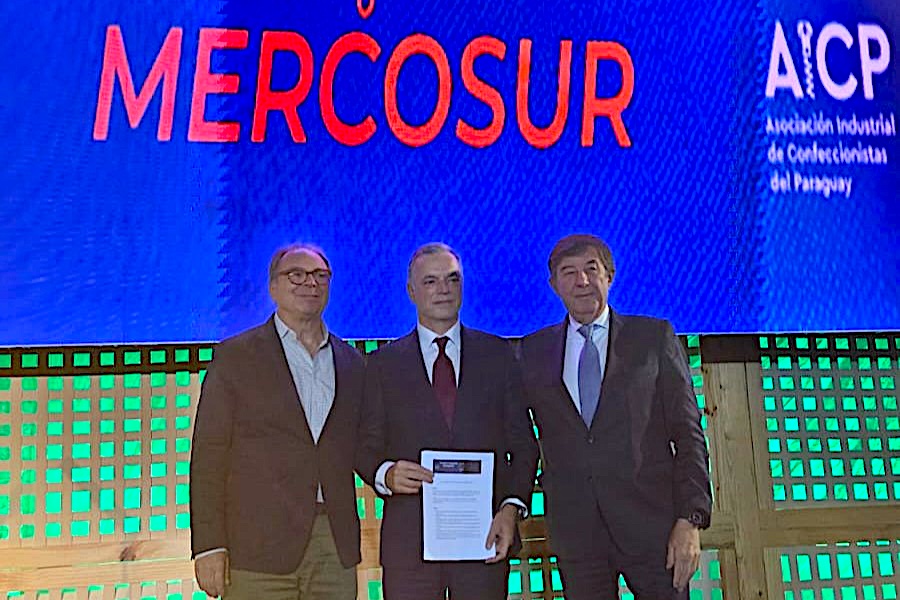
European Business Coalition welcomes provisional application of EU–Mercosur Agreement and calls for Swift and full implementation

With the European Commission’s decision to provisionally apply the EU–Mercosur Interim Trade Agreement, a process spanning more than 25 years now moves decisively into its implementation phase.

#Europe

Antwerp Declaration community urges EU leaders to deliver emergency measures as Europe’s competitiveness crisis deepens

EURATEX, representing the European textile and fashion industry, joins the Antwerp Declaration Community’s call on EU Heads of State and Government to adopt emergency measures that restore industrial competitiveness and deliver tangible results for Europe’s manufacturing base in 2026.

#Europe

FITA, ABIT and EURATEX underline strategic importance of Mercosur – EU Partnership Agreement for the textile and apparel industry

The Argentine Textile Industry Federation (FITA), the Brazilian Textile and Apparel Industry Association (ABIT), and the European Apparel and Textile Confederation (EURATEX) continue to monitor the process of internalizing the Mercosur-European Union Partnership Agreement. This agreement is essential for the competitiveness of our industries, on both sides of the Atlantic.

#Associations

Industry associations warn against state-run EPR models in the EU

European industry associations, led by Euratex, have raised concerns over a growing trend in several EU Member States to introduce state-run Producer Responsibility Organisations (PROs) within Extended Producer Responsibility (EPR) schemes.

More News on Associations

#Techtextil 2026

Precision, performance and progress: British textile machinery at Techtextil and Texprocess 2026

As global demand accelerates for lighter, stronger and more sustainable technical textiles, the machinery and testing technologies behind their manufacture are evolving at pace. At the Techtextil and Texprocess exhibitions in Frankfurt this April, eight members of the British Textile Machinery Association (BTMA) will demonstrate how advanced engineering continues to shape the performance, precision and resource efficiency of advanced fibre and fabric production.

#Nonwovens

INDA honors four industry leaders with 2026 Lifetime Service and Technical Achievement Awards

INDA, the Association of the Nonwoven Fabrics Industry, has announced the four distinguished recipients of the 2026 INDA Lifetime Service Award and Lifetime Technical Achievement Award. Tom Daugherty, Pricie Hanna, Carey Hobbs, and CK Wong are being recognized for their exceptional leadership, innovation, and enduring contributions to advancing the nonwovens industry and strengthening the global community it serves.

#Associations

Azerbaijan Textile Association (ATA) becomes member of ITMF

The Azerbaijan Textile Association (ATA) has officially become a Member Association of the International Textile Manufacturers Federation (ITMF), further strengthening Azerbaijan’s integration into the global textile value chain.

#Associations

EDANA joins industry coalition urging a strong internal market legal basis for the New Circular Economy Act

EDANA has joined 67 European industry associations in a joint industry statement calling on the European Commission and co-legislators to anchor the forthcoming New Circular Economy Act (CEA) in the Internal Market legal basis (Article 114 TFEU).

Latest News

#Europe

Commission presents proposal for EU Inc. - unlocking the full potential of the Single Market for Europe's entrepreneurs

Today, the European Commission presented its proposal for EU Inc., a new single set of corporate rules, building the cornerstone and starting point for the EU's 28th regime. EU Inc. is an optional, digital-by-default European corporate framework. It will make it easier for businesses to start, operate and grow across the EU – incentivising them to stay in Europe, and encourage those who once looked elsewhere to return.

#Man-Made Fibers

OnceMore® from Södra brings end-to-end traceability for circular Man-made Cellulosic Fibers (MMCF) using TextileGenesis

OnceMore® from Södra, the world’s first large-scale process for recycling blended fabrics into high‐quality dissolving pulp, will begin using TextileGenesis, a Lectra company, to strengthen traceability from raw material to retail across the value chain. OnceMore® produces dissolving pulp made from blended textile waste and wood sourced from responsibly managed Swedish forests. By integrating TextileGenesis, OnceMore® supports the growing need for verified data and secure, transparent tracking throughout increasingly complex supply chain.

#Sustainability

Experts publish APAC policy priorities

Cascale today announced the publication of its APAC Policy Priorities Paper, developed by the Asia-Pacific (APAC) Policy Member Expert Team (MET) to identify key regional sustainability challenges and provide practical, aligned recommendations for policymakers and industry stakeholders across Asia-Pacific.

#Spinning

Temco launches a new DTY all-in-one solution

Temco introduces the DTY All-in-One Solution – a fully harmonized set of components engineered to give customers a highly stable, low maintenance and reproducible process environment. The solution reduces interruptions, extends component lifetimes and supports consistent yarn quality across all machine positions. All-in-One Solution – a fully harmonized set of components engineered to provide maintenance and reproducible process environment.

TOP