[pageLogInLogOut]

#ITMA Asia + CITME 2020

The family company Thies is exhibiting at ITMA ASIA + CITME in June 2021.
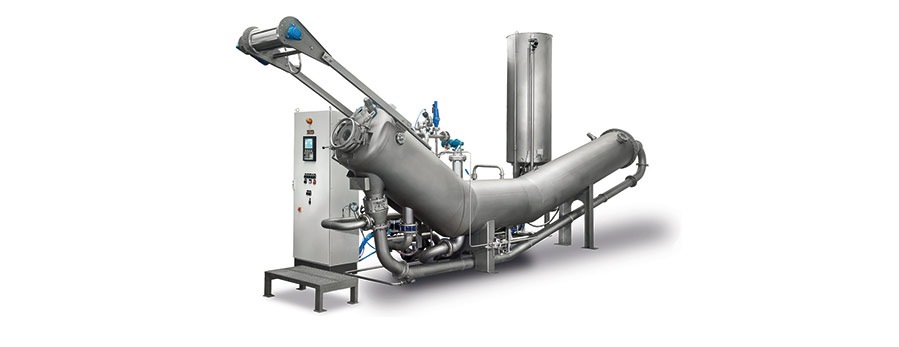
soft TRD SIII © 2021 Thies
After such a long time, the team of the German textile machine manufacturer is looking forward to the fair in Shanghai and, above all, to the personal exchange with customers and business partners.

The portfolio of machinery is quite extensive in terms of fibre-, yarn- and fabric-dyeing. Offering sustainable solutions for its worldwide customer base, each machine type is from the outset designed to minimize the inputs and respectively the outputs. 

However, Thies does not only concentrate on the machine design but also on developing intelligent software solutions to control the actual dyeing process. With the help of these so called ‘energy efficient functions’ its customers achieve enormous reductions of their water-, energy-, dyestuff-, chemicals- and utilities- consumption.
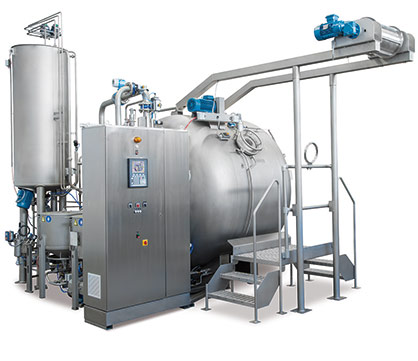
iMaster H2O © 2021 Thies


Modern dye houses further implement dye kitchens, as well as dosing and dispensing systems from Thies in their facilities. The fully automatic weighing, dissolving and provision of dyes and chemicals leads to exact dyeing results, maximum reproducibility, significantly increased occupational safety and tremendous time savings.


All machines, including the dispensing systems, the dye kitchen, the beam winding machines and/ or the heat recovery systems can be connected to MES systems and deliver important data which customers can use to improve their performances. 
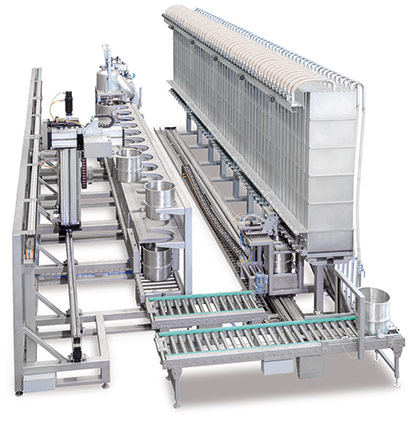
MPS-Colourmatic © 2021 Thies


A unique selling point is, that Thies has already been open to connect systems from various control manufacturers – for the past centuries. Against this background, customers have nearly no technical limitations while choosing control systems or expanding existing networks.

Further requirements, like the semi- to fully- automated loading and unloading of our yarn dyeing machines are also possible.

To sum it up, Thies is offering best-practice solutions with the highest degree of digitalisation and automation.



More News from Thies GmbH & Co. KG

More News on ITMA Asia + CITME 2020

Latest News

#Techtextil 2026

AI, Start-ups, Research: Techtextil and Texprocess bring together players in the textile industry

From start-ups to universities and research institutes: at Techtextil and Texprocess, the world’s leading innovation trade fairs in Frankfurt am Main, exhibitors present future-oriented concepts for the global textile industry. With the international Campus & Research area, a strong participation from start-ups and the latest AI applications for textile processing, both trade fairs showcase current developments in the textile industry. By bringing together innovation, research and application, they enable new partnerships across the textile value chain.

#Techtextil 2026

IVGT joint stand brings innovation and networking to Techtextil 2026

At Techtextil 2026 and the parallel Texprocess 2026, key transformation topics such as artificial intelligence, digitalisation, sustainability, recycling and the circular economy will be reflected across the show. Against this backdrop, the IVGT, together with 16 member companies, will present its joint stand in Hall 12.1 (Stand D62) as a platform for exchange and networking.

#Man-Made Fibers

Indorama Ventures supports Southeast Asia’s textile customers with reliable regional supply and global innovative portfolio

Indorama Ventures, one of the leading global polyester fiber and filament yarn suppliers globally, will participate in Indo Intertex 2026 in Jakarta this April, making its diverse global portfolio available to apparel, home textile, and hygiene customers across Southeast Asia.

#Raw Materials

New study shows low environmental impact by Cotton made in Africa Organic Cotton from Tanzania

Today, the Aid by Trade Foundation (AbTF) is announcing the results of a comprehensive life-cycle analysis (LCA) for cotton produced in Tanzania under the Cotton made in Africa Organic (CmiA Organic) standard. The study emphasises the small ecological footprint of CmiA Organic verified cotton. This can largely be traced back to the absence of synthetic pesticides, artificial fertilisers, and artificial irrigation. Consequently, CmiA Organic cotton can help the textile industry meet regulatory requirements as well as science-based targets. The results also show that the consequences of climate change threaten the livelihoods of these cotton farmers, even though the type of agriculture they practise barely contributes to climate change.

TOP
