#ITMA-Asia + CITME-2012
KARL MAYER at ITMA Asia + CITME, 12.-16.06.2012 in Shanghai
Main highlights will be a HKS 3-M machine of the 3rd generation which is 15% faster than its predecessor but offers the same high flexibility typical of this machine range. Another machine on display will be the HKS 2-3 E equipped with the 2nd generation of CFRP technology and operating at extraordinary high speeds. And for the lace production KARL MAYER will be showing a new JL 65/1 B – a Jacquardtronic® Lace machine, the design of which has been optimized and which will be operating with a working width of 168“, thus, running at previously unreached speeds. Moreover, the user friendliness of this type has been further improved. For the warp preparation sector, KARL MAYER will be showing its new fast, versatile Nov-O-Matic 2 with Isotens creel. This automatic sectional warping machine is setting new standards in quality and productivity for producing long production warps as well as for processing batches with short running lengths. These high-tech solutions will be located on an impressive stand made from textiles, a concept that has already created quite a stir at ITMA 2011 in Barcelona. And in Shanghai as well, KARL MAYER’s stand, with its soft, pleasant lighting, will once again invite the visitors to rest for a while and also act as a meeting point for the sector. While the exhibition is taking place, KARL MAYER will also be holding its own in-house show at KARL MAYER (China) Ltd., Changzhou City, in the district of Wujin. The TM 4-T EL for producing terry goods will be on show here.
HKS 2-3 E, fast and precise During ITMA ASIA + CITME 2012 KARL MAYER will be showing a HKS 2-3 E tricot machine equipped with the 2nd generation of CFRP technology, offering an extraordinary high speed. The optimisation work of the lightweight machine concept mainly focused on segmenting the shaft for controlling the bars. This component used to be produced from a single piece and had to be heated continuously to guarantee reliable operation even at high speeds. The new solution consists of high-precision segments which are virtually dimensionally stable, without the need to apply heat externally. When arranged in a row for use as the shaft, they guarantee rapid start-up times and a high gauge accuracy, even at fluctuating ambient temperatures. This enables even fine fabrics to be produced in a high quality at wide working widths and high speeds – such as will be demonstrated by a HKS 2-3 E in a gauge of E 36 at ITMA ASIA + CITME 2012. The machine exhibited this year will be manufacturing an elastic jersey fabric for beachwear and sportswear, operating at speeds of up to 4,000 min-1 in a working width of 130 inches.
The HKS 3-M of the 3rd generation The HKS 3-M was the first model to be mass-produced with CFP bars at ITMA 2007 – a step, which increased its speed compared to the previous generation by 25%. This successful machine was upgraded again at the beginning of this year. All the experience gained over the last few years was brought to bear to redesign and revamp the machine construction, which is now in its third generation. The knitting motion, machine frame and the beam let-off frame were completely redesigned, which increased the speed by more than 15% compared to the previous version. The HKS 3-M offers the same high performance both in terms of applications and working widths. It is available initially with a working width of 210" and gauges of E 28 and E 32 but more widths and gauges will follow. The machine at the fair will work with a gauge of E 28. As well as offering a higher maximum speed, the construction of the new HKS 3-M is much more compact. Access to the warp beam rollers on the right-hand side of the machine has been improved considerably, which complements the entire concept of the machine.
The new JL 65/1B – it is not only the working width and speed that have been optimised The level of performance of the Jacquardtronic® Lace machine has been improved constantly. The result of the latest upgrade made to the Jacquardtronic® range was the optimisation of the JL 65/1B. The development work carried out by KARL MAYER involved making specific modifications and changing the technical design, changes which considerably increased the productivity of the Jacquardtronic® Lace with 65 guide bars. These innovations on the new JL 65/1B and F models with a working width of 132" enable them to reach maximum speeds of 800 min-1, which means that they are 60% faster than their predecessors. The older machines operated at speeds of up to 500 min-1. Also in this range is the JL 65/1B with a working width of 168" which, because of its overall design, can reach almost the same speed as its sister machine with a width of 132". It is more efficient than the previous machine with its old design.
.jpg)
The performance has been increased by 25%, just by extending the width of the new machine from 132" to 168" – and this efficiency will surely also convince the visitors to the fair. During ITMA ASIA + CITME 2012 KARL MAYER will be presenting a JL 65/1 B machine with a working width of 168“ and a gauge of E 24, which will produce a versatile lace article. The new machine concept also involved repositioning the pattern drive, with the string bars being controlled from one side. This change enabled the performance potential to be fully utilised for the relevant widths, and guarantees smooth machine running.
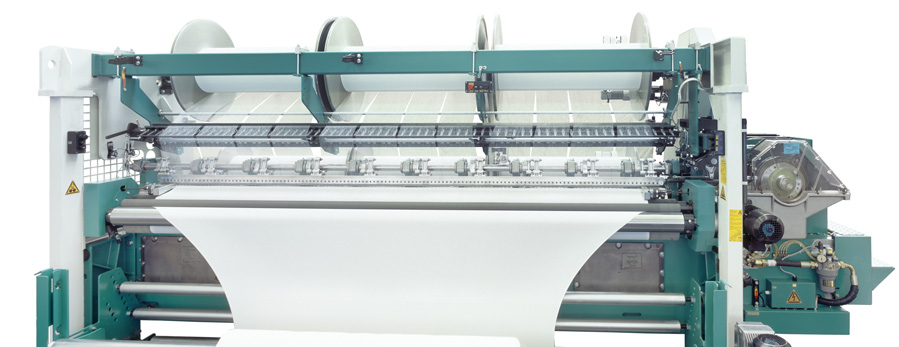
The Wefttronic® RS with now even more working widths The innovative range Wefttronic® RS was unveiled for the first time at ITMA ASIA + CITME 2010, and has been constantly expanded since then. The modifications in the construction, which led to the development of the Wefttronic® RS, focused mainly on increasing the speed and productivity. Consequently, the entire machine space and basic construction were adapted to the higher dynamics of the warp knitting process in order to increase the speed. In addition to increasing the production speed, the working width was also extended. This enabled the performance to be increased by up to 20%. Another improvement in efficiency offered by the new weft-insertion machine has been achieved by improving the components used in weft insertion. For example, the guide system of the circulating chain has been re-designed, and the weft insertion system has been optimised. The weft carriage now contains 30 yarns instead of the previous 24. The modified weft insertion system, with its ½-inch spacing, also guarantees fault-free yarn laying without the yarns sticking together, which also increases the product quality. In order to produce a perfect textile, the entire yarn handling sequence on the machine was analysed and improved. These changes in the construction resulted in uniform zero inlay run-ins in the delivery unit and at the guide rollers, thanks to central supports and short yarn paths for the knitting yarns in the ground guide bars. The recent developments have concentrated on complementing the range of working widths available. Whereas the first Wefttronic® machine, which appeared in 2010, had a width of 268", a version having a width of 138" was already available for ShanghaiTex 2011. A Wefttronic® RS in a width of 213" will exhibit at ITMA Asia 2012. This intermediate width is complemented by a machine having a width of 176”, which was launched at the same time. The different working widths of the Wefttronic® RS for the simultaneous production of several fabric webs next to each other can be fully utilised to achieve a high level of operating efficiency.
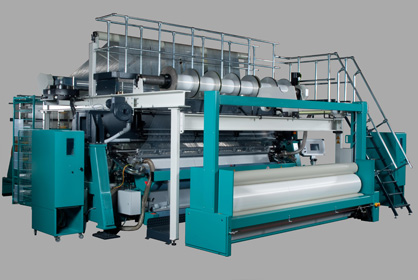
The Nov-O-Matic 2, the first automatic sectional warping machine from KARL MAYER and the company formerly known as Benninger
The Nov-O-Matic is the first automatic sectional warper from KARL MAYER and the company formerly known as Benninger. It is based on the concept of the NOM machine, which was first unveiled at ITMA 2007, but it has been completely revamped in 2010, and a number of features have been improved. First of all, the Nov-O-Matic 2 is now even faster than its predecessor, which has reduced processing times by as much as 30 %. Moreover, the user friendliness and the product quality of this new machine have also been optimized. The technical features of the new NOM also include an innovative torque motor for the drive of the warping drum. The extremely accurate and dynamic torque motor permits high torque moments at relatively low speeds. During the warping sequence, it guarantees short accelerating and braking times, minimal processing tolerances and perfect operation when stopping. Besides, the torque motor has a high overall efficiency and uses the resources resulting from energy recovery during braking in the intermediate circuit for driving the warping drum – important advantages of an efficient energy management system. For an easier handling two identical Operator Interfaces have been swivel-mounted to the machine, offering an ergonomic advantage. Furthermore, changes in the drive concept also mean that the machine is now even more compact, and this has improved access to the warping drum from the side. Other design changes refer to the implementation of a new control and regulating system, of a yarn tension sensor and the optimisation of the yarn guiding elements, improvements which reduce the stressing of the yarns during processing, and guarantee automatic, trouble-free warping sequences. The mobile leasing reed for producing the yarn divisions was designed so that it can be moved around and this mobility enables it to be located in the middle of the two halves of the creel at a second creel or at the machine. In addition to the obvious reduction in the yarn delivery paths, another advantage of being able to select the location is that the opening angle is much smaller than before. This means that considerably less force is exerted on the yarns. With its operating features and range of applications, this efficient, high-tech NOM 2 machine is designed to bridge the gap between the conventional warping machines and the Gir-O-Matic series of sample warping machines (Multi-Matic®). This new machine operates at maximum efficiency when producing weaving warps having short lengths and narrower widths in particular.