[pageLogInLogOut]

#Dyeing, Drying, Finishing

Monforts Sanforisor ensures precise control of compressive shrinkage for Pincroft

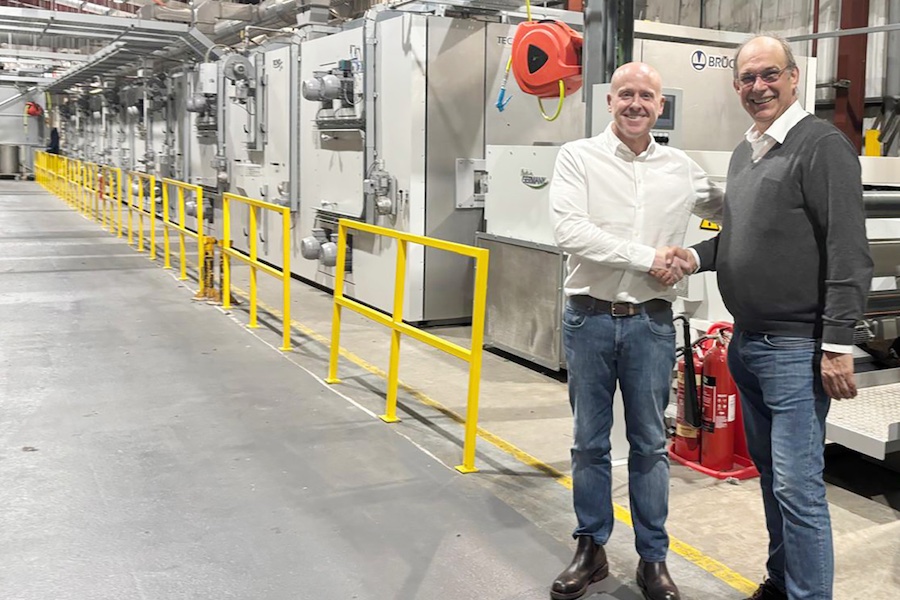
Pincroft Managing Director Neil Dowds (c) 2013 Monforts
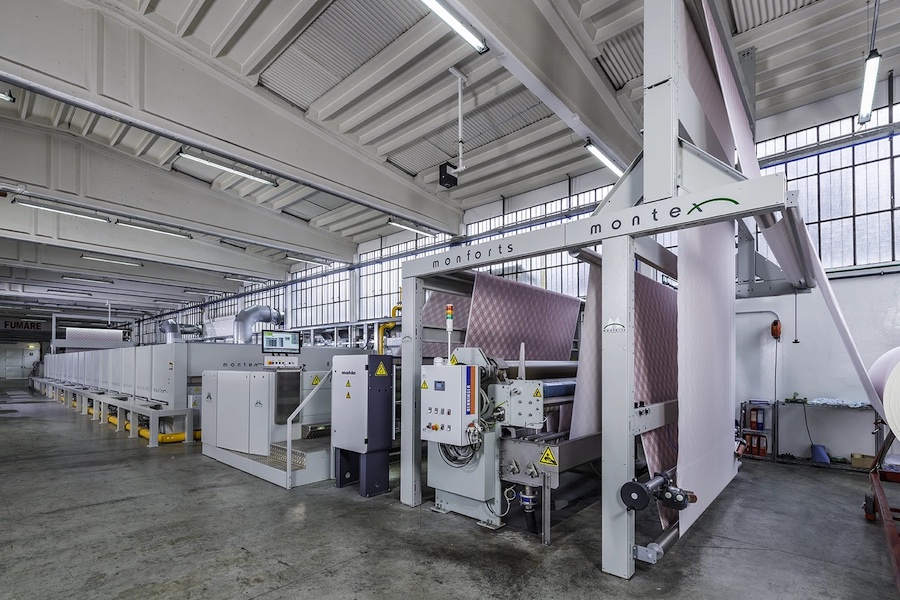
A Monforts Toptex shrinking range has recently been installed at the UK’s Pincroft Dyers and Printers facility in Chorley, Lancashire to ensure precise control of compressive shrinkage for the company’s range of camouflaged military uniforms and industrial contract workwear.

+ Monforts technology plays a key role in Pincroft’s guarantees to its exacting customers

Pincroft dyes and prints over 40 different camouflage designs for military forces around the world as part of its extensive programme which also includes fabrics for contract workwear, upholstery and canvas tarpaulins. Flame retardancy is regarded as one of the company’s key strengths – an essential requirement extending beyond the military to first responders and industrial workers in all sorts of challenging situations.

On average – over just 4.5 day shifts, Monday to Friday lunchtime – Pincroft produces some 600,000 metres of finished fabric every week. And for accuracy and reproducibility, the company relies on the advanced technology of companies like Monforts.

Consequently, it took delivery of a new Toptex sanforizer – through local Monforts representative Colplan - for the precise control of compressive shrinkage in fabrics, after a long evaluation period of potential options.

“Over 80% of production is for our subsidiary company, Carrington Workwear’s internal sales team, with the remaining 20% commission finished for commercial customers,” explains Pincroft Managing Director, Neil Dowds. “So if there are any problems, we probably get to hear about them sooner than the companies whose customers are not directly on their doorstep.”

While 30% of the company’s business is with UK customers, Mr Dowds estimates that at least 90% of its production is then exported to be made up into garments.

Customer demands Tighter specifications, driven by both European Standards and demands from customers, motivate Pincroft to offer increased assurances in respect of shade consistency and the physical performance of its products such as strength and durability, and increasingly, of shrinkage.

“We are a long-standing customer of Monforts, employing their stenters, and we were aware we needed more control over shrinkage than our existing sanforizer provided,” Mr Dowds explained.

The machine was installed earlier this year and after a subsequent six-month evaluation period, it is now being fine-tuned and ‘tweaked’, based on the exacting internal findings of Pincroft’s operators. Operating at speeds of between 20-100 m/min and processing fabrics with weights of up to 550 gsm, the sanforiser has been the subject of a number of improvements in recent years to provide increased residual shrinkage at higher production speeds.

These include precise and automatic grinding of the rubber belt to increase its efficiency and life, along with greatly reduced water consumption for cooling.

Simplified belt removal – possible in just a single shift compared to the industry standard two days – is accomplished by an integral lifting device to lift up the rollers, rather than having to completely remove them.

Automatic vision system.

In addition, Pincroft has installed an advanced automatic vision system on the sanforizer for detecting fabric faults, which not only calculates and optimises the necessary cuts required to minimise waste, but also flags up minor faults that would otherwise go undetected and could potentially indicated latent production problems building up.

“For a Grade 1 fabric, it’s still permissible to have up to ten faults per one hundred metres of fabric, so often if there are just three of four, nobody looks at them,” Mr Dowds said, “Our optimised process allows us to analyse and prevent any such faults which may lead to problems in the future.” 

Enviromental standards For over 115 years, the water feeding down from the West Pennine Moors to the River Douglas has supplied the means for a mill to operate at the Pincroft site in Adlington, but the days of such plants operating in the UK without strict control and guidelines are long past.

Today, high environmental standards are also critical to Pincroft.

“Our commitment to reducing the impact on the environment plays a major part in the way we develop and operate our business,” says Mr Dowds. “We firmly believe that good environmental performance and the efficient use of resources makes for a better business.

“We are committed to measuring, reviewing and continuously improving the environmental impacts of our operations, using resources such as water and energy efficiently and minimising waste wherever possible. As a consequence, we will continue to invest in the ground-breaking technologies required to stay out in front, developed by reliable partners like Monforts.”

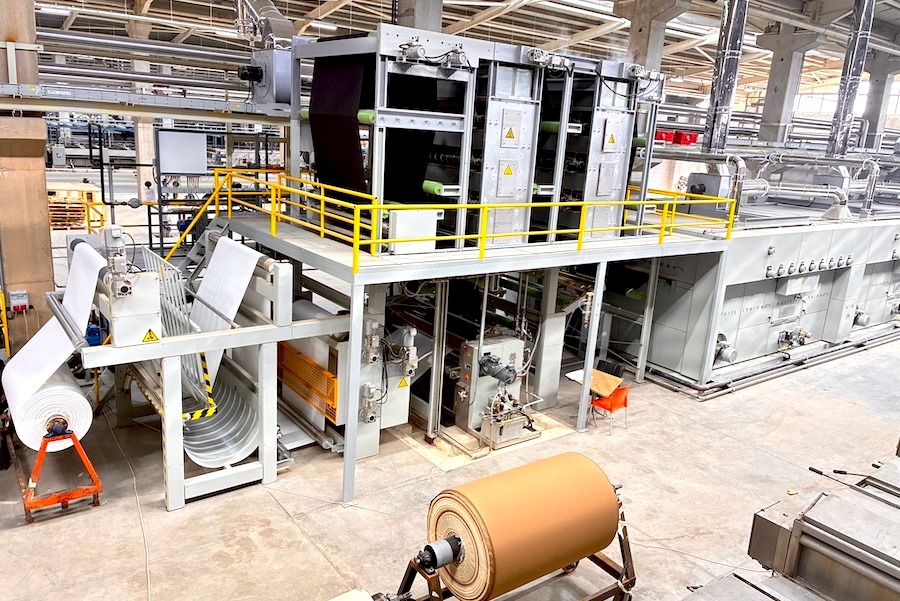
Pic: Pincroft dyes and prints over 40 different camouflage designs for military forces

More News from A. Monforts Textilmaschinen GmbH & Co. KG

#ITM 2026

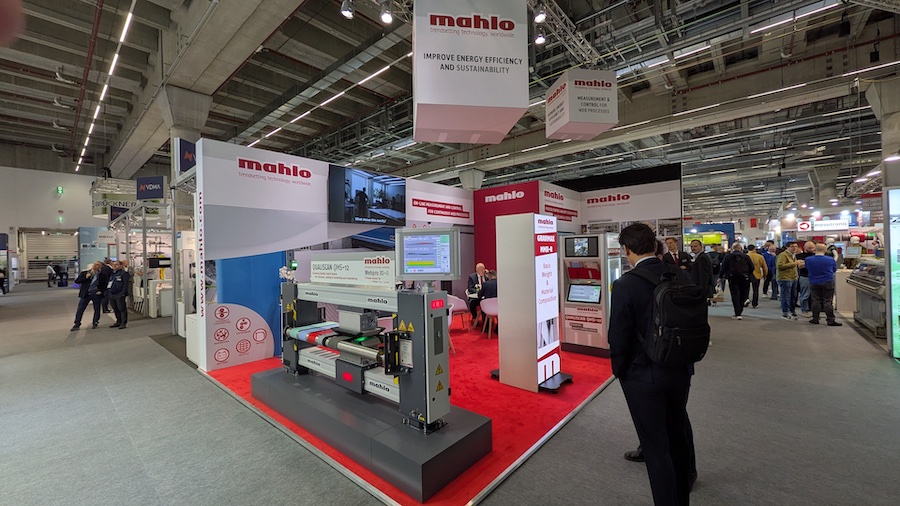
New Monforts systems deliver round-the-clock production for Kipaş

As a valued Monforts customer for many years, Türkiye’s Kipaş Textile has just installed a new Thermex dyeing range and a Monfortex sanforizer at its new dyeing and finishing plant in Kahramanmaraş.

#ITM 2026

Monforts sees growing potential for technical textiles in Türkiye

For many years now, Türkiye has been one of the most important markets for textile finishing, coating and continuous dyeing equipment, making ITM 2026 from June 9-13 a key event for Germany’s Monforts. At the Istanbul exhibition at stand 1117D in Hall 11, the company will put the emphasis on its machines which continue to lead the field in conventional dyeing and finishing, and also highlight the strong opportunities for Turkish textile manufacturers in the growing field of technical textiles.

#Dyeing, Drying, Finishing

Monforts unveils interactive digital platform for textile finishers

Monforts has launched a new digital platform designed to give textile manufacturers faster, more intuitive access to the company’s finishing technologies, technical expertise and aftersales support worldwide.

#Techtextil 2026

Monforts to showcase advanced coating solutions at Techtextil 2026

Over the past few years Monforts has significantly advanced its technologies for coating, with the successive introductions of the MontexCoat, coaTTex and VertiDry systems combining flexibility, precision and energy efficiency for the technical textiles market.

More News on Dyeing, Drying, Finishing

#ITM 2026

SETEX turns dyeing and finishing data into daily production control

At ITM 2026, SETEX will show how textile mills can use machine, recipe, quality and energy data for more reliable daily production decisions — not as another reporting layer, but as part of the running dyeing and finishing process. With OrgaTEX X3 MES, E390x/C390x controllers, CamCOUNT and FabricInspector Portable, SETEX connects planning, machine execution and fabric-related quality insight within existing mill structures.

#Dyeing, Drying, Finishing

Tradition and Innovation – Phoenox Textiles Ltd. relies on state-of-the-art carpet back-coating line from Brückner

For more than 70 years, Phoenox Textiles Ltd. has been synonymous with quality, reliability, and inno-vation in the textile industry. Founded in 1954 in Huddersfield (Yorkshire, UK), a region with a long tradition in textiles, this family-owned business has continued to evolve without losing sight of its roots. Today, in its fourth generation under the leadership of the Mosley family, Phoenox successfully combines decades of experience with a clear, forward-looking corporate strategy.

#Dyeing, Drying, Finishing

Smart Quality Control for Technical Textiles

In the end, what matters is the result: a filter that performs reliably, a membrane that remains stable in storm conditions, a composite material with precisely defined properties. But the path to achieving this is demanding. In the production of technical textiles, numerous parameters interact – and even the smallest deviations can have major consequences.

#ITM 2026

The address for environmentally friendly dyeing and finishing systems: ITM 2026

Dyeing and finishing technologies, one of the most critical and value-added areas of the textile sector, have gained strong growth momentum on a global scale. Technologies that are pioneers of this transformation focused on sustainability, quality and efficiency will meet with sector professionals at the ITM 2026 International Textile Machinery Exhibition. Dyeing and Finishing Hall (11–12) will host the latest technologies that increase efficiency, optimize resource use and reduce environmental impact in textile finishing processes.

Latest News

#Spinning

Barmag and Hitech Automation enter into partnership for an auto-doff system for texturing machines

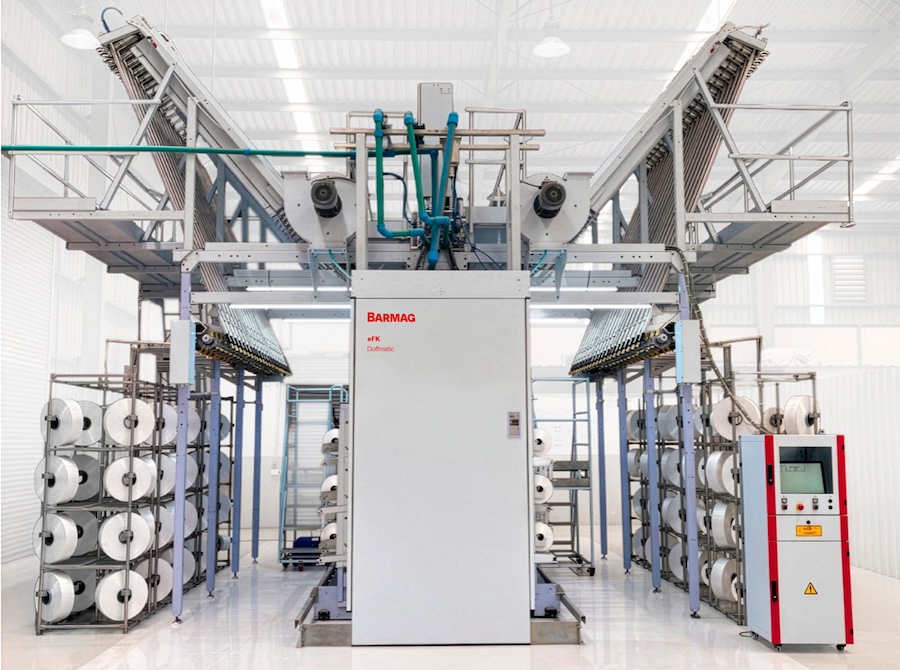
Barmag (Suzhou) Technology Co., Ltd. and Hitech Automation Solutions PVT LTD. of Surat, India, have agreed to an exclusive partnership to jointly market Hitech’s Doffmatic automation solution for Barmag’s proven manual eFK texturing machines. In many texturing facilities, manual doffing processes remain heavily operator-dependent – resulting in issues such as increased scrap, inconsistent quality, and limited productivity.

#ITM 2026

Uster’s new Recycling Opening Index guides spinners to the perfect blend

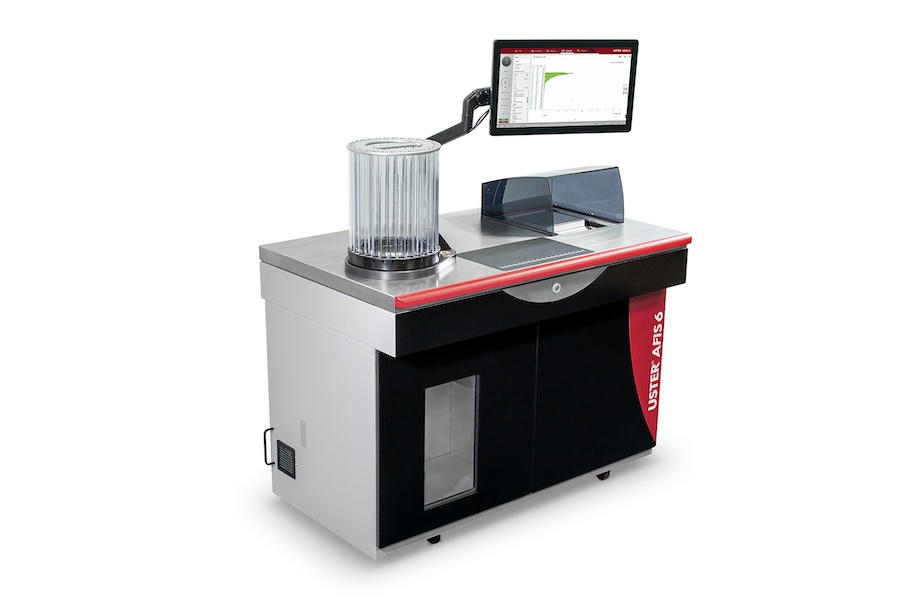
Uster AFIS 6 now offers the key data for better decisions when blending recycled fibers. Process control is decisive in determining the quality and economic outcome. The new R Recycling Module of AFIS 6 introduces the Recycling Opening Index (ROI), so spinners can optimize their circularity credentials. It was officially launched at ITM 2026 in Istanbul, Türkiye.

#HIGHTEX 2026

The heart of the technical textiles and nonwovens world will beat in Istanbul

Only 1 day remains until HIGHTEX 2026 International Technical Textiles and Nonwovens Exhibition opens its doors. Bringing together manufacturers, technology developers, investors, and industry professionals from around the world, HIGHTEX 2026 is preparing to showcase the innovations shaping the future of the industry. As the countdown to this major event continues, Istanbul is once again getting ready to become the meeting point of the global technical textiles industry.

#Man-Made Fibers

Grasim Industries announces fresh investment of ₹3094 Crore to expand Lyocell capacity

Grasim Industries Limited, the flagship company of the Aditya Birla Group and a global leader in cellulosic fibres, today announced an investment of ₹3,094 crore, for Phase II Lyocell capacity of 110K TPA at Harihar, Karnataka. This expansion will consist of 2 lines of 55K TPA (150 Tons per day) each. The first line is expected to be commissioned by 2028, and the second line is expected to be commissioned by 2030.

TOP