[pageLogInLogOut]

#Textiles & Apparel / Garment

Retail demand is set to grow at double digit rates in several emerging markets

Retail demand in several emerging markets will grow at double digit annual average rates in the five years to 2016. This is one of the findings of a report in the latest issue of Global Apparel Markets, which is published quarterly by the business information company Textiles Intelligence.

The fastest growth will be in China and India, where demand is set rise by an average of 16.9% per annum in each country. Double digit growth is also forecast for Indonesia (13.3% per annum), Russia (12.0% per annum), Saudi Arabia (11.7% per annum), Turkey (11.4% per annum), Peru (10.3% per annum) and South Africa (10.1% per annum), while growth in the high single digits is expected in Brazil, Chile, Colombia and Thailand.

By contrast, demand in a number of major Western European countries is set to grow only modestly between 2011 and 2016.

In China, the population is benefiting from rising personal disposable incomes. In fact, the number of households earning over US$50,000 is expected to increase five-fold between 2010 and 2015. Furthermore, there is strong potential for growth in clothing retail demand as a result of urbanisation within the country.

However, competition is fierce as several foreign brands are entering the market -- having been attracted by the country’s massive potential -- and are all vying for market share. Also, several Chinese companies are looking to explore opportunities in their domestic market, given that future export growth is likely to be curtailed by economic uncertainty in Western developed countries.

In India, a growing middle class of about 300 million people with a purchasing power parity of US$30,000 a year are seeking access to world class products. This group of people is adopting international trends much faster than initially expected and consumption is moving beyond big cities, such as Delhi, to smaller cities.

Furthermore, this trend is expected to accelerate following a recent easing of the rules governing foreign ownership of single brand retailing in the country. In fact, the designer wear market in India is predicted to grow at an average rate of 40% per annum between 2012 and 2020 compared with a global average growth rate of 12% per annum.


In Indonesia, much of the growth in retail demand is likely to be fuelled by cheaper imports. Under the Asean-China Free Trade Agreement (ACFTA) there has been a lowering of tariffs on imports into Indonesia and this has led to a steep decline in Chinese prices. As a result, a number of domestic producers have been forced to cease operations.

In Turkey, several international brands have entered the market in recent years in the hope of taking advantage of the country’s growing young and fashion conscious population. Indeed, Turkish imports grew by 32.0% in 2011, which represented the eighth double digit increase in imports in nine years.

But much of the expected growth in the market over the five years to 2016 could be provided domestically. The Turkish government has approved the implementation of additional customs duties on imports of woven fabrics and ready made garments from countries with which it does not have free trade agreements. The aim of the duties is to protect Turkish manufacturers from losing market share as a result of rising low cost imports.

In Brazil, imports shot up by 52.5% in 2011 after increasing at double digit rates in seven of the previous eight years, reflecting strong growth in retail demand in the country.

To combat the sharp rise in imports, the Brazilian government announced plans in December 2011 to replace its current tariff system -- which imposes duties on a price-based mechanism -- with a system which imposes duties on a per item basis. The purpose of the new system is to safeguard the interests of domestic manufacturers, who are facing increasingly tough international competition as a result of low import prices.

Despite the new initiative, import growth is expected to continue at a significant rate over the coming years as retail demand continues to outstrip domestic supply. Indeed, consumption of fibres per head in Brazil is expected to double between 2005 and 2015 -- from 10 kg to 20 kg.


More News from TEXDATA International

#ITM 2026

ITM 2026: The new geography of textile production

New production hubs are emerging across North Africa and Central Asia, while Türkiye is accelerating its transformation toward higher-value, technology-driven and more sustainable textile manufacturing.

#Research & Development

“Production is a product”

From technical textiles and AI-driven robotics to the limitations of textile circularity: Professor Dr Thomas Gries looks back on more than two decades of development at ITA Aachen. In the interview, he explains why production technology remains a decisive success factor, discusses international collaborations and innovation ecosystems, and shares his views on the transformation of production landscapes and the challenges facing an increasingly regulated industry.

#Knitting & Hosiery

“We need to move away from the price trap and return to a value-driven mindset.”

With its new Textile Innovation Center, KARL MAYER is sending a strong signal for innovation, collaboration, and the future of textile applications. In this interview, Karl Josef Mayer discusses new opportunities in warp knitting, the processing of staple fibres, recycling, the changing role of machinery manufacturers, and why the textile industry must once again focus more strongly on the value of textiles. by Oliver Schmidt

#Associations

“Innovation, resilience and international experience remain the great strengths of the Swiss textile machinery industry”

Geopolitical uncertainty, growing competitive pressure from China, new free trade agreements and the shift towards a circular economy are currently reshaping the global textile industry. In this interview, Cornelia Buchwalder discusses the current mood within the Swiss textile machinery sector, the industry’s distinctive innovative strength, new market opportunities in India and Asia, and the technological trends that could shape the upcoming trade fair cycle leading up to ITMA 2027.

More News on Textiles & Apparel / Garment

#Yarn & Fiber

Next week’s focus: Intertextile Shenzhen & Yarn Expo Shenzhen fuse textile tradition with sustainable, digital trends

Fashion will not be left behind in one of the world’s undisputed tech and manufacturing capitals. Which is why next week, at Intertextile Shenzhen Apparel Fabrics and Yarn Expo Shenzhen 2026, the organisers have made special efforts to integrate textile topics such as materials innovation, holistic sustainability, digitalisation and AI. Yet, from 9 – 11 June at the Shenzhen Convention and Exhibition Center, the platform also includes timeless tradition and heritage-inspired evolution in equal measure. Across both shows, over 600 exhibitors from 11 countries and regions are set to showcase everything from Peruvian alpaca wool fabrics to tea-derived fibres, while their fringe programmes will explore diverse solutions along the entire value chain.

#Textiles & Apparel / Garment

Global size study for brands and retailers to optimize fit and market coverage

Hohenstein Apparel Fit Solutions, a global leader in apparel fit, sizing, and product development, today announces the launch of its Global Size Study, a new initiative designed to equip brands to better understand and serve their target consumers through more accurate, market-relevant sizing.

#Textiles & Apparel / Garment

New sourcing regions and sustainable solutions shape Texworld Paris 2026

From August 31 to September 2, 2026, Texworld Apparel Sourcing Paris will once again bring together all international players in textiles and apparel at the Paris-Le Bourget Exhibition Center.

#Textiles & Apparel / Garment

Messe Frankfurt commits further to East Africa: three textiles trade fairs during Africa Sourcing and Fashion Week from 2027

Messe Frankfurt and its Texpertise Network continue their steady, successful trajectory in the region. As Africa Sourcing and Fashion Week (ASFW) opened today, Member of the Executive Board Detlef Braun announced that Messe Frankfurt is licencing its three leading international trade fair brands Texworld, Apparel Sourcing and Texprocess to Nairobi, Kenya for the first time in 2027. From now on, they will take place annually as part of the Africa Sourcing and Fashion Week (ASFW) Nairobi.

Latest News

#Spinning

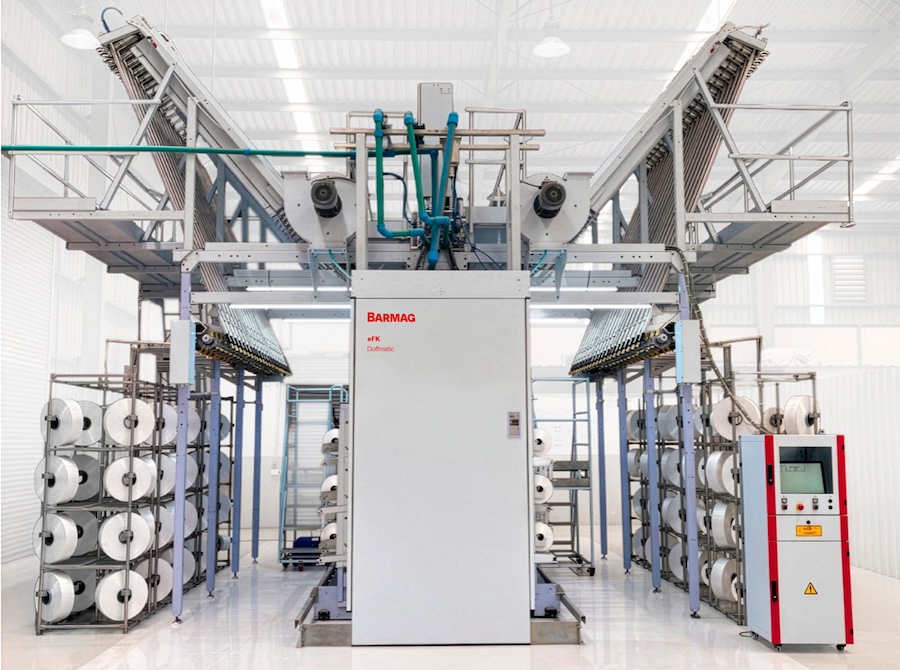
Barmag and Hitech Automation enter into partnership for an auto-doff system for texturing machines

Barmag (Suzhou) Technology Co., Ltd. and Hitech Automation Solutions PVT LTD. of Surat, India, have agreed to an exclusive partnership to jointly market Hitech’s Doffmatic automation solution for Barmag’s proven manual eFK texturing machines. In many texturing facilities, manual doffing processes remain heavily operator-dependent – resulting in issues such as increased scrap, inconsistent quality, and limited productivity.

#ITM 2026

Uster’s new Recycling Opening Index guides spinners to the perfect blend

Uster AFIS 6 now offers the key data for better decisions when blending recycled fibers. Process control is decisive in determining the quality and economic outcome. The new R Recycling Module of AFIS 6 introduces the Recycling Opening Index (ROI), so spinners can optimize their circularity credentials. It was officially launched at ITM 2026 in Istanbul, Türkiye.

#HIGHTEX 2026

The heart of the technical textiles and nonwovens world will beat in Istanbul

Only 1 day remains until HIGHTEX 2026 International Technical Textiles and Nonwovens Exhibition opens its doors. Bringing together manufacturers, technology developers, investors, and industry professionals from around the world, HIGHTEX 2026 is preparing to showcase the innovations shaping the future of the industry. As the countdown to this major event continues, Istanbul is once again getting ready to become the meeting point of the global technical textiles industry.

#Man-Made Fibers

Grasim Industries announces fresh investment of ₹3094 Crore to expand Lyocell capacity

Grasim Industries Limited, the flagship company of the Aditya Birla Group and a global leader in cellulosic fibres, today announced an investment of ₹3,094 crore, for Phase II Lyocell capacity of 110K TPA at Harihar, Karnataka. This expansion will consist of 2 lines of 55K TPA (150 Tons per day) each. The first line is expected to be commissioned by 2028, and the second line is expected to be commissioned by 2030.

TOP