[pageLogInLogOut]

#Dyeing, Drying, Finishing

Monforts MXL helps bed sheets remember

The Monforts MXL (moist crosslinking) process is now being widely adopted by manufacturers of bed linen – having initially established itself on the market for the production of crease-free shirts.

“Wrinkle-resistant bed sheets which require limited ironing – if at all – are allowing manufacturers to differentiate with easy care products in a very competitive market,” says Peter Tolksdorf, Monforts’ Head of Product Management for Dyeing and Application. “As a consequence we are having notable success in selling our MXL range, and particularly in India.”

Crosslinking involves the resin finishing of cellulose material, usually cotton, to significantly reduce a fabric’s propensity to wrinkling. Upon application, the reactive resins penetrate into the fabric and catalyse the fibres during heating and curing.

“This creates a dry dimensional structure which in a sense has a degree of shape memory and even if wrinkled will return to its original form,” Mr Tolksdorf explains. “It’s also possible to achieve exactly the opposite of this, and provide products with permanent creases, in trousers, for example.”

“The Monforts MXL process,” he added, “differs significantly from both conventional dry crosslinking methods and other technologies for moist crosslinking, bringing a number of benefits – not least a vast reduction in processing times, in addition to greater flexibility and increased safety compared to other systems.”

With dry crosslinking, the fabric is opened in the stenter and all chemicals are applied by padder, the fabric is then dried in the stenter and cured.

“This can be appropriate for 90% of cotton products, but the resulting fabrics are not entirely wrinkle-free and the results vary significantly depending on the cotton quality,” said Mr Tolksdorf.   Conventional moist crosslinking is somewhat different, in employing chemicals which cannot be applied at high temperature. As a consequence, the process is carried out at around 80°C to protect and support the reaction at low temperature and then dried down to defined residual moisture. Afterwards the fabrics have to go through a 24-hour batch curing process.

“The disadvantages here are the lengthy process time and the limited opportunity for variation in the treatment of fabric,” Mr Tolksdorf said. “In addition, there’s a very narrow temperature band for optimising parameters which adds an element of risk, and the fabric must be thoroughly washed off afterwards.”

With the MXL process the complete process and drying are carried out simultaneously at a higher temperature of 100°C and relative humidity of 30%.

“Basically, MXL reduces the processing time required from twenty hours to just three minutes,” said Mr Tolksdorf. “Because of the very special climate that’s created, the process is much less risky, since the residual moisture is consistent from start to finish, and very good control can be achieved with the unit’s measurement system.

“The process is extremely precise and reproducibility is guaranteed. It can also be with aromatic and wellness treatments to provide further product differentiation.”

“For the mills, it also leads to process simplification and improved logistics.”
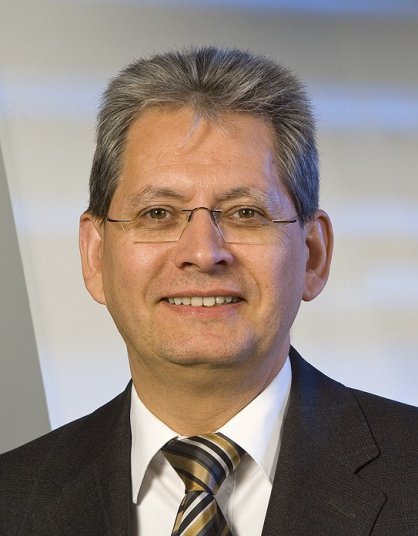
Mr. Peter Tolksdorf  

More News from A. Monforts Textilmaschinen GmbH & Co. KG

#ITM 2026

New Monforts systems deliver round-the-clock production for Kipaş

As a valued Monforts customer for many years, Türkiye’s Kipaş Textile has just installed a new Thermex dyeing range and a Monfortex sanforizer at its new dyeing and finishing plant in Kahramanmaraş.

#ITM 2026

Monforts sees growing potential for technical textiles in Türkiye

For many years now, Türkiye has been one of the most important markets for textile finishing, coating and continuous dyeing equipment, making ITM 2026 from June 9-13 a key event for Germany’s Monforts. At the Istanbul exhibition at stand 1117D in Hall 11, the company will put the emphasis on its machines which continue to lead the field in conventional dyeing and finishing, and also highlight the strong opportunities for Turkish textile manufacturers in the growing field of technical textiles.

#Dyeing, Drying, Finishing

Monforts unveils interactive digital platform for textile finishers

Monforts has launched a new digital platform designed to give textile manufacturers faster, more intuitive access to the company’s finishing technologies, technical expertise and aftersales support worldwide.

#Techtextil 2026

Monforts to showcase advanced coating solutions at Techtextil 2026

Over the past few years Monforts has significantly advanced its technologies for coating, with the successive introductions of the MontexCoat, coaTTex and VertiDry systems combining flexibility, precision and energy efficiency for the technical textiles market.

More News on Dyeing, Drying, Finishing

#ITM 2026

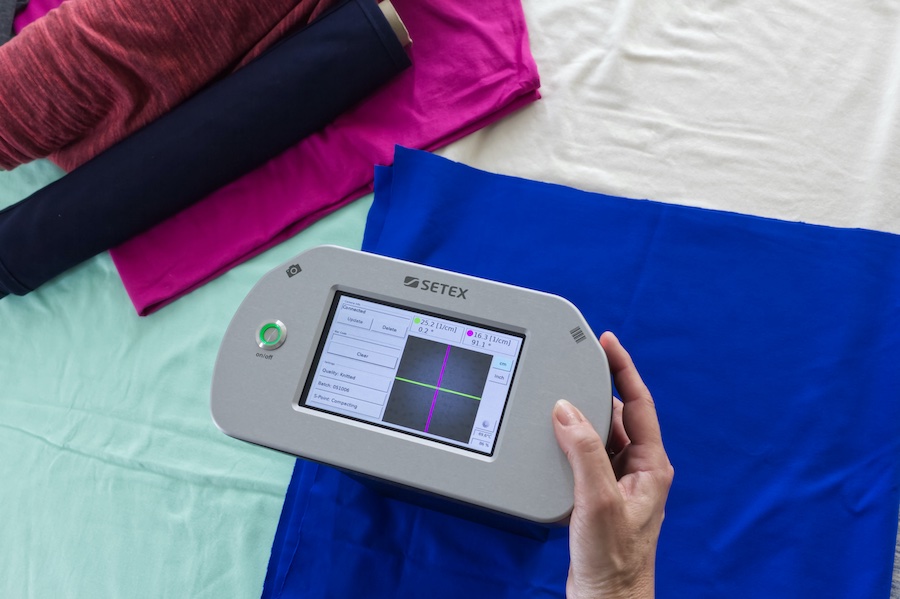
SETEX turns dyeing and finishing data into daily production control

At ITM 2026, SETEX will show how textile mills can use machine, recipe, quality and energy data for more reliable daily production decisions — not as another reporting layer, but as part of the running dyeing and finishing process. With OrgaTEX X3 MES, E390x/C390x controllers, CamCOUNT and FabricInspector Portable, SETEX connects planning, machine execution and fabric-related quality insight within existing mill structures.

#Dyeing, Drying, Finishing

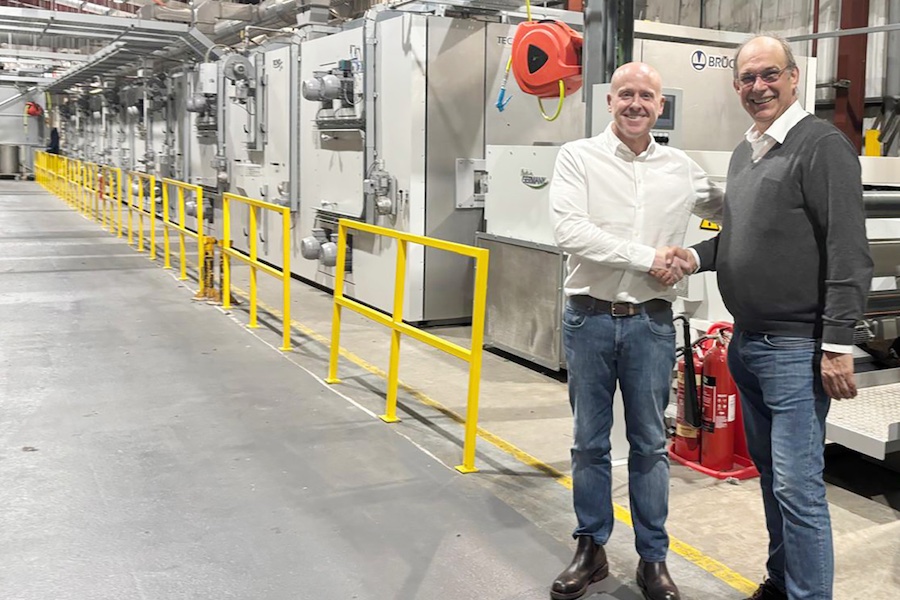
Tradition and Innovation – Phoenox Textiles Ltd. relies on state-of-the-art carpet back-coating line from Brückner

For more than 70 years, Phoenox Textiles Ltd. has been synonymous with quality, reliability, and inno-vation in the textile industry. Founded in 1954 in Huddersfield (Yorkshire, UK), a region with a long tradition in textiles, this family-owned business has continued to evolve without losing sight of its roots. Today, in its fourth generation under the leadership of the Mosley family, Phoenox successfully combines decades of experience with a clear, forward-looking corporate strategy.

#Dyeing, Drying, Finishing

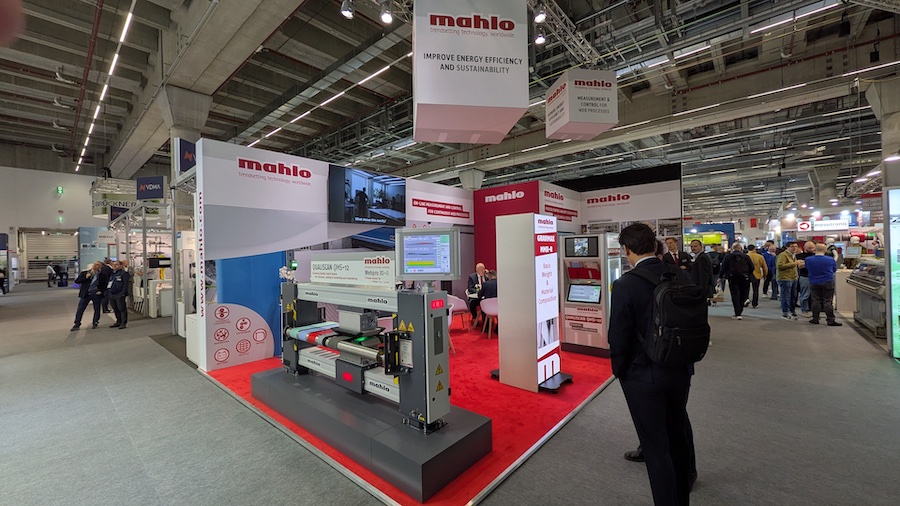
Smart Quality Control for Technical Textiles

In the end, what matters is the result: a filter that performs reliably, a membrane that remains stable in storm conditions, a composite material with precisely defined properties. But the path to achieving this is demanding. In the production of technical textiles, numerous parameters interact – and even the smallest deviations can have major consequences.

#ITM 2026

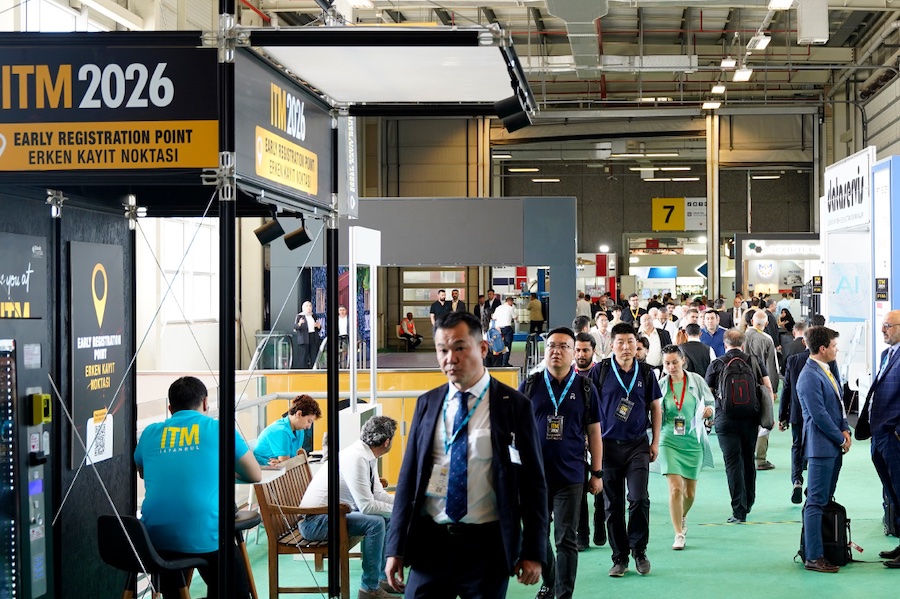
The address for environmentally friendly dyeing and finishing systems: ITM 2026

Dyeing and finishing technologies, one of the most critical and value-added areas of the textile sector, have gained strong growth momentum on a global scale. Technologies that are pioneers of this transformation focused on sustainability, quality and efficiency will meet with sector professionals at the ITM 2026 International Textile Machinery Exhibition. Dyeing and Finishing Hall (11–12) will host the latest technologies that increase efficiency, optimize resource use and reduce environmental impact in textile finishing processes.

Latest News

#HIGHTEX 2026

The heart of the technical textiles and nonwovens world will beat in Istanbul

Only 1 day remains until HIGHTEX 2026 International Technical Textiles and Nonwovens Exhibition opens its doors. Bringing together manufacturers, technology developers, investors, and industry professionals from around the world, HIGHTEX 2026 is preparing to showcase the innovations shaping the future of the industry. As the countdown to this major event continues, Istanbul is once again getting ready to become the meeting point of the global technical textiles industry.

#Man-Made Fibers

Grasim Industries announces fresh investment of ₹3094 Crore to expand Lyocell capacity

Grasim Industries Limited, the flagship company of the Aditya Birla Group and a global leader in cellulosic fibres, today announced an investment of ₹3,094 crore, for Phase II Lyocell capacity of 110K TPA at Harihar, Karnataka. This expansion will consist of 2 lines of 55K TPA (150 Tons per day) each. The first line is expected to be commissioned by 2028, and the second line is expected to be commissioned by 2030.

#ITM 2026

The future of textiles, the power of trade, and the summit of technology come together at ITM 2026

ITM 2026 International Textile Machinery Exhibition, one of the most prestigious organizations in the textile technologies sector, opens its doors to visitors between June 9-13. Expected to break records in terms of both exhibitor and visitor numbers, as well as the technological vision it presents, ITM 2026 will transform into a global trade hub with machine sales, and new business collaborations.

#Nonwoven machines

ATCO Hygienics, Uzbekistan, orders baby diaper production line from ANDRITZ

International technology group ANDRITZ has received an order from ATCO Hygienics to supply a new baby diaper production line for its plant in Tashkent, Uzbekistan. The order is included in ANDRITZ’s order intake for the first quarter of 2026. Commissioning of the production line is scheduled for the end of 2026.

TOP