#Techtextil / Texprocess 2013
Bayer develops solvent-free raw materials for textile coating
High-class outfit of car seats, sports and fashion goods
Products such as team jerseys, soccer balls, shoes, jeans, jackets and bags may be very different, but once treated with these polyurethane dispersions, they have one thing in common – textiles and synthetic leather products manufactured in this way are long-lasting, feel good and look stylish. Not to mention they also meet the desire of many customers and consumers for low-emission, eco-friendly products. Impranil® can also be used for the formulation of coatings that meet the special requirements of technical textiles.
Polyurethane dispersions fulfill the highest requirements
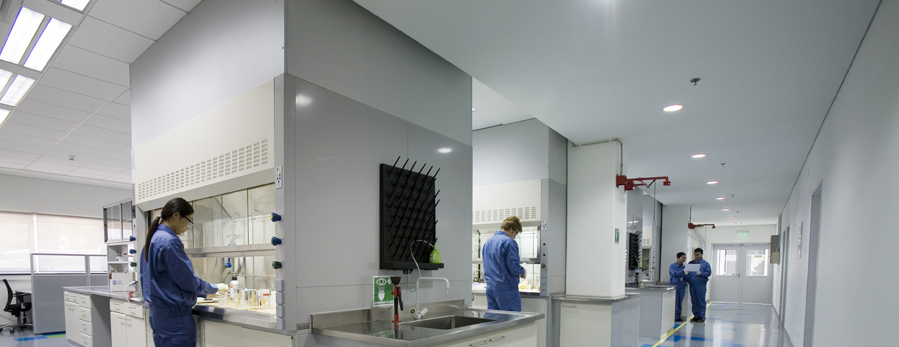
Just like its customers, Bayer MaterialScience is an international player, and its representatives at the fair will include experts from Asia. Along with their European coworkers, they will showcase sample coatings manufactured in pilot plants in Leverkusen and Shanghai. They will give visitors to the stand an idea of the possibilities offered by state-of-the-art textile technology using Impranil® dispersions.
Upscale, long-lasting automotive interiors “Our polycarbonate-based polyurethane dispersions can be used to produce synthetic leather and textiles for automotive interiors that are extremely resistant to abrasion, moisture, sunlight and heat,” says Thomas Michaelis, head of Textile Coating for Europe, the Middle East and Africa at Bayer MaterialScience. “The materials are also notable for their good low-temperature flexibility and allow the creation of automotive interiors with very low emissions,” he continues.
The dispersions Impranil® DL 2077 XP, Impranil® DL 2288 XP and the high-solids Impranil® DLU can be processed very easily using the mechanically blown foam method. Unlike the conventional coagulation process, this method does not involve the use of any toxic substances. It also uses less water and less than half as much energy.
Durable sports equipment for better performance and more fun Polyurethane high-performance coatings make an enormous improvement to athletic clothing and shoes. Among other things, they give the products a high level of elasticity that doesn't fade even after frequent use. When the material is stretched during competition, it stores the energy for a short time and can give it back to athletes as they continue to move. Even frequent machine washing or drying cannot degrade these excellent properties. At the same time, the coating has only a very minimal effect on the weight of the textiles.
“Our solvent-free dispersions support the efforts of the sporting goods industry toward more sustainability,” says Thomas Michaelis. The technology also enables the manufacture of solvent-free, color-fast and abrasion-resistant synthetic leathers.
Bayer MaterialScience is collaborating with the leading sporting goods manufacturers on developing coatings and synthetic leathers for innovative sports equipment. Among other things, Bayer experts are currently developing waterborne, breathable polyurethane systems for the coating of textiles.
Fashion goods with improved look and feel “The fashion industry is also moving toward more environmentally-friendly materials, and we can support this trend with our dispersions,” says Michaelis. For example, the Oeko-Tex® standard 100 can be achieved with coatings based on these dispersions. This is an independent system that grades textile raw materials, intermediates and end products in all stages of processing in terms of the harmful substances they contain.
For example, jeans coated using Impranil® DLN or the high-solids variant Impranil® DL 1380 have a pleasant, soft and high-quality feel. The coatings also provide a high level of design freedom and enable gloss, color and glitter effects. At the same time, the polyurethane coating survives more washes than other coatings. Finally, the dispersions can also be helpful in protecting certain areas during the stonewashed process, for example, where the bleached effect is not to be as pronounced as on the rest of the jeans.
Products such as Impranil® DL 519, Impranil® DL 1554 and Impranil® DAH are also used to produce fashionable and low-emission synthetic leather applications for bags, jackets, belts, shoes and clothing.
High performance in technical applications Areas of application for technical textiles include conveyor and other transport belts as well as bellows used to protect the joints of industrial robots, for example. Appropriate textile coatings must be extremely abrasion-resistant while at the same time very flexible. For a long time, this combination of characteristics could only be achieved using solventborne systems. However, waterborne, cosolvent-free formulations with products from Bayer MaterialScience now meet the most stringent requirements in this respect. This also benefits other applications besides industrial production engineering, including textile protective gloves, safety vests, lifeboats and tents.