[pageLogInLogOut]

#ITM 2013

Country focus: Turkey

Turkey is one of the most important textile producing countries of the world and is considered to be the textile powerhouse in Europe as well as being sometimes described as the China of Europe which certainly refers to its relatively low wage costs for European standards and high economic growth over a number of years.

Turkey ranks number 4 in the 2011 WTO table of export statistics with a value of 10.8 bn USD for textiles and 13.9 bn USD for garments. The ranking remains unchanged compared to 2010, growth however amounted to 15% and was only just below the growth of 17% for all exports of textiles and garments. Ahead of Turkey in the ranking are India, the EU (27) and of course China, the absolute number one with 94.4 bn USD for textiles and 153.8 bn for garments. Turkey ranks just behind Italy when the EU is split up into its individual countries. According to Eurostat 3.9 bn USD of exports from Turkey went to the EU in 2011, garments amounted to 8.186 bn USD which represented about 59% of exports to the EU. Germany and Italy are the most important countries for exports to the EU. Textiles and garments combined form a 19% share of exports (2010) and represent the most important trade group for exports from Turkey (source Fischer Weltallmanach). Motor vehicles, iron and steel, electrical machinery and food products are further important export trade groups.

These figures show the great importance of the textile and garment industry for Turkey as well as on the other hand how important the sales market EU is. Turkey has been part of the European customs union since 1996 that led to the removal of customs duties and provided Turkey with a competitive advantage over other textile producing countries.

The EU has however progressively concluded agreements with other countries and reduced restrictions or abolished them completely, which is why the country on the Bosporus has been faced with ever growing competition from Asia in recent years.

Despite low unit labour costs the country cannot compete with the prices of cheap products from the Far East any longer. The advantages for Turkey are the relative close proximity to the European single market, automation already well advanced to a large part and flexibility in production batch sizes. According to the EU report ‘Worldwide Sourcing 2012’ presented by the French association ‘Fédération de la Maille et de la Lingerie’ in February 2013 at the Sourcing trade fair ‘Zoom by Fatex’, Bangladesch has been able to double its share of exports of textiles and garments to the EU in the past five years and was ahead of Turkey in 2012 (+9% compared to 2011) whose share was reported to have declined by 4%. It is therefore only a small consolation that India has declined by 19% and even China by 10% for the first time. Besides Bangladesh, the countries of Vietnam (+2%), Sri Lanka (+8 %) and Cambodia (+38 %) are the beneficiaries of the altogether lower imports to the EU. Another impending adversity is the re-orientation of the Chinese textile industry towards more quality, more sustainability in production and transformation to an automated high-tech industry.

Economic development in Turkey

Let us have a look at the development of the Turkish economy as a whole. (...)

Read the complete article in the last issue 2 / 2013 of the TexData Magazine. If you aren 't already a subscriber, please register here!


More News from TEXDATA International

#ITM 2026

ITM 2026: The new geography of textile production

New production hubs are emerging across North Africa and Central Asia, while Türkiye is accelerating its transformation toward higher-value, technology-driven and more sustainable textile manufacturing.

#Research & Development

“Production is a product”

From technical textiles and AI-driven robotics to the limitations of textile circularity: Professor Dr Thomas Gries looks back on more than two decades of development at ITA Aachen. In the interview, he explains why production technology remains a decisive success factor, discusses international collaborations and innovation ecosystems, and shares his views on the transformation of production landscapes and the challenges facing an increasingly regulated industry.

#Knitting & Hosiery

“We need to move away from the price trap and return to a value-driven mindset.”

With its new Textile Innovation Center, KARL MAYER is sending a strong signal for innovation, collaboration, and the future of textile applications. In this interview, Karl Josef Mayer discusses new opportunities in warp knitting, the processing of staple fibres, recycling, the changing role of machinery manufacturers, and why the textile industry must once again focus more strongly on the value of textiles. by Oliver Schmidt

#Associations

“Innovation, resilience and international experience remain the great strengths of the Swiss textile machinery industry”

Geopolitical uncertainty, growing competitive pressure from China, new free trade agreements and the shift towards a circular economy are currently reshaping the global textile industry. In this interview, Cornelia Buchwalder discusses the current mood within the Swiss textile machinery sector, the industry’s distinctive innovative strength, new market opportunities in India and Asia, and the technological trends that could shape the upcoming trade fair cycle leading up to ITMA 2027.

More News on ITM 2013

Latest News

#Spinning

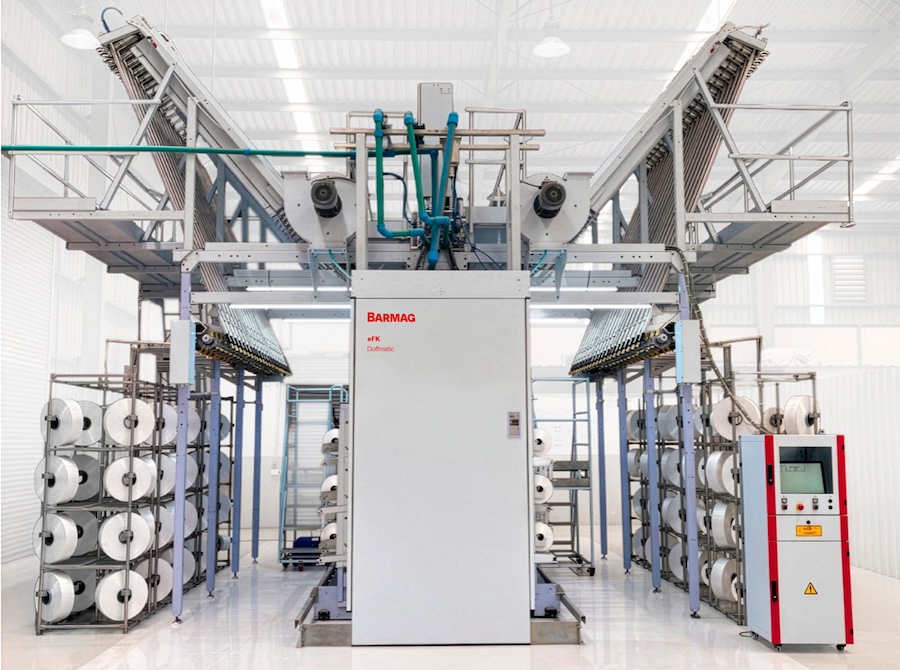
Barmag and Hitech Automation enter into partnership for an auto-doff system for texturing machines

Barmag (Suzhou) Technology Co., Ltd. and Hitech Automation Solutions PVT LTD. of Surat, India, have agreed to an exclusive partnership to jointly market Hitech’s Doffmatic automation solution for Barmag’s proven manual eFK texturing machines. In many texturing facilities, manual doffing processes remain heavily operator-dependent – resulting in issues such as increased scrap, inconsistent quality, and limited productivity.

#ITM 2026

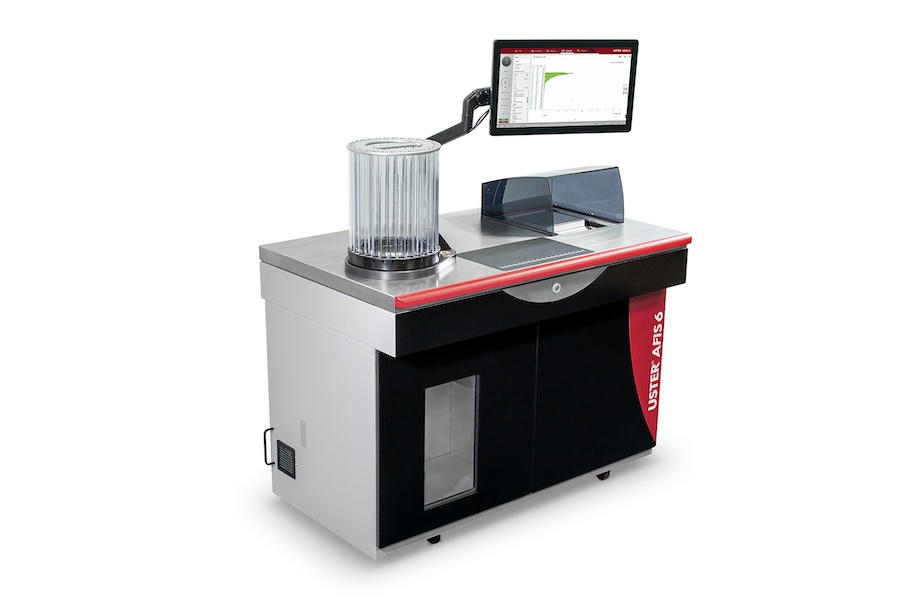
Uster’s new Recycling Opening Index guides spinners to the perfect blend

Uster AFIS 6 now offers the key data for better decisions when blending recycled fibers. Process control is decisive in determining the quality and economic outcome. The new R Recycling Module of AFIS 6 introduces the Recycling Opening Index (ROI), so spinners can optimize their circularity credentials. It was officially launched at ITM 2026 in Istanbul, Türkiye.

#HIGHTEX 2026

The heart of the technical textiles and nonwovens world will beat in Istanbul

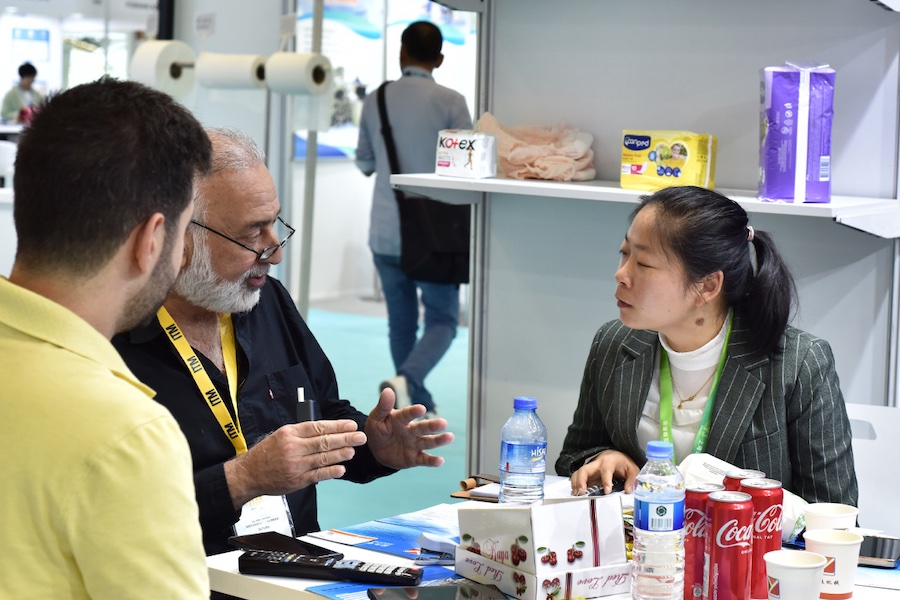
Only 1 day remains until HIGHTEX 2026 International Technical Textiles and Nonwovens Exhibition opens its doors. Bringing together manufacturers, technology developers, investors, and industry professionals from around the world, HIGHTEX 2026 is preparing to showcase the innovations shaping the future of the industry. As the countdown to this major event continues, Istanbul is once again getting ready to become the meeting point of the global technical textiles industry.

#Man-Made Fibers

Grasim Industries announces fresh investment of ₹3094 Crore to expand Lyocell capacity

Grasim Industries Limited, the flagship company of the Aditya Birla Group and a global leader in cellulosic fibres, today announced an investment of ₹3,094 crore, for Phase II Lyocell capacity of 110K TPA at Harihar, Karnataka. This expansion will consist of 2 lines of 55K TPA (150 Tons per day) each. The first line is expected to be commissioned by 2028, and the second line is expected to be commissioned by 2030.

TOP