[pageLogInLogOut]

#Textiles & Apparel / Garment

OEKO-TEX® Test Criteria 2013
© 2013 www.clauslanger.de
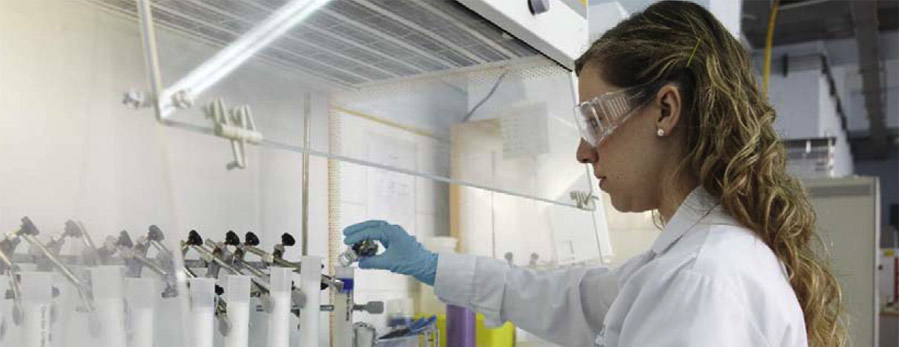
With regard to product certification according to OEKO-TEX® Standard 100, the OEKO-TEX® Association has as usual updated the applicable test criteria and limit values at the beginning of year.

After a three-month transitional period the following new regulations will come into force for all certification procedures on 1 April 2013.

  • The textiles submitted for certification will in future be tested for eight additional polycyclic aromatic hydrocarbons (PAHs). In product category I the existing limit value for benzo(a)pyrene will furthermore be lowered to 0.5 mg/kg and the previously valid sum limit value for all other PAHs will be lowered to 5 mg/kg.
  • In view of the classification as a "substance of very high concern" (SVHC) in the sense of the REACh legislation, dimethylformamide (DMF) will be added to the list of regulated solvents. A limit value of 0.1 % applies.
  • In addition to this, all test samples will in future be tested for three additional phthalates which are potentially harmful to health as they have also been classified as SVHCs or are partly listed in the REACh 'Registry of Intentions'. The sum limit values of 0.1 % for product category I and product categories II to IV remain.
  • Due to the limitation stipulated in annex XVII of the REACh regulation, dimethyl fumarate (DMFu) will in future be listed with a limit value of 0.1 mg/kg as an additional substance in the list of residual chemicals regulated by OEKO-TEX® and will be tested for in relevant items.
  • Due to the change of the European standard for determining nickel release, the limit values for extractable nickel will be adapted in all four OEKO-TEX® product categories. The new limit values will be 0.5 mg/kg for product category I and 1.0 mg/ kg for product categories II to IV.
  • The regulation of nonylphenol, octylphenol and alkylphenol ethoxylates (APEOs), which was already introduced for product certification according to OEKOTEX ® Standard 100 in early 2012, will now become finally binding for all product certifications according to OEKO-TEX® Standard 100 from 1 April 2013.
  •  The following limit values apply: + sum of octylphenol (OP) and nonylphenol (NP) = 50 mg/kg (equal to 0.005 weight by weight) + sum of octylphenol, nonylphenol, octylphenol-(1-2)-ethoxylate and nonylphenol- (1-9)-ethoxylate = 500 mg/kg (equal to 0.05 weight by weight)
  • With these limit values OEKO-TEX® supports the 'Zero Discharge of Hazardous Chemicals (ZDHC)' initiative. The process of raising awareness among the companies involved in the OEKO-TEX® system with regard to these problematic substances, which are harmful to the environment and can be found in auxiliary materials, will be further intensified during the company audits.
  • Every OEKO-TEX® certificate issued in future will explicitly state that the conformance of items which are marked with the OEKO-TEX® label will be verified regularly through company audits.
More information about the new OEKO-TEX® test criteria can be obtained from your OEKO-TEX® institute and from the OEKO-TEX® secretariat (info@oeko-tex.com).

After a three-month transitional period the new OEKO-TEX® test criteria and limit values will become binding for all certification procedures on 1 April 2013. 
More News from Oeko-Tex® Association

#Sustainability

OEKO-TEX® chooses TextileGenesis to advance digital traceability for organic cotton

OEKO-TEX® today announced a full collaboration with TextileGenesis, a Lectra company, to digitally trace and authenticate organic cotton, strengthening fraud prevention across the supply chain. This announcement follows a successful pilot and brings together OEKO-TEX®’s certification expertise and closed testing system with TextileGenesis’ digital traceability platform to deliver a secure, end-to-end solution for managing certified organic cotton flows.

#Sustainability

OEKO-TEX® - New regulations 2025

Fostering trust within the textile and leather industry remains the mission of OEKO-TEX®. Since trust relies on consistently high standards, the OEKO-TEX® Association has released the updated testing criteria, limit values and guidelines for its certifications, based on the latest scientific research and legal developments.

#Sustainability

OEKO-TEX® Annual Report 2023/2024 mentions 50,000+ valid certifications

The international OEKO-TEX® association has continued to demonstrate positive business growth, highlighting the critical role of close collaboration and shared commitment in accelerating sustainable change. More than 35,000 textile and leather companies depend on the certificates and product labels issued by OEKO-TEX®’s independent testing institutes. OEKO-TEX® issued more than 50,000 certificates and labels between July 1, 2023, and June 30, 2024 – an increase of 22% over the previous financial year.

#Sustainability

OEKO-TEX® New regulations 2024

Creating trust within the textile and leather industry and for its customers is the mission of OEKO-TEX®. Since trust is based on consistently high quality, the OEKO-TEX® Association is again publishing updates to the applicable test criteria, limit values and guidelines for its certifications. Based on new scientific findings and legal developments, the OEKO-TEX® Association has published the annual updates to its test criteria, limit values and guidelines.

More News on Textiles & Apparel / Garment

#Yarn & Fiber

Next week’s focus: Intertextile Shenzhen & Yarn Expo Shenzhen fuse textile tradition with sustainable, digital trends

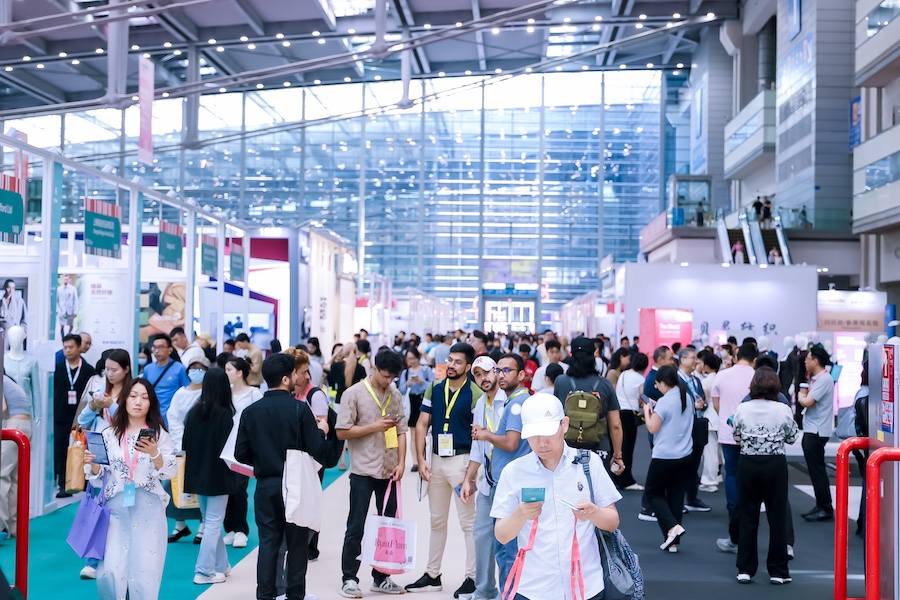
Fashion will not be left behind in one of the world’s undisputed tech and manufacturing capitals. Which is why next week, at Intertextile Shenzhen Apparel Fabrics and Yarn Expo Shenzhen 2026, the organisers have made special efforts to integrate textile topics such as materials innovation, holistic sustainability, digitalisation and AI. Yet, from 9 – 11 June at the Shenzhen Convention and Exhibition Center, the platform also includes timeless tradition and heritage-inspired evolution in equal measure. Across both shows, over 600 exhibitors from 11 countries and regions are set to showcase everything from Peruvian alpaca wool fabrics to tea-derived fibres, while their fringe programmes will explore diverse solutions along the entire value chain.

#Textiles & Apparel / Garment

Global size study for brands and retailers to optimize fit and market coverage

Hohenstein Apparel Fit Solutions, a global leader in apparel fit, sizing, and product development, today announces the launch of its Global Size Study, a new initiative designed to equip brands to better understand and serve their target consumers through more accurate, market-relevant sizing.

#Textiles & Apparel / Garment

New sourcing regions and sustainable solutions shape Texworld Paris 2026

From August 31 to September 2, 2026, Texworld Apparel Sourcing Paris will once again bring together all international players in textiles and apparel at the Paris-Le Bourget Exhibition Center.

#Textiles & Apparel / Garment

Messe Frankfurt commits further to East Africa: three textiles trade fairs during Africa Sourcing and Fashion Week from 2027

Messe Frankfurt and its Texpertise Network continue their steady, successful trajectory in the region. As Africa Sourcing and Fashion Week (ASFW) opened today, Member of the Executive Board Detlef Braun announced that Messe Frankfurt is licencing its three leading international trade fair brands Texworld, Apparel Sourcing and Texprocess to Nairobi, Kenya for the first time in 2027. From now on, they will take place annually as part of the Africa Sourcing and Fashion Week (ASFW) Nairobi.

Latest News

#Spinning

Barmag and Hitech Automation enter into partnership for an auto-doff system for texturing machines

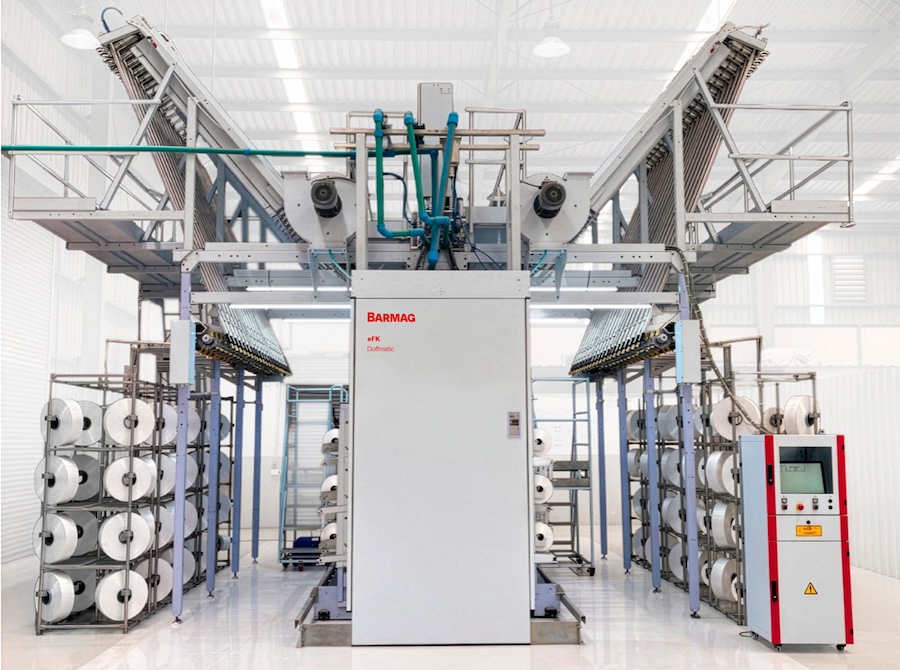
Barmag (Suzhou) Technology Co., Ltd. and Hitech Automation Solutions PVT LTD. of Surat, India, have agreed to an exclusive partnership to jointly market Hitech’s Doffmatic automation solution for Barmag’s proven manual eFK texturing machines. In many texturing facilities, manual doffing processes remain heavily operator-dependent – resulting in issues such as increased scrap, inconsistent quality, and limited productivity.

#ITM 2026

Uster’s new Recycling Opening Index guides spinners to the perfect blend

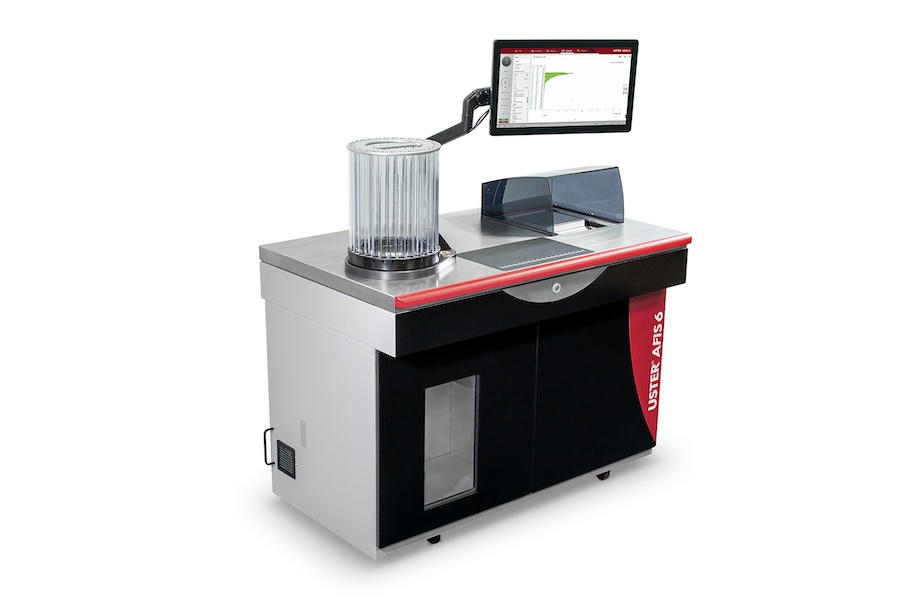
Uster AFIS 6 now offers the key data for better decisions when blending recycled fibers. Process control is decisive in determining the quality and economic outcome. The new R Recycling Module of AFIS 6 introduces the Recycling Opening Index (ROI), so spinners can optimize their circularity credentials. It was officially launched at ITM 2026 in Istanbul, Türkiye.

#HIGHTEX 2026

The heart of the technical textiles and nonwovens world will beat in Istanbul

Only 1 day remains until HIGHTEX 2026 International Technical Textiles and Nonwovens Exhibition opens its doors. Bringing together manufacturers, technology developers, investors, and industry professionals from around the world, HIGHTEX 2026 is preparing to showcase the innovations shaping the future of the industry. As the countdown to this major event continues, Istanbul is once again getting ready to become the meeting point of the global technical textiles industry.

#Man-Made Fibers

Grasim Industries announces fresh investment of ₹3094 Crore to expand Lyocell capacity

Grasim Industries Limited, the flagship company of the Aditya Birla Group and a global leader in cellulosic fibres, today announced an investment of ₹3,094 crore, for Phase II Lyocell capacity of 110K TPA at Harihar, Karnataka. This expansion will consist of 2 lines of 55K TPA (150 Tons per day) each. The first line is expected to be commissioned by 2028, and the second line is expected to be commissioned by 2030.

TOP