[pageLogInLogOut]

#Sustainability

BASF completes world-scale facilities for water treatment and paper chemicals in Nanjing, China
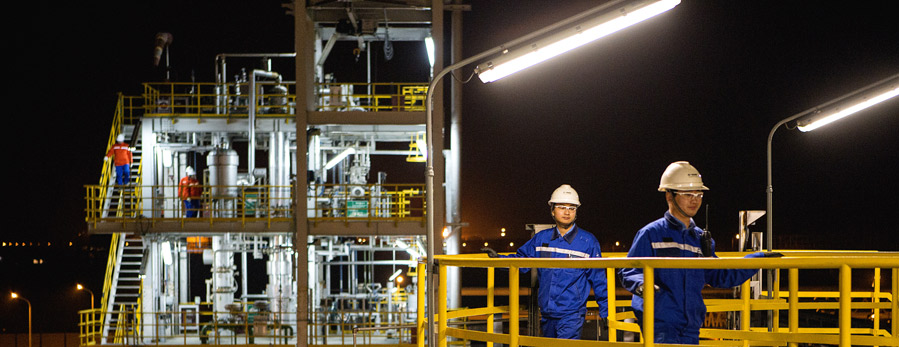
BASF world-scale facilities for water treatment and paper chemicals in Nanjing, China (c) 2012 BASF
BASF has begun production of chemicals for water treatment and paper manufacturing at the Nanjing Chemical Industry Park in Nanjing, China. These wholly-owned, world-scale production plants for quaternized cationic monomers (DMA3Q) and cationic polyacrylamide (cPAM) further strengthen BASF’s leading position in supporting the water treatment and paper industries in Asia.

+ Production at the heart of water treatment and paper industry in Asia Pacific

+ Built to BASF’s high global standards of safety protection and energy efficiency

+ First installation of a strongly backward integrated polyacrylamide (PAM) value chain in China The facility has an annual capacity of 40,000 tons of DMA3Q and 20,000 tons of cPAM, and is strongly backward integrated. Key precursors are supplied by the adjoining facilities at BASF-YPC Co., a 50-50 joint venture between BASF and SINOPEC which is one of six BASF Verbund sites worldwide.

“The completion of these facilities is an important milestone, allowing BASF to establish a globally cost-competitive supply for the water treatment industry,” said Dr. Matthias Halusa, Head of BASF’s Global Business Management Water Solutions. “ Production right at the heart of the water treatment industry in Asia further strengthens BASF’s position in this region as a supplier of innovative solutions.”

The demand for sustainable solutions to improve water and waste water management in Asia, specifically in China, is rising in order to provide long-term water security. Access to clean water is among the major local challenges. BASF contributes with innovative solutions to close the water supply gap as a leading provider of chemical solutions for water recycling, reuse, water savings and drinking water treatment.

“As the first global player for powder polymers and monomers in this rapidly growing region, we can respond to the growing demands of our customers. Becoming a local producer demonstrates BASF’s commitment to support these important industries in Asia ,” emphasized Magali Simon, Regional Head of BASF Business Water Solutions Asia Pacific.

Cationic polyacrylamides are used as organic flocculants and coagulants as well as retention and drainage aids in the paper industry. With Zetag® and Magnafloc® BASF provides a comprehensive range of water treatment chemicals especially designed for the solid/liquid separation process in the industrial and municipal waste water treatment sectors. BASF offers innovative solutions on increasing productivity and reducing total cost of operations in paper industry with Percol® and Organopol®.

“This plant will underpin BASF’s position as one of the leading players in providing retention and drainage solutions as well as water management to our paper customers. At the same time, we will be setting new sustainability standards in the way we use water and energy, ” said Heng Lin, Senior Vice President, Paper Chemicals Asia Pacific.

The plants at Nanjing are built according to BASF’s high global standards of safety and environmental protection. Particular importance is put on training the employees and the safety experts to ensure the same high safety standards as in all other production facilities.
More News from BASF Aktiengesellschaft
Performance Chemicals for Textiles

More News on Sustainability

#Sustainability

Closing the Footwear Loop reveals challenges and opportunities for circular footwear

The footwear industry faces one of the most complex circularity challenges in the fashion sector. A new Phase 1 report from the Fashion for Good initiative Closing the Footwear Loop, developed together with Circle Economy, provides new insights into the composition, condition and recycling potential of post-consumer footwear waste.

#Man-Made Fibers

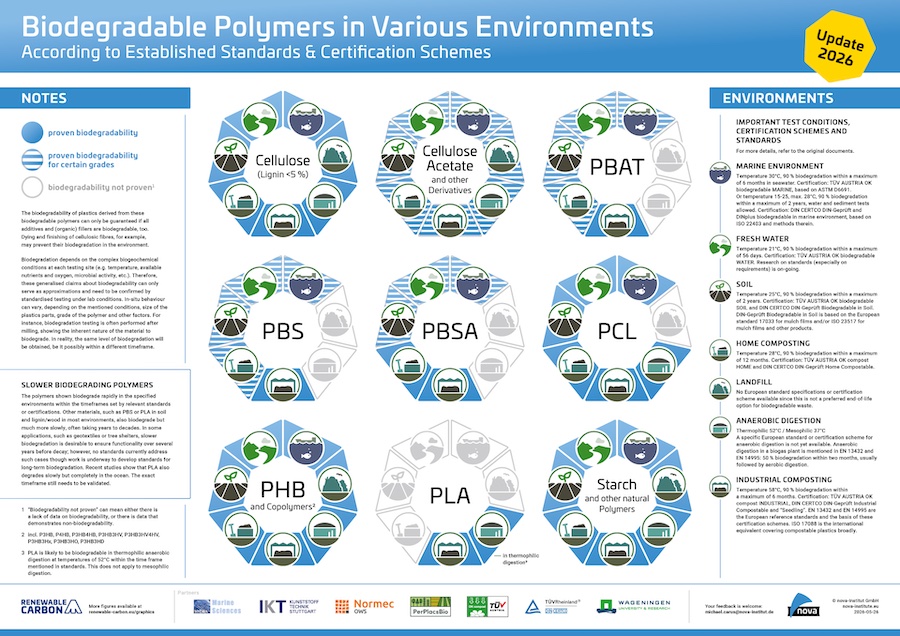
The updated poster on biodegradable Polymers in various environments has been released

As part of the PerPlacsBio project, nova-Institute has updated its popular poster on the biodegradability of polymers in different environments. The updated version reflects current standards, certifications and the latest scientific findings. The poster can be used to assess biodegradable alternatives for use in agriculture and forestry, and it is now available in German for the first time.

#Sustainability

A new standard to combat plastic waste in forests

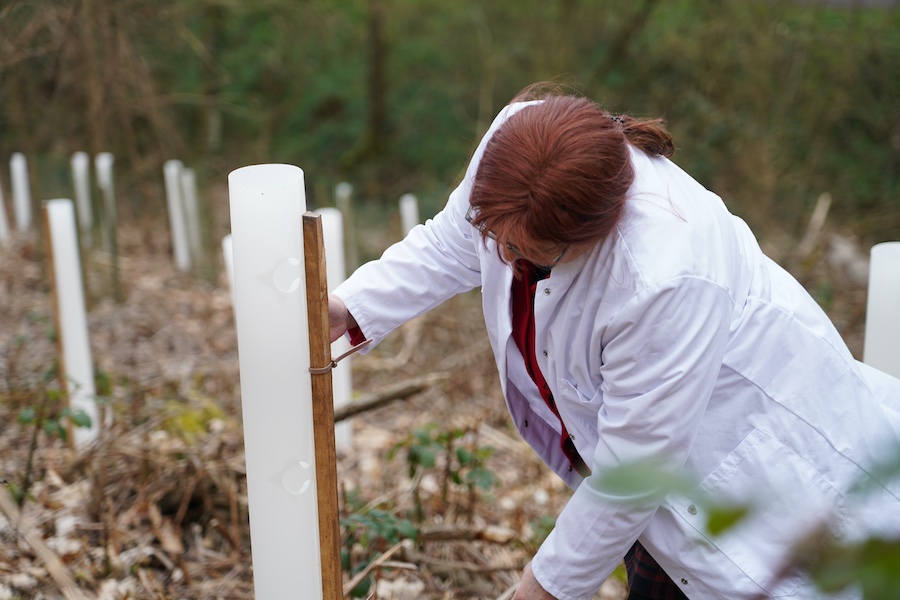
With DIN SPEC 35808 “Tree Shelter for Forestry Applications,” the testing and research service provider Hohenstein, in collaboration with Rottenburg University of Forestry, as well as forestry authorities and industry partners, has established a clear framework for bio-based and fully biodegradable tree shelters. The pre-standard defines requirements and practical testing methods designed to reduce plastic waste in forests and strengthen the long-term protection of soil and the environment.

#Denim

Denim moves towards sustainability

EIM (Environmental Impact Measurement), the global reference platform for measuring the environmental impact of garment finishing, presents the second edition of its annual report Denim Industry Progress & Insights 2025. The study analyses over 100,000 real denim finishing processes, providing an accurate and up-to-date view of the industry’s evolution towards more sustainable models.

Latest News

#Spinning

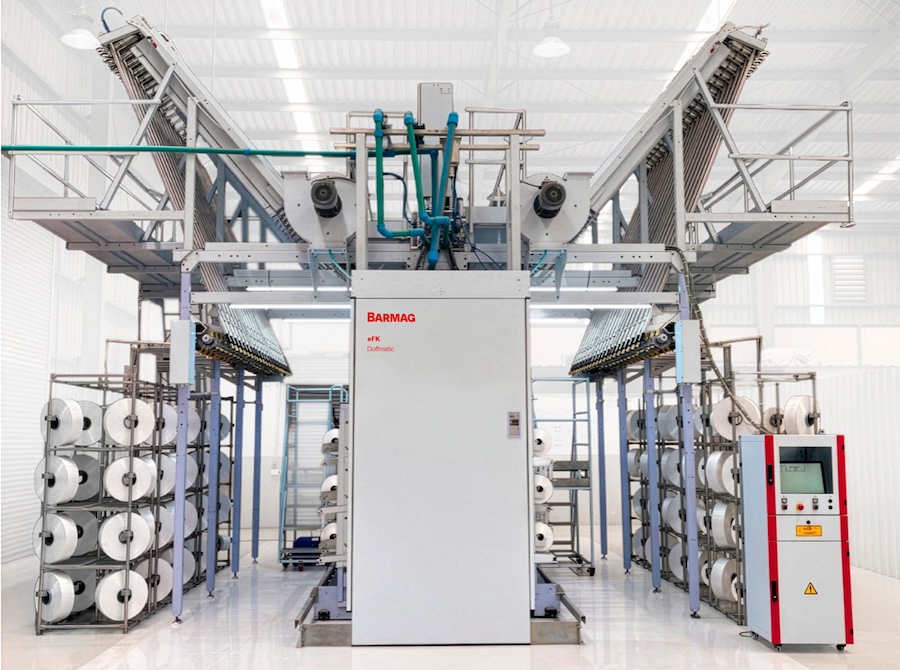
Barmag and Hitech Automation enter into partnership for an auto-doff system for texturing machines

Barmag (Suzhou) Technology Co., Ltd. and Hitech Automation Solutions PVT LTD. of Surat, India, have agreed to an exclusive partnership to jointly market Hitech’s Doffmatic automation solution for Barmag’s proven manual eFK texturing machines. In many texturing facilities, manual doffing processes remain heavily operator-dependent – resulting in issues such as increased scrap, inconsistent quality, and limited productivity.

#ITM 2026

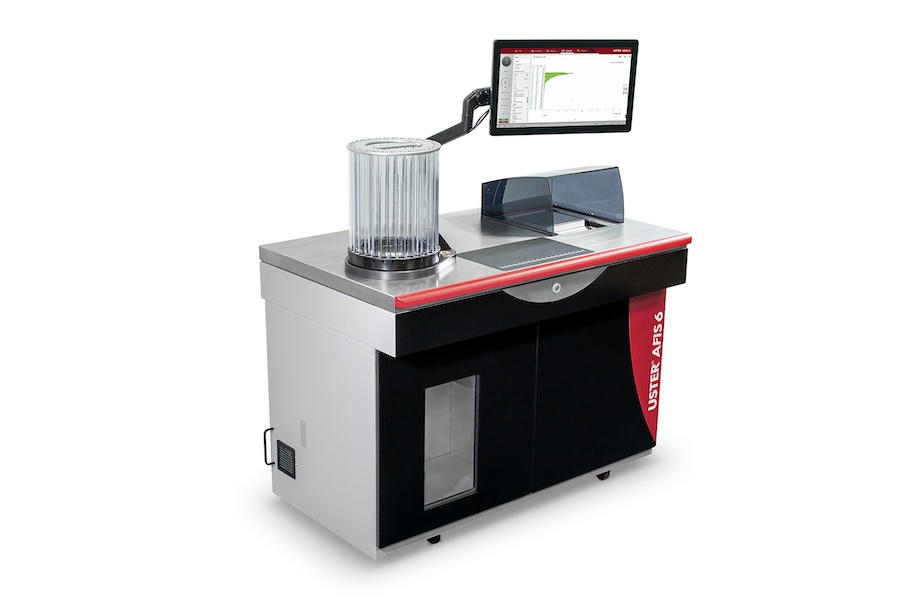
Uster’s new Recycling Opening Index guides spinners to the perfect blend

Uster AFIS 6 now offers the key data for better decisions when blending recycled fibers. Process control is decisive in determining the quality and economic outcome. The new R Recycling Module of AFIS 6 introduces the Recycling Opening Index (ROI), so spinners can optimize their circularity credentials. It was officially launched at ITM 2026 in Istanbul, Türkiye.

#HIGHTEX 2026

The heart of the technical textiles and nonwovens world will beat in Istanbul

Only 1 day remains until HIGHTEX 2026 International Technical Textiles and Nonwovens Exhibition opens its doors. Bringing together manufacturers, technology developers, investors, and industry professionals from around the world, HIGHTEX 2026 is preparing to showcase the innovations shaping the future of the industry. As the countdown to this major event continues, Istanbul is once again getting ready to become the meeting point of the global technical textiles industry.

#Man-Made Fibers

Grasim Industries announces fresh investment of ₹3094 Crore to expand Lyocell capacity

Grasim Industries Limited, the flagship company of the Aditya Birla Group and a global leader in cellulosic fibres, today announced an investment of ₹3,094 crore, for Phase II Lyocell capacity of 110K TPA at Harihar, Karnataka. This expansion will consist of 2 lines of 55K TPA (150 Tons per day) each. The first line is expected to be commissioned by 2028, and the second line is expected to be commissioned by 2030.

TOP