#Spinning
Business year 2012: Rieter with stronger position in weaker market environment
Order intake for the year as a whole declined by 12% to 839.7 million CHF, although Rieter received more orders in the second half-year than in the first. As expected, sales totaling 888.5 million CHF were 16% lower than in 2011. Mainly due to lower sales and also the 2012/2013 investment program announced by Rieter in spring 2012, the operating result (EBIT) declined to 33.6 million CHF or 3.8% of sales (2011: 10.6% at 112.6 million CHF). Net profit was 26.5 million CHF or 3.0% of sales (2011: 11.2% at 119.0 million CHF). For the 2012 financial year the Board of Directors proposes a dividend of 2.50 CHF to be paid out of the reserves from capital contributions. Despite adverse economic conditions, Rieter strengthened its market position during the year under review and closed with a sound balance sheet. Rieter has reached its half-time goals in the investment program for further growth, and is well on course with the respective projects. In 2013, Rieter will focus all the more on greater profitability. The business year 2012 was beset by uncertainties in all major economic regions worldwide. Textile machinery and component suppliers were faced with additional industry- and country-specific challenges in their main markets of China and India. Spinning mills in India were still affected during the first half of the year with the consequences of raw materials price distortions, but during the second half-year, demand started to improve particularly in northern India. In China the spinning mills suffered as a result of government regulated raw material prices. Overall, Rieter’s spinning mill customers recorded a more stable trend of business in the second half of 2012 and operated profitably. The business environment in Rieter’s yarn customer markets remained volatile, however, and the banks upheld their caution with regard to project financing. It was clearly apparent in 2012 that in this unfavorable environment, Rieter is well positioned with the existing product range and is heading in the right direction with its innovation and expansion strategy focused on Asia. Today the company is considerably Media release better off with market-specific products than during the economic slump of 2008/09. Rieter strengthened its overall market position in 2012. In the major markets of China and India, machinery and components offering higher productivity and quality, with lower energy consumption and with a higher degree of automation, are in greater demand than ever.
Orders received and sales Order intake by the Rieter Group in the year under review declined by 12% to 839.7 million CHF. This was also due to cancellations of orders totaling about 60 million CHF. The second half-year nevertheless brought 435.6 million CHF order intake, 8% higher than in the first half of the year. The main reason for this positive development was market revival in India and a slightly increased demand in Turkey, in the South East Asian countries, and in North and South America. In China, Rieter attained a good level of order intake despite a more challenging environment. During this period several large orders for machine deliveries in the 2013 financial year were also received. Both business groups recorded lower order intake, but the decline was less pronounced with Spun Yarn Systems (machinery business) than with Premium Textile Components (components supply business). Rieter orders on hand per year-end totaled around 550 million CHF. Rieter Group sales for 2012 totaled 888.5 million CHF, 16% less than in prior year. The downturn became more pronounced in the second half-year, when sales were 18% lower than in the first semester. This was due to weak order intake at the beginning of 2012, orders postponed by customers until the 2013 financial year, and weaker components supply business. Spun Yarn Systems business group sales declined by 16% to 727.6 million CHF despite substantially higher sales in China compared to the previous year. Premium Textile Components sales declined by 19% to 160.9 million CHF. Per December 31, 2012 Rieter employed a workforce of 4720, as against 4695 one year earlier. There are mainly two reasons for this slight increase in the Rieter workforce despite declining business volume. On the one hand Rieter is expanding local presence in India and China, and on the other hand there has been an ongoing need for specialist personnel in Switzerland and Germany to provide strategic project support. Furthermore, Rieter also employed temporary personnel amounting per year-end to 985 employees or 17% of the total workforce.
Operating result and net profit The Rieter operating result for 2012 before interest and taxes (EBIT) totaled 33.6 million CHF or 3.8% of sales (2011: 112.6 million CHF or 10.6% of sales). The difficult market environment and associated decline of business volume did not deter Rieter from continuing with its investment program. EBIT for the year under review included expenditures totaling 25.3 million CHF for investment program 2012/2013 (see page 6). These expenditures impacted the EBIT margin by less than 2.8 percentage points, well within expectations. EBIT prior to deductions for strategic projects therefore amounted to 58.9 million CHF, or 6.6% of sales. In addition to the decline of business volume, a less favorable product mix also impacted EBIT development. Components supply business contributed less to Rieter’s sales than in prior year, and machinery sales margins declined. This was attributable on the one hand to the lower demand for high-margin products, and on the other hand to the cyclic and currency-related higher pressure on pricing. The operating result was enhanced by gains totaling 6.0 million CHF from the sale of Czech production plants in 2012, as announced in 2011. Investments in tangible fixed assets and intangible assets totaled 81.6 million CHF, a good 51.6 million CHF of which in strategic projects. Regular investments of 30.0 million CHF in replacements and rationalization thus amounted to 3.4% of sales, in line with the long-term average. Rieter accelerated research and development with 42.7 million CHF or 4.8% of sales (2011: 39.5 million CHF). Net profit for the year under review amounted to 26.5 million CHF or 3.0% of sales (2011: 11.2% of sales at 119.0 million CHF, of which 47.3 million CHF from reduction of Rieter’s equity interest in Lakshmi Machine Works). This includes gains of 17.6 million CHF from sale of the residual equity interest in Lakshmi Machine Works and Lakshmi Ring Travellers. Earnings per share for 2012 thus amounted to 6.40 CHF. Return on net assets (RONA) was 6.7% (2011: 19.8%).
Dividend Rieter Holding Ltd. posted a net profit of 12.0 million CHF for the 2012 financial year (28.7 million CHF in 2011). The Board of Directors will propose to the Annual General Meeting on April 18, 2013 that a dividend of 2.50 CHF be paid for the 2012 financial year out of the reserve from capital contributions (2011: 6.00 CHF). This corresponds to a distribution ratio of 39% of earnings per share. Rieter aims for an average distribution ratio of about 30% over the years, taking into consideration various factors such as the trend of business, liquidity needs and market prospects.
Spun Yarn Systems Business Group Order intake of 695.0 million CHF by the Spun Yarn Systems Business Group in 2012 was 10% lower than a year earlier (2011: 775.0 million CHF). Sales by Spun Yarn Systems were 16% lower at 727.6 million CHF (2011: 861.7 million CHF), declining mainly in the second half-year. This is attributable on the one hand to low order intake in the first half of 2012, and on the other hand to some orders not being delivered until 2013 partly as a consequence of customer postponements. The operating result (EBIT) of 81.2 million CHF (9.4% of sales) posted by Spun Yarn Systems for 2011 declined in 2012 to 30.5 million CHF (4.2% of sales). The lower profitability than in prior year is attributable to the lower business volumes, a less favorable product mix in machinery business, and lower spare parts sales. The cyclically lower demand for new machinery, resulting in more intense competition among manufacturers, has led to pricing pressure in particular on business invoiced in Swiss francs. This likewise led to a margin decline, which could only be compensated in part by the production costs savings realized. Furthermore, the majority of strategic project costs arising in connection with the 2012/2013 investment program were charged to Business Group Spun Yarn Systems, especially to locations in Switzerland.
Premium Textile Components Business Group Order intake by the Premium Textile Components Business Group declined by 21% from prior year to 144.7 million CHF in 2012 (2011: 183.3 million CHF). This development is mainly attributable to weaker demand for deliveries to Chinese and Indian textile machinery manufacturers. Sales declined by 19% to 160.9 million CHF (2011:199.1 million CHF), while segment sales – i.e. including internal deliveries to Spun Yarn Systems – declined less by 12% to 232.3 million CHF (2011: 263.9 million CHF). Premium Textile Components’ EBIT for the year under review amounted to 16.0 million CHF, corresponding to an operating margin of 6.9% of segment sales (2011: 35.1 million CHF or 13.3% of segment sales). Profitability declined mainly because of lower volumes, particularly in third-party business with textile machinery manufacturers and in spinning mill retrofit business.
Balance sheet and finances Rieter has a sound balance sheet with an unchanged equity ratio of 35% (2011: 35%). In particular the high investment and project costs in connection with the 2012/2013 investment program, and a slight increase in net working capital, resulted in negative free cash flow of 32.3 million CHF. Due to postponements of orders in the second half-year, some machines completed by year-end were not yet delivered. In 2012 dividends totaling 27.7 million CHF were paid out of the reserve from capital contributions. Net liquidity had reduced per 31.12.2012 to 95.6 million CHF.Rieter‘s financial stability is additionally ensured by a 250 million CHF bond issue until 2015. This assures Rieter of strategic flexibility and long-term financing of the company‘s development.
Progress with the 2012/2013 investment program Although the substantial investment program announced early in 2012 (see page 6) placed challenging demands on those involved, all half-time goals for the year were nevertheless reached. The overall program implementation is now going ahead and financially well on course. By year-end 2012 Rieter had taken the following important steps:
- Expansion in Asia: Rieter made rapid progress with capacity expansion in its two key markets of China and India. In Changzhou, China, Rieter upgraded the existing plant and completed the first construction phase of a large second plant. This was inaugurated in June and is now fully operational. Both plants are at a high level of the operational excel- lence for which Rieter strives worldwide. In India, Rieter created additional capacity with an existing plant rebuild and a new plant building in Koregaon Bhima. The plant in Wing was optimized and has likewise made good progress in operational excellence. The expansion plan is scheduled for completion per year-end 2013.
- Innovation: Rieter worked intensively on innovations in 2012 and launched new machines and technology components to improve yarn quality, increase productivity and enhance energy efficiency. Selective and controlled market launch of the J 20 airjet spinning machine went ahead, and a customer in China commissioned the first complete line of J 20 airjet spinning machines. Well received by customers were among others the E 80 comber and a wide range of new Bräcker, Graf, Novibra and Suessen brand technology components.
- Process improvements: Rieter was also well on course with process improvement investment priorities per year end 2012. Apart from the projects for global standardization and IT support of business processes, Rieter made good progress with organizational realignment to a global working approach, in particular with regard also to manufacturing. By concentrating assembly work at the Winterthur location in Switzerland, and with projects in Germany and the Czech Republic, Rieter pushed forward operational excellence in Europe as well.
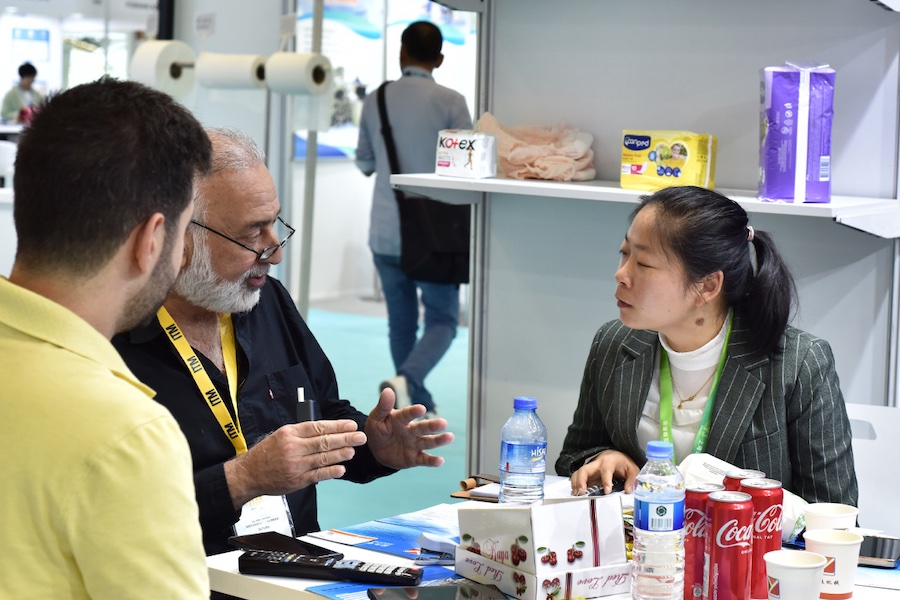
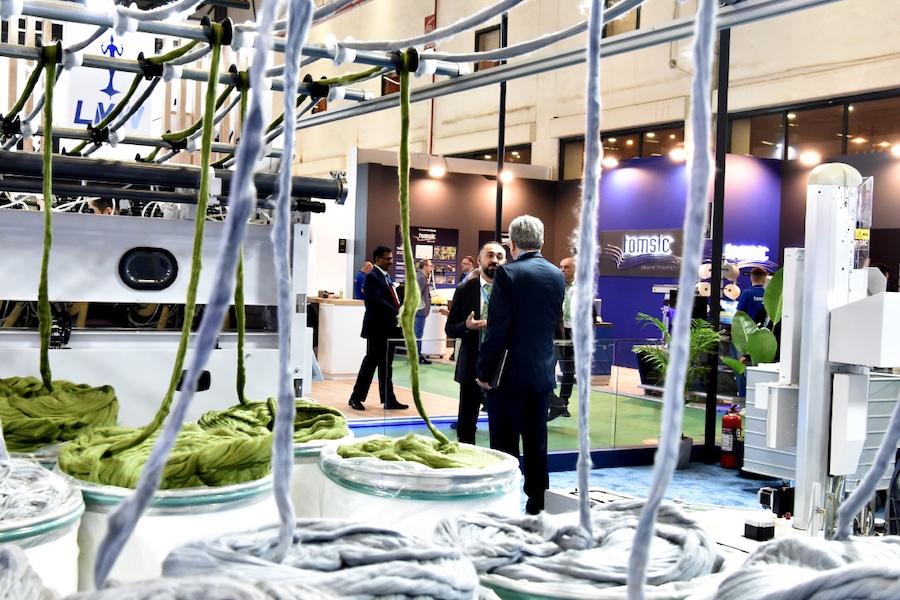
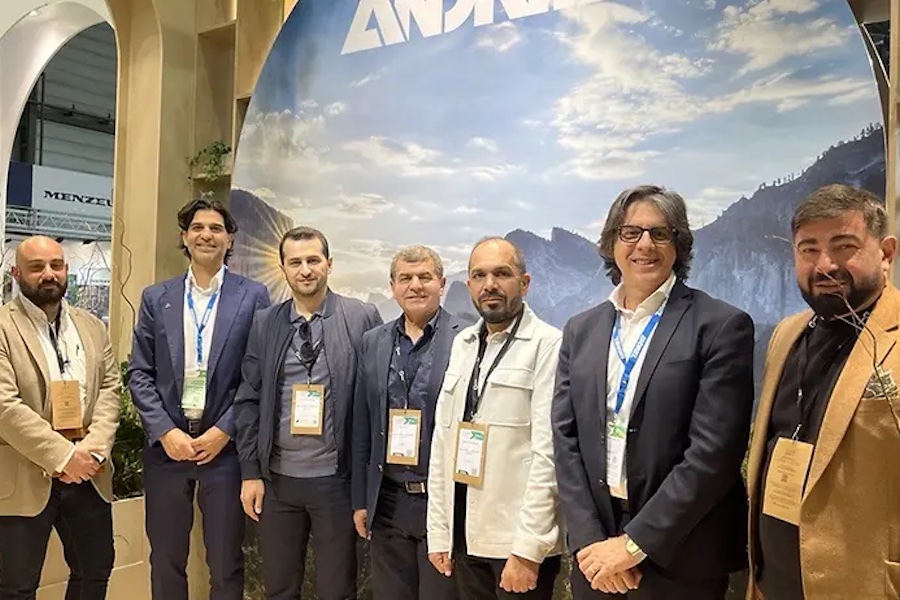
Strong brands with international presence With its long-standing industrial experience, its strong Rieter brands in the machinery business as well as in the components business with the brands Bräcker, Graf, Novibra and Suessen and its extensive expertise in the textile value chain from raw materials to end products, the Rieter company enjoys global recognition. During 2012 Rieter‘s specialists attended not only the three large trade fairs ITM in Istanbul, ITMA Asia in Shanghai and ITME in Mumbai, but also several other important trade fairs and symposia in specific market areas. Rieter’s development result presentations make a major contribution to improving know-how throughout the industry. In great demand are for example Rieter’s seminars for yarn suppliers and designers to deepen their understanding of the four spinning systems and the resultant yarn properties. Rieter thereby meets a widespread customer need for know-how exchange along the entire value chain. This also results in valuable feedback to the Rieter product development. Rieter’s unique technology leadership in the spinning machinery market is unchallenged. This is clear from the high access rates to the Rikipedia online database for yarn production information, high readership of Rieter articles in the specialized media, Rieter’s close contacts with universities, specialized institutes and leading fiber producers, and from the invitations received to presentations in all parts of the world. Rieter diligently protects know-how of vital business importance through patents and by other means.
Board of Directors and Annual General Meeting Shareholders at the Annual General Meeting held on April 18, 2012 elected Dr. Jakob Baer, Michael Pieper, This E. Schneider, Hans-Peter Schwald and Peter Spuhler to the Board of Directors for a further three-year term of office. This E. Schneider continues as Vice-Chairman of the Board and Lead Director. By approving an amendment to the articles of association, shareholders enabled the creation for two years of new authorized capital to the maximum amount of 2.5 million CHF in the form of up to 500 000 registered shares. This measure will provide Rieter with greater financial flexibility for exploiting strategic opportunities, such as acquisitions, without delay. At the Annual General Meeting to be held on April 18, 2013, Dr. Dieter Spälti is standing for re-election to the Board of Directors for a further three-year term of office.
Focus on sustainable profitability improvement The expansion of Rieter locations in China and India will be completed by the end of 2013 as announced. The projects for improving global processes are likewise well advanced. With completion of the 2012/2013 investment program and in order to improve the ability to respond to the market cycles typical in this industry, Rieter aims again to lower the break-even threshold in both business groups. Rieter expects further market growth above all in Asia, and must therefore adjust capacities accordingly at the long-established locations. The expected consequence is personnel reductions totaling about 5% of the global workforce, both temporary and permanent, over a period of 24 months predominantly in Switzerland. Although this will be achieved in part through natural fluctuation, early retirements, and reduction of temporary personnel engaged specifically for the investment program, the remaining workforce will also be subject to adjustments. Consultations with the respective staff committees will be held at the appropriate time. Rieter is also focusing on margin improvement through production costs savings, optimal capacity management and greater price discipline, in order to reach the announced mid-term goals.
Outlook Rieter business activities are broadly based worldwide. Heterogeneous market development is expected for 2013. Market development depends amongst other factors also on currency exchange rate developments, consumer sentiment in Europe and North America, fiber consumption growth in Asia, and raw material prices. The slight improvement in market conditions in the second semester of 2012 continued in the first two months of 2013. Full-year sales for this financial year are expected to reach at least a similar level as in 2012. As a result, operating profit (EBIT) is expected around 2012 levels before disposal gains. This includes strategic project costs from the investment program 2012/2013 of about 20-25 million CHF. Operating profitability in the first semester 2013 is expected to be lower due to less attractive inherent margins in the current order backlog. Rieter expects a slightly positive net profit in 2013. Investment activity from the finalization of the investment program 2012/2013 will lead to capital expenditure of around 35-40 million CHF on top of ongoing replacement demand.
Investment program 2012/2013 for further growth Rieter expects that global demand for short staple fibers (natural fibers / staple man-made fibers) will grow by an average of 2.3% annually until 2030. The additional spinning capacity this will require, the replacement demand and the trend toward greater automation, especially in the Chinese and Indian markets, will have a positive impact on demand for spinning machinery and components. Against this background Rieter is aiming for overall annual average growth of 5%, half of which should be organic. Rieter’s strategic targets are to retain its leadership in the premium segment and also to expand its position in the local markets in China and India.
In the implementation Rieter is focusing on Expansion in Asia: Further build-up of capacity in China and India; Innovation: Increased focus on air-jet spinning, improvement of yarn quality, productivity and energy efficiency of machinery and components; Process improvements: Operational excellence, global standardization and IT support of business processes. Rieter plans investments totaling around 140 million CHF in 2012/2013 for rapid expansion in Asia, product innovations, and the further improvement of global processes. In 2012, 51.6 million CHF were invested, and another 25.3 million CHF impacted the result as strategic project costs (2.8% of sales). These investments were in addition to the regular investments for replacements. Through this investment program, Rieter is seeking to achieve an EBIT margin of at least 9% over the demand cycles and greater than 12% in peak years.